
What Shingles Does to Your Skin and How to Minimize Lasting Damage | As Seen in Glamour
Shingles is more than just a painful rash. Without the right care, it can leave behind lasting skin damage including scarring, hyperpigmentation, and chronic sensitivity. Dr. Alexandra Bowles, walks through the full progression of a shingles outbreak, what it means for your skin at each stage, and exactly how to care for it to reduce the risk of long-term damage. Whether you’re in the early tingling phase or deep in recovery, learn more in Glamour’s full article.
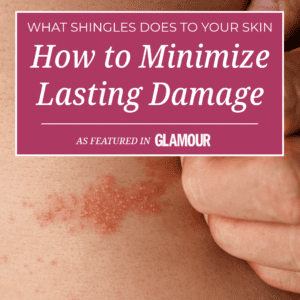
What does the typical timeline and progression of a shingles rash look like?
Shingles typically follows a fairly predictable progression, although it can vary somewhat from person to person. It often starts with a tingling, burning, or sensitive feeling. Within a few days, a red rash begins to appear, followed by clusters of small, fluid-filled blisters. These blisters can become painful and may continue to develop over several days before they eventually begin to dry out and form scabs. Over time, the scabs heal, although the skin may still appear discolored or sensitive for a period afterward. I usually think of it as moving from nerve-related symptoms to visible skin changes and then into a healing phase.
What are some of the risks or things that can happen to your skin from an episode of shingles?
In the short term, shingles can cause significant inflammation, redness, and discomfort in the affected area. As the skin heals, some patients may experience post-inflammatory hyperpigmentation or changes in skin tone, particularly if the rash was more severe. In some cases, there can also be textural changes or mild scarring, especially if the blisters were disrupted. One of the more well-known long-term complications is postherpetic neuralgia, which involves lingering nerve pain even after the skin has healed. I also see patients who notice ongoing sensitivity or dryness in the affected area. The degree of these changes can vary depending on how early the condition is treated and how the skin is cared for during the healing process.
What are best practices for maintaining the health of your skin, lessening symptoms, and reducing the risk of skin damage?
During the early tingling phase, the most important step is seeking medical evaluation, as antiviral treatment can help reduce the severity and duration of the outbreak. Once the rash appears, I usually recommend keeping the area clean, avoiding friction, and using gentle, non-irritating skincare. During the blister phase, it’s important not to pick or pop the lesions, as this can increase the risk of infection and scarring. As the skin begins to scab and heal, keeping the area lightly moisturized can help support the skin barrier. Sun protection is also very important once the rash has healed, since the skin can be more prone to discoloration at that stage. Overall, gentle care and avoiding unnecessary irritation are key throughout the process.
Does the progression always look the same?
The progression is often similar, but it doesn’t look exactly the same for everyone. Some people may have a milder rash, while others experience more extensive blistering or discomfort. Catching shingles early is important because starting antiviral treatment can help reduce inflammation and limit how severe the rash becomes. From a skin perspective, this can lower the risk of prolonged discoloration, scarring, and ongoing sensitivity. I usually emphasize that earlier treatment tends to lead to better overall outcomes, both for the skin and for symptom control.
What are some skin mistakes people can make when they have shingles, and why are these important to avoid?
One of the most common mistakes is picking or scratching the affected area, which can increase the risk of infection and scarring. I also see patients use overly harsh products or try to “treat” the rash with strong active ingredients, which can further irritate already inflamed skin. Another issue is not keeping the area clean and protected, especially if blisters are present. It’s also important to avoid excessive sun exposure during healing, as this can worsen discoloration. In general, I recommend keeping the routine simple and focused on supporting the skin rather than aggressively treating it.
What products are recommended for a shingles outbreak?
I usually recommend focusing on gentle, soothing products that support the skin barrier during a shingles outbreak. A simple, fragrance-free moisturizer can be very helpful, especially as the skin begins to dry out or scab. For example, I often suggest something like CeraVe Moisturizing Cream because it contains ceramides and hydrating ingredients that help maintain the skin barrier without adding unnecessary irritation. For cleansing, I recommend using a very gentle, non-stripping cleanser that won’t disrupt the skin while it’s healing. A product like Vanicream Gentle Facial Cleanser is a good option because it effectively removes debris while still being well-tolerated by sensitive or inflamed skin. In addition to basic skincare, cool compresses can help relieve discomfort during more active stages of the rash. I also recommend avoiding strong active ingredients such as exfoliants or retinoids until the skin has fully recovered. Overall, the goal is to keep the routine simple and supportive while the skin heals.