
Anna, CNP’s Guide to Pregnancy & Postpartum Skin | As Seen in Cincinnati Magazine
For many women, the journey to motherhood is equal parts empowering and humbling. Your body is doing something extraordinary, and with those incredible changes often come changes to your skin. Anna Luning, a Certified Nurse Practitioner with nearly a decade of experience in dermatology and aesthetic medicine, along with her own experience of being a mom of two, understands the science behind these changes. As seen in Cincinnati Magazine, Anna shares the best guide to looking and feeling your best no matter where you are in your journey of motherhood.
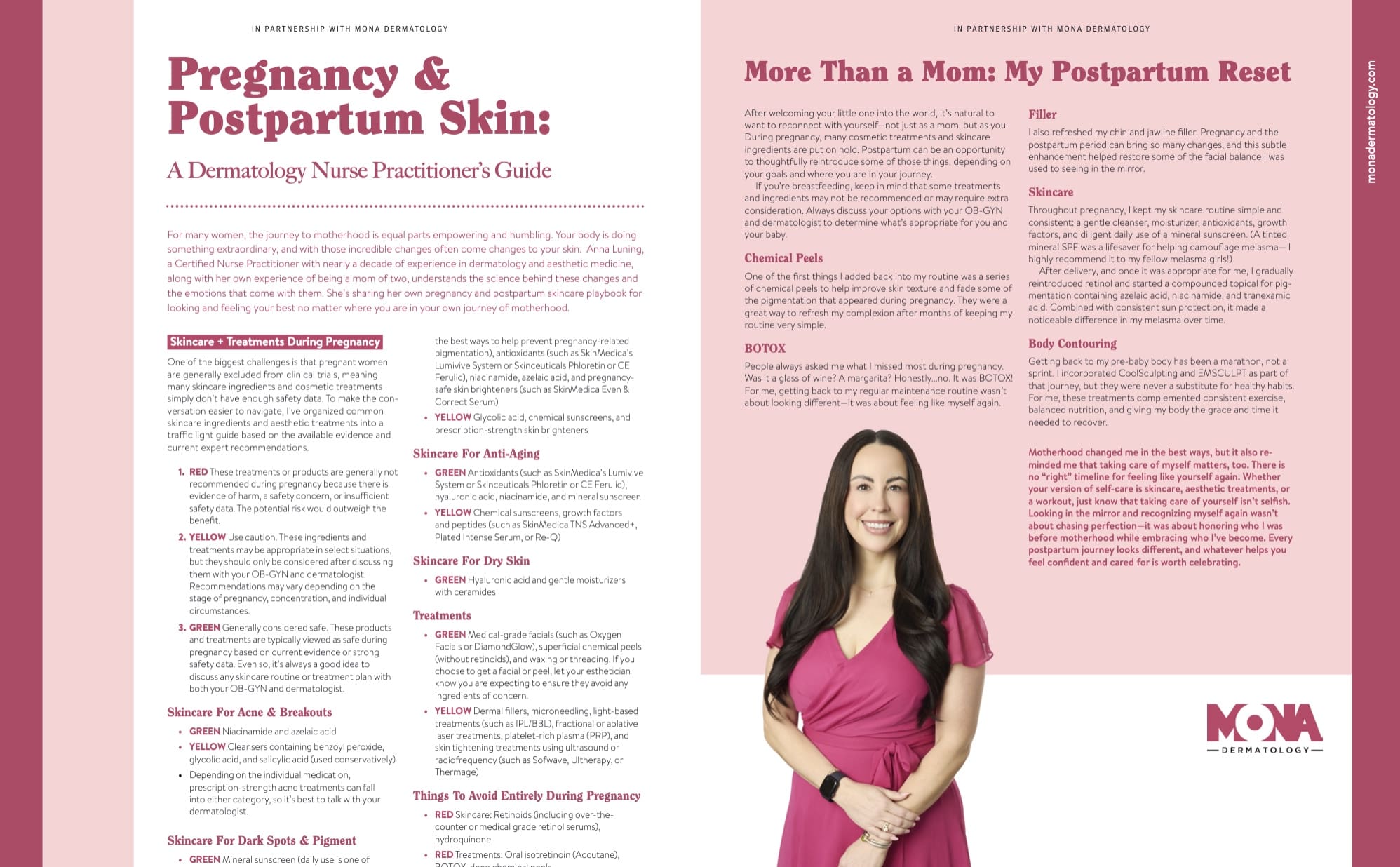
Skincare and treatments during pregnancy
One of the biggest challenges is that pregnant women are generally excluded from clinical trials, meaning many skincare ingredients and cosmetic treatments simply don’t have enough safety data. To make the conversation easier to navigate, I’ve organized common skincare ingredients and aesthetic treatments into a traffic light guide based on the available evidence and current expert recommendations.
- RED | These treatments or products are generally not recommended during pregnancy because there is evidence of harm, a safety concern, or insufficient safety data. The potential risk would outweigh the benefit.
- YELLOW | Use caution. These ingredients and treatments may be appropriate in select situations, but they should only be considered after discussing them with your OB-GYN and dermatologist. Recommendations may vary depending on the stage of pregnancy, concentration, and individual circumstances.
- GREEN | Generally considered safe. These products and treatments are typically viewed as safe during pregnancy based on current evidence or strong safety data. Even so, it’s always a good idea to discuss any skincare routine or treatment plan with both your OB-GYN and dermatologist.
Skincare for acne and breakouts
- GREEN | Niacinamide and azelaic acid
- YELLOW | Cleansers containing benzoyl peroxide, glycolic acid, and salicylic acid (used conservatively)
Depending on the individual medication, prescription-strength acne treatments can fall into either category, so it’s best to talk with your dermatologist.
Skincare for dark spots and pigment
- GREEN | Mineral sunscreen (daily use is one of the best ways to help prevent pregnancy-related pigmentation), antioxidants (such as SkinMedica’s Lumivive System or Skinceuticals Phloretin or CE Ferulic ), niacinamide, azelaic acid, and pregnancy-safe skin brighteners (such as SkinMedica Even & Correct Serum)
- YELLOW | Glycolic acid, chemical sunscreens, and prescription-strength skin brighteners
Skincare for anti-aging
- GREEN | Antioxidants (such as SkinMedica’s Lumivive System or Skinceuticals Phloretin or CE Ferulic), hyaluronic acid, niacinamide, and mineral sunscreen
- YELLOW | Chemical sunscreens, growth factors and peptides (such as SkinMedica TNS Advanced+, Plated Intense Serum, or Re-Q)
Skincare for dry skin
- GREEN | Hyaluronic acid and gentle moisturizers with ceramides
Treatments
- GREEN | Medical-grade facials (such as Oxygen Facials or DiamondGlow), superficial chemical peels (without retinoids), and waxing or threading. If you choose to get a facial or peel, let your esthetician know you are expecting to ensure they avoid any ingredients of concern.
- YELLOW | Dermal fillers, microneedling, light-based treatments (such as IPL/BBL), fractional or ablative laser treatments, platelet-rich plasma (PRP), and skin tightening treatments using ultrasound or radiofrequency (such as Sofwave, Ultherapy, or Thermage)
Things to avoid entirely during pregnancy
- RED | Skincare: Retinoids (including over-the-counter or medical grade retinol serums), hydroquinone
- RED | Treatments: Oral isotretinoin (Accutane), botox, deep chemical peels
More than a mom: My postpartum reset
After welcoming your little one into the world, it’s natural to want to reconnect with yourself—not just as a mom, but as you. During pregnancy, many cosmetic treatments and skincare ingredients are put on hold. Postpartum can be an opportunity to thoughtfully reintroduce some of those things, depending on your goals and where you are in your journey. If you’re breastfeeding, keep in mind that some treatments and ingredients may not be recommended or may require extra consideration. Always discuss your options with your OB-GYN and dermatologist to determine what’s appropriate for you and your baby.
Chemical peels
One of the first things I added back into my routine was a series of chemical peels to help improve skin texture and fade some of the pigmentation that appeared during pregnancy. They were a great way to refresh my complexion after months of keeping my routine very simple.
Botox
People always asked me what I missed most during pregnancy. Was it a glass of wine? A margarita? Honestly…no. It was botox! For me, getting back to my regular maintenance routine wasn’t about looking different–it was about feeling like myself again.
Filler
I also refreshed my chin and jawline filler. Pregnancy and the postpartum period can bring so many changes, and this subtle enhancement helped restore some of the facial balance I was used to seeing in the mirror.
Skincare
Throughout pregnancy, I kept my skincare routine simple and consistent: a gentle cleanser, moisturizer, antioxidants, growth factors, and diligent daily use of a mineral sunscreen. (A tinted mineral SPF was a lifesaver for helping camouflage melasma—I highly recommend it to my fellow melasma girls!)
After delivery, and once it was appropriate for me, I gradually reintroduced retinol and started a compounded topical for pigmentation containing azelaic acid, niacinamide, and tranexamic acid. Combined with consistent sun protection, it made a noticeable difference in my melasma over time.
Body Contouring
Getting back to my pre-baby body has been a marathon, not a sprint. I incorporated CoolSculpting and Emsculpt as part of that journey, but they were never a substitute for healthy habits. For me, these treatments complemented consistent exercise, balanced nutrition, and giving my body the grace and time it needed to recover.
Motherhood changed me in the best ways, but it also reminded me that taking care of myself matters, too. There is no “right” timeline for feeling like yourself again. Whether your version of self-care is skincare, aesthetic treatments, or a workout, just know that taking care of yourself isn’t selfish. Looking in the mirror and recognizing myself again wasn’t about chasing perfection—it was about honoring who I was before motherhood while embracing who I’ve become. Every postpartum journey looks different, and whatever helps you feel confident and cared for is worth celebrating.