Sun Safety Made Easy: Best Sunscreens for the Whole Family
Summer is right around the corner, so now is the perfect time for you to find the right sunscreen and use it! What better way to prepare for spring break than by refreshing your sunscreen stash? Learn why this is the most important step in your skincare routine. Our provider Anna, CNP shares her top recommendations for the best sunscreens for the whole family. If you are not already wearing your sunscreen daily, this is your sign to start!
When it comes to finding the perfect sunscreen for you or your family, there are three things to look out for:
Coverage
When looking for the right sunscreen for you, coverage is extremely important: look for ingredients including Zinc Oxide and Titanium Dioxide to ensure you are purchasing a broad-spectrum sunscreen. These two ingredients are a great choice in your sunscreens as they cover both UVA & UVB Rays.
SPF
Our providers always recommend a sunscreen with an SPF of 30 or higher. SPF stands for Sun Protection Factor and rates the amount of solar exposure that you will be protected from. For example: an SPF 100 is going to block 99% of UVB rays, while an SPF 30 is going to block 97% of UVB rays. So while SPF 100 is going to give you greater protection, it is only a 3% increase so it may not be worth the added cost.
Daily Use
Using a broad spectrum sunscreen daily will help ensure consistent protection from UV damage. In order to get into the habit of wearing your sunscreen daily, it’s helpful for you to find one that you enjoy wearing. We carry a wide variety of sunscreens here at our office: such as lightweight or moisturizing, tinted and non-tinted, along with specialty formulations such as powders.
Lastly make sure you purchase a sunscreen you will wear, there are a variety of sunscreen options based on your skin type, as well as tinted and untinted options.
Click below to watch our provider, Anna, CNP share her favorite sunscreens for the whole family!
This ultralight tinted sunscreen protects, repairs, and corrects with Eryfotona Ageless. It is an ultralight tinted sunscreen with zinc oxide which helps fight the signs of photoaging.
This revolutionary sunscreen helps protect your skin from harmful infrared rays while improving the appearance of lines, wrinkles, and sun damaged skin.
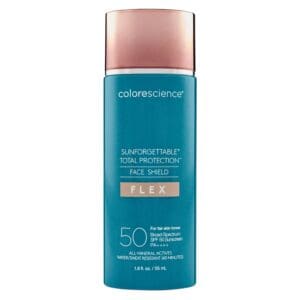
ColoreScience Face Shield Flex ($54)- Best for Pigment
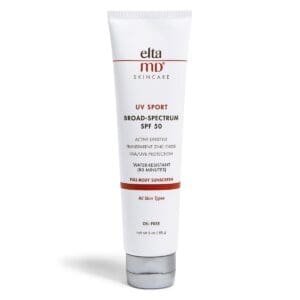
This sunscreen is great for swimmers, skiers, runners, golfers and other athletes. This sunscreen will not wash off or run into your eyes if you sweat.
ColoreScience Brush On Shield ($69)- Best for Reapplying
This all mineral skin shield provides complete protection on the go, this application can be applied alone or over makeup.
*Not wearing sunscreen at all is never a good idea! If you are still on the hunt for the perfect sunscreen for you or your family schedule a consultation, we would love to help!
Expanding on her insights revealed in the interview with Byrdie, Dr. Bowles is sharing the inside scoop on these two treatments and how you can choose which one is best for you.
What Is Laser Hair Removal?
Laser hair removal is a cosmetic procedure that uses a laser (also known as concentrated beams of light) to remove unwanted hair. The laser emits light that is absorbed by the pigment (or melanin), found in the hair follicles, which in turn delays future hair growth.
What Is Waxing?
Waxing is a semi-permanent hair removal method that is easy and efficient, leaving the skin feeling smooth and soft. Waxing allows for a more effective removal of the entire hair with the root, from the follicle, as opposed to shaving. There are different types of wax such as:
Soft wax, also known as strip waxing
Hard wax, which is directly applied onto the skin, cooled for a few minutes, and then pulled and removed in the opposite direction of the hair growth
Fruit wax, which works well for sensitive skin
Chocolate wax which works well for skin prone to irritation and redness
Sugar wax, a more natural option for hair removal for people with sensitive skin
What results to expect for both?
The most major difference is that laser hair removal is semi-permanent or in some cases permanent. Waxing must be performed regularly as the hair regrows. Each process of hair removal has its own benefits and drawbacks in terms of lasting quality, effectiveness, and potential side effects.
Laser hair removal offers a long-term reduction in hair growth and precision targeting of unwanted hair. Plan for several treatments, typically 5-8, for optimal reduction; and maintenance treatments every year or so. Laser hair removal has minimal discomfort and temporary redness or swelling in the treated area. In some cases, skin pigmentation or scarring can occur during and after the procedure. However, seeing a well-trained provider will reduce this risk as they will be able to choose the proper laser and settings for your skin tone. They can also perform a spot test when necessary.
Waxing on the other hand provides immediate results, with smoother skin right after the procedure. However, the results from waxing are temporary in that hair usually grows back within a few weeks. Waxing can be painful, especially with sensitive skin. It can cause side effects such as redness, skin irritation, and ingrown hairs.
What skin or hair types are best for laser hair removal vs. waxing?
People with lighter pigmented hair such as blonde or red, are not a candidate for laser hair removal. This is because the laser targets the pigment in the hair follicle and lighter hair types lack the pigment needed for the laser to work. Waxing or plucking is a good choice for people with this hair type. Individuals with darker hair are good candidates for laser hair removal. It is very important to note that plucking or waxing hair prior to a laser hair removal session is not recommended. This removes the hair follicle entirely, so there is nothing for the laser to target. Dermaplaning or shaving prior to laser hair removal is recommended though, as treating an area with long hair can impede the laser’s ability to get into the follicle.
In contrast, waxing comes in different forms that can be used for hair removal, depending on an individual’s preference. Soft wax, also known as strip waxing, is ideal for removing tiny, fine strands of hair you can’t see. It is usually used on larger areas of the body, applied directly to the skin, and removed by a strip of cloth. Hard wax is used for smaller and more sensitive areas like the upper lip, underarms, and bikini area. This form of wax is applied warm and directly on the skin, and once hardened, is peeled off. Fruit wax is similar to hard body wax but is recommended mostly for people with sensitive skin.
What is the pain level for both treatments?
When it comes to laser hair removal, the pain level or discomfort is usually tolerable for most individuals. Most people feel a mild stinging or tingling sensation during the procedure. Sometimes we will use topical numbing cream in certain areas to provide more comfort. Waxing, on the other hand, is generally considered more painful. This is especially true in areas of the body like the bikini area, underarms, and upper lip that are more sensitive.
What is the cost for both treatments?
The cost of a laser hair treatment really depends on two factors, treatment area and permanence. Typically, larger treatment areas like the back or legs can cost more than smaller areas. While laser hair removal is a more permanent option than waxing, you will still have to get some maintenance treatments. If you follow your complete treatment plan, including maintenance, this could last between 6 to 12 months or longer. This can cost more initially, but can end up being a worthwhile investment down the road. Waxing, on the other hand, is less costly than laser hair removal per treatment. However, waxing is not a permanent hair removal solution. The cost of getting routine wax treatments for several years can end up being more costly than laser treatment in the end.
What is aftercare like for both treatments?
The aftercare for laser hair removal requires individuals to avoid being exposed to the sun, heat, and irritants. This includes hot baths, steam rooms, and saunas. It is also recommended to resist the urge to scratch or pick at the treated area. Similarly, for waxing, individuals are encouraged to avoid sun exposure to prevent sunburn and minimize the risk of post-inflammatory hyperpigmentation. Exfoliating gently, moisturizing regularly, and avoiding tight clothing around the waxed area are also ways to reduce the risk of irritation, redness, and dryness of the skin.
What is the frequency of treatment for both?
Most patients have laser hair removal sessions once every 4 to 6 weeks. This varies depending on the rate of hair regrowth and also on the treatment area. The hair growth cycle for the face is usually faster so patients might start with a visit every 2 weeks. The body, on the other hand, is typically every 4 weeks. Similarly, for waxing, hair growth is faster in areas like the eyebrows, bikini line, and underarms. For these areas, you will require a wax session every 2-3 weeks. The time between sessions allows for the hair to regrow to a waxable length. In contrast, legs will typically require a waxing session every 3 to 5 weeks.
Final Thoughts: Which treatment does Dr. Alexandra recommend?
I would recommend laser hair removal as I feel it is a safe and effective way to provide long lasting hair reduction. While it is an investment upfront, the time and money you would save from years of waxing is something important to consider. I also feel that over-waxing some areas can cause permanent discoloration, while laser hair removal does not do this if the treatments are performed properly. It’s very important to get a consultation with a knowledgeable provider who has treated patients with your skin type and to do a test spot if there is a concern of hyperpigmentation. All in all, laser hair removal is a great choice for everyone!
Cookie Consent
We use cookies to improve your experience on our site. By using our site, you consent to cookies.
Cookie Preferences
Manage your cookie preferences below:
Essential cookies enable basic functions and are necessary for the proper function of the website.
Name
Description
Duration
Geolocation Config
This cookie is used to store the consent settings based on the visitor's location.
30 days
Cookie Preferences
This cookie is used to store the user's cookie consent preferences.
30 days
CloudFlare provides web performance and security solutions, enhancing site speed and protecting against threats.
These cookies are for internal use which allows Cloudflare to identify production issues on clients.
session
__cfruid
Used by the content network, Cloudflare, to identify trusted web traffic.
session
__cf_bm
Cloudflare's bot products identify and mitigate automated traffic to protect your site from bad bots. Cloudflare places the __cf_bm cookie on End User devices that access Customer sites that are protected by Bot Management or Bot Fight Mode. The __cf_bm cookie is necessary for the proper functioning of these bot solutions.
session
__cflb
When enabling session affinity with Cloudflare Load Balancer, Cloudflare sets a __cflb cookie with a unique value on the first response to the requesting client. Cloudflare routes future requests to the same origin, optimizing network resource usage. In the event of a failover, Cloudflare sets a new __cflb cookie to direct future requests to the failover pool.
session
_cfuvid
The _cfuvid cookie is only set when a site uses this option in a Rate Limiting Rule, and is only used to allow the Cloudflare WAF to distinguish individual users who share the same IP address.
session
cf_clearance
Whether a CAPTCHA or Javascript challenge has been solved.
session
__cfseq
Sequence rules uses cookies to track the order of requests a user has made and the time between requests and makes them available via Cloudflare Rules. This allows you to write rules that match valid or invalid sequences. The specific cookies used to validate sequences are called sequence cookies.
session
cf_ob_info
The cf_ob_info cookie provides information on: The HTTP Status Code returned by the origin web server. The Ray ID of the original failed request. The data center serving the traffic
session
cf_chl_rc_ni
These cookies are for internal use which allows Cloudflare to identify production issues on clients.
session
cf_chl_rc_i
These cookies are for internal use which allows Cloudflare to identify production issues on clients.
session
__cfwaitingroom
The __cfwaitingroom cookie is only used to track visitors that access a waiting room enabled host and path combination for a zone. Visitors using a browser that does not accept cookies cannot visit the host and path combination while the waiting room is active.
session
cf_use_ob
The cf_use_ob cookie informs Cloudflare to fetch the requested resource from the Always Online cache on the designated port. Applicable values are: 0, 80, and 443. The cf_ob_info and cf_use_ob cookies are persistent cookies that expire after 30 seconds.
session
Google Tag Manager simplifies the management of marketing tags on your website without code changes.
Name
Description
Duration
td
Registers statistical data on users' behaviour on the website. Used for internal analytics by the website operator.
session
cookiePreferences
Registers cookie preferences of a user
2 years
WooCommerce is a customizable eCommerce platform for building online stores using WordPress.
Name
Description
Duration
woocommerce_items_in_cart
Helps WooCommerce determine when cart contents/data changes.
session
woocommerce_cart_hash
Helps WooCommerce determine when cart contents/data changes.
session
woocommerce_dismissed_suggestions__
Count of suggestion dismissals, if enabled.
1 month
woocommerce_snooze_suggestions__
Allows dashboard users to dismiss Marketplace suggestions, if enabled.
2 days
store_notice
Allows customers to dismiss the Store Notice.
session
woocommerce_recently_viewed
Powers the Recent Viewed Products widget
session
wp_woocommerce_session_
Contains a unique code for each customer so that it knows where to find the cart data in the database for each customer.
2 days
Statistics cookies collect information anonymously. This information helps us understand how visitors use our website.
Google Analytics is a powerful tool that tracks and analyzes website traffic for informed marketing decisions.
Used to monitor number of Google Analytics server requests when using Google Tag Manager
1 minute
_gid
ID used to identify users for 24 hours after last activity
24 hours
_gac_
Contains information related to marketing campaigns of the user. These are shared with Google AdWords / Google Ads when the Google Ads and Google Analytics accounts are linked together.
90 days
_gali
Used by Google Analytics to determine which links on a page are being clicked
30 seconds
_ga
ID used to identify users
2 years
__utmx
Used to determine whether a user is included in an A / B or Multivariate test.
18 months
__utmv
Contains custom information set by the web developer via the _setCustomVar method in Google Analytics. This cookie is updated every time new data is sent to the Google Analytics server.
2 years after last activity
__utmz
Contains information about the traffic source or campaign that directed user to the website. The cookie is set when the GA.js javascript is loaded and updated when data is sent to the Google Anaytics server
6 months after last activity
__utmc
Used only with old Urchin versions of Google Analytics and not with GA.js. Was used to distinguish between new sessions and visits at the end of a session.
End of session (browser)
__utmb
Used to distinguish new sessions and visits. This cookie is set when the GA.js javascript library is loaded and there is no existing __utmb cookie. The cookie is updated every time data is sent to the Google Analytics server.
30 minutes after last activity
__utmt
Used to monitor number of Google Analytics server requests
10 minutes
__utma
ID used to identify users and sessions
2 years after last activity
SourceBuster is used by WooCommerce for order attribution based on user source.
Name
Description
Duration
sbjs_migrations
Technical data to help with migrations between different versions of the tracking feature
session
sbjs_current_add
Timestamp, referring URL, and entry page for your visitor’s current visit to your store
session
sbjs_first_add
Timestamp, referring URL, and entry page for your visitor’s first visit to your store (only applicable if the visitor returns before the session expires)
session
sbjs_current
Traffic origin information for the visitor’s current visit to your store
session
sbjs_first
Traffic origin information for the visitor’s first visit to your store (only applicable if the visitor returns before the session expires)
session
sbjs_udata
Information about the visitor’s user agent, such as IP, the browser, and the device type
session
sbjs_session
The number of page views in this session and the current page path
30 minutes
Marketing cookies are used to follow visitors to websites. The intention is to show ads that are relevant and engaging to the individual user.
Facebook Pixel is a web analytics service that tracks and reports website traffic.