
Who Should Be Using Salicylic Acid? | As Seen in Allure
Salicylic acid is a skincare ingredient that can be great for those struggling with acne, without being too harsh for those with sensitive skin. Discover top product picks, other ingredients to look out for, and who should be using it with Dr. Alexandra Bowles, featured in Allure.
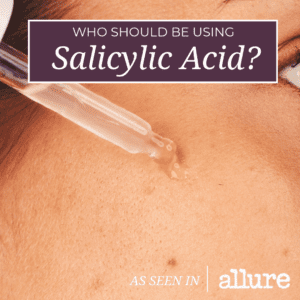
What are your favorite salicylic acid serums and why?
I like serums that balance effectiveness with skin-barrier support. La Roche-Posay Effaclar Salicylic Acid Serum is a great option, especially for patients with sensitive or acne-prone skin, because it combines salicylic acid with soothing ingredients like niacinamide. Skinmedica’s Acne Clarifying treatment is a classic because it’s well-studied, consistently formulated, and effective at unclogging pores without unnecessary fillers. It also incorporates niacinamide for extra calming. For those who prefer a gentler approach, The Inkey List Beta Hydroxy Acid Serum offers effective pore-clearing benefits at an accessible price point. The best serums are ones that exfoliate while maintaining hydration and minimizing irritation.
What other ingredients should you look out for in salicylic acid serums?
I always encourage patients to look for supportive ingredients that reduce irritation and strengthen the skin barrier. Niacinamide helps calm redness and regulate oil to production, making it a great pairing. Hyaluronic acid or glycerin helps counteract dryness and maintain hydration. Ceramides and panthenol support barrier repair, which is especially important if you’re using exfoliating acids regularly. Antioxidants like green tea extract can also help soothe inflammation and protect the skin.
Is there a concentration in Over-The-Counter products that is standard?
Most over-the-counter salicylic acid products are formulated between 0.5% and 2%, with 2% being the maximum allowed in OTC skincare in the U.S. For many people, 2% is effective and well-tolerated, but higher percentages don’t necessarily mean better results. Lower concentrations can work well for sensitive or dry skin types when used consistently. The vehicle of the product, whether it’s a serum, toner, or cleanser, often matters just as much as the percentage. Using the right formulation at the right frequency is more important than chasing higher numbers.
Who should use salicylic acid serums?
Salicylic acid serums are especially beneficial for people with oily, acne-prone, or combination skin, as well as those struggling with blackheads, clogged pores, or breakouts along the T-zone. Because salicylic acid is oil-soluble, it penetrates deep into pores, making it ideal for congestion-related acne. Some patients with sensitive skin can also use it, but they should start slowly and choose formulations with soothing ingredients. It may not be the best choice for very dry, eczema-prone, or compromised skin barriers unless guided by a dermatologist. As with any active ingredient, personalization and moderation are key to seeing results without irritation.

 How should someone address postpartum hair loss that persists for several years?
 What are some of the symptoms of Hidradenitis Suppurativa?
 How does a high-sodium diet impact the skin?