Why Your Scalp Gets So Oily & How to Help | As Seen in HuffPost

An oily scalp can feel frustrating, especially when your hair looks greasy just hours after washing. Dr. Mona Foad, featured in HuffPost, explains what actually drives excess oil production on the scalp, which ingredients and products help rebalance it, and the simple habit changes that can make a real difference. Whether you’re dealing with genetics, hormones, or the wrong hair care routine, here’s what to do about it.

oily scalp


Are there certain factors that cause an excessively oily scalp or make someone more prone to oily hair?

The scalp naturally produces oil, known as sebum. This oil is essential for maintaining healthy, hydrated hair and protecting the skin’s barrier. A balanced amount keeps the scalp comfortable and adds shine and flexibility to the hair.

However, when oil production becomes excessive, it can cause problems. Greasy, flat hair shortly after washing is a common sign. Some people also experience scalp irritation or breakouts around the hairline.

Genetics plays a major role. Some people naturally have more active oil glands. Hormonal fluctuations during puberty, pregnancy, or periods of stress can further increase oil output. Conditions like dandruff, eczema, or psoriasis may also contribute. Overwashing or using harsh hair products can strip the scalp, causing it to produce even more oil to compensate.

What are some products you recommend for an oily scalp?

An oily scalp that feels greasy even after washing can benefit from rebalancing products. The key is finding something that controls oil without over-drying the skin.

Look for shampoos that contain salicylic acid, zinc pyrithione, selenium sulfide, or ketoconazole. These ingredients help exfoliate the scalp, reduce buildup, and calm inflammation linked to excess sebum.

The Neutrogena Healthy Scalp Clarify & Shine Shampoo is a great option. It uses gentle exfoliants to lift away residue and balance oil while keeping hair lightweight and shiny. The Living Proof Clarifying Detox Shampoo is another excellent choice. It removes excess oil and product buildup without stripping the scalp’s natural moisture barrier.

In between washes, reach for a dry shampoo with rice starch or kaolin clay. These ingredients absorb surface oil and keep hair feeling fresh. The goal isn’t to eliminate all oil — it’s to maintain a clean, balanced scalp that supports healthy hair.

For those with seborrheic dermatitis or psoriasis, a tar shampoo like TGel or a prescription ketoconazole shampoo may be worth considering.

Are there other things someone can be doing to prevent an overly oily scalp?

Yes. Simple adjustments to your hair care habits can make a big difference.

Start with washing frequency. Some people do well shampooing daily with a gentle, pH-balanced cleanser. Others may need to wash less often to avoid overstimulating oil production. It varies from person to person.

When you do wash, focus on the scalp rather than the length of the hair. Use your fingertips — not your nails — to avoid irritation. Apply conditioner only to the mid-lengths and ends. Putting it near the scalp can weigh hair down and make it look greasier.

Product choice matters too. Look for lightweight, silicone-free formulas designed for oily scalps. Ingredients like salicylic acid, tea tree oil, and green tea extract help balance oil and calm inflammation.

Heat styling can contribute to oil buildup over time. Air-drying when possible is a good habit. Keeping brushes and styling tools clean also helps maintain a fresher, healthier scalp.

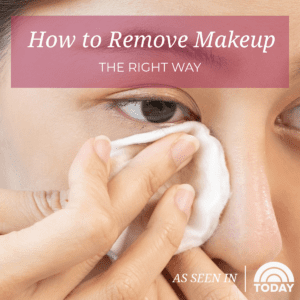
How to Remove Makeup the Right Way | As Seen in Today

Removing your makeup at the end of the day is one of the simplest things you can do for your skin, but most people aren’t doing it quite right. Dr. Mona Foad, featured in Today, shares her top makeup remover picks, the double cleanse method she recommends to patients, and what to look for in a formula that cleans thoroughly without stripping the skin. Whether you wear light everyday makeup or full-coverage long-wear formulas, here’s how to do it properly.

makeup remover

How does makeup remover work?

Makeup removers are designed to dissolve and lift away the ingredients in makeup, which often include oils, pigments, and waxes. Oil-based products are particularly effective because they bind to those components and break them down gently. Micellar waters work a bit differently, using cleansing molecules that attract and lift debris from the skin. When used correctly, these products allow you to remove makeup without disrupting the skin’s natural barrier, which is key for maintaining healthy skin.

What are the main types of makeup remover? 

There are several options, including micellar waters, cleansing oils, balms, and wipes. I tend to favor cleansing oils or balms because they are very effective at removing makeup while still being gentle on the skin. Micellar water can be a great option for lighter makeup or as a first step in a double cleanse. I generally advise against relying too heavily on wipes, as they can be more irritating over time. The best approach is one that removes makeup thoroughly while still supporting the skin’s natural balance.

What steps do you recommend for proper makeup removal?

When it comes to makeup removal, I always encourage a gentle but thorough approach. I like the double cleanse approach which uses to start with a product that breaks down makeup, such as an oil based cleanser, cleansing balm or micellar water, followed with a second water based cleanser to fully remove any residue. This helps ensure the skin is truly clean without needing to scrub or over-exfoliate. I also remind patients to be especially gentle around the eye area, where the skin is more delicate. Taking that extra time in the evening really helps support the skin’s overall health and can make a noticeable difference over time.

What are the best ingredients to look for in a makeup remover?

I like to focus on ingredients that are both effective and supportive of the skin. Hydrating ingredients like glycerin and soothing components like ceramides can help maintain the skin barrier during cleansing. I also recommend looking for fragrance-free formulations, particularly for patients with sensitive skin. In general, makeup removal should feel like a gentle extension of your skincare routine, not something harsh or stripping.

What’s the best type of product to remove waterproof makeup?

For waterproof makeup, I usually recommend a cleansing balm or a bi-phase oil-based remover. These formulas are designed to gently dissolve long-wearing products without requiring excessive rubbing. Around the eyes, I suggest pressing the product onto the area for a few seconds before wiping it away. That small step can help minimize irritation and protect the delicate skin around the eyes.

What are some make-up removers that you recommend? 

I often recommend La Roche-Posay Toleriane Dermo-Cleanser, especially for patients with sensitive or reactive skin. It’s very gentle and does a beautiful job of removing makeup while still supporting the skin barrier, which is something I always prioritize. It’s also a great option for people who want a simple, soothing product that doesn’t overwhelm the skin. For those who wear heavier or long-wear makeup, I also like Clinique Take The Day Off Cleansing Balm. It melts into the skin and breaks down makeup very effectively, even waterproof formulas, without leaving the skin feeling stripped. I find it’s especially helpful for patients who want something that feels both effective and nourishing. In addition, for sensitive skin, For people who like to double cleanse, I like Avene’s Xeracalm Cleansing Oil which is an effective and gentle  oil based cleanser  followed by Cerave Hydrating Cream to Foam cleanser. 

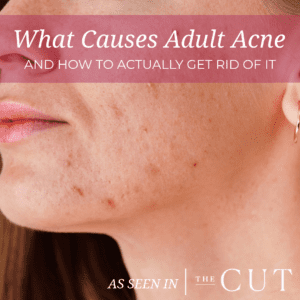
What Causes Adult Acne and How to Actually Get Rid of It | As Seen in The Cut

Adult acne is more common than most people realize. And, it’s often more stubborn and complex than the breakouts you dealt with as a teenager. Dr. Mona Foad, featured in The Cut, breaks down exactly what drives adult acne, from hormonal fluctuations and stress. She shares the most effective treatments, ingredients, and lifestyle changes to clear it for good.

Adult Acne

What causes adult acne?

Various factors can cause adult acne, often different from those that cause acne in teenagers. One factor is hormone fluctuations, which can increase oil production in the skin, leading to clogged pores and acne. Additionally, high stress levels can trigger the production of cortisol, a hormone that can increase oil production and exacerbate acne. Using skin care products that are too heavy, greasy, or unsuitable for your skin type can clog pores and lead to acne. Using certain medications, such as corticosteroids, anabolic steroids, and lithium, can also cause acne as a side effect.

Furthermore, underlying health conditions can cause hormonal imbalances that lead to acne. Environmental factors like pollution and exposure to oily or greasy substances can also contribute to acne development. Genetics is another factor that can increase the likelihood of developing adult acne.

In addition, frequently touching your face or letting hair (especially if oily or with hair products) come into contact with your face can transfer oils and bacteria, causing acne. Poor skincare habits like not cleansing the skin properly, over-exfoliating, or not removing makeup before bed can also lead to clogged pores and acne.

How is it different from other types of acne?

Adult acne differs from other acne in multiple ways, from causes to affected areas and treatment approaches. Teenage acne typically begins during puberty due to hormonal changes that increase oil production. In contrast, adult acne can occur in individuals over 25, often due to hormonal changes, stress, and other factors. Teenage acne is strongly influenced by the surge of androgens (male hormones) during puberty, whereas adult acne is often linked to hormonal fluctuations related to menstrual cycles, pregnancy, menopause, and conditions like polycystic ovary syndrome (PCOS).

Teenage acne frequently appears on the forehead, nose, and chin (the T-zone). Adult acne, on the other hand, more commonly affects the lower half of the face, including the jawline, chin, and neck. When we see this distribution of acne along the jawline, we usually know that there is a hormonal component involved.

The type of lesions also differs between teenage and adult acne. Teenage acne includes a variety of lesions such as blackheads, whiteheads, pimples, cysts, and nodules. Adult acne, in contrast, often presents as inflammatory lesions like papules, pustules, and cysts and is less likely to include non-inflammatory lesions like blackheads and whiteheads. Teenage skin is generally more resilient and recovers faster from acne lesions, though it can still develop scarring depending on severity. Adult skin is typically more sensitive, slower to heal, and more prone to post-inflammatory hyperpigmentation.

Treatment approaches also differ. Teenage acne is often treated with over-the-counter topical treatments. And in severe cases, prescription retinoids, topical and oral antibiotics, or hormonal treatments. Teenagers may be prescribed Accutane more frequently than adults due to the severity of the acne and to reduce long-term scarring.

Adult acne may require a gentler approach due to more sensitive skin. Topical options like benzoyl peroxide and salicylic acid may be used at lower, less irritating percentages. Instead of a prescription retinoid such as tretinoin, an over-the-counter retinol may be a better fit. Hormonal therapies such as oral contraceptives or anti-androgens may also play a bigger role. Although not as common, Accutane may still be used in resistant cases.

What is the best way to get rid of adult acne?

Getting rid of adult acne often requires a comprehensive approach that includes proper skincare, lifestyle adjustments, and sometimes medical treatments.

For skincare, start with a gentle, non-comedogenic cleanser like SkinMedica’s Pore Purifying Gel Cleanser twice daily to remove dirt, oil, and makeup. Chemical exfoliants like SkinMedica’s AHA BHA Exfoliating Cleanser can help unclog pores and promote cell turnover. Depending on your skin type, this can be used once a week or once daily.

Topical treatments also play an important role. Benzoyl peroxide helps reduce bacteria and clear pores. Retinoids encourage cell turnover and prevent clogged pores. Salicylic acid penetrates pores to exfoliate and reduce inflammation. Keep in mind that you may only be able to introduce one exfoliating product at a time to avoid drying out the skin. Niacinamide is a wonderful addition to help reduce inflammation and regulate oil production.

A lightweight, non-comedogenic moisturizer helps hydrate the skin without clogging pores. I recommend CleananceHYDRA Soothing Cream or SkinMedica’s Ultra Sheer Moisturizer. Daily broad-spectrum, non-comedogenic sunscreen is also essential to protect the skin and prevent hyperpigmentation from acne.

Lifestyle adjustments matter too. Incorporate a balanced diet rich in fruits, vegetables, whole grains, and lean proteins, and reduce refined sugars. Drink plenty of water to keep the skin hydrated and support overall health. Practice stress-reducing activities such as yoga, meditation, or regular exercise. Prioritizing sleep and consistent movement can also improve circulation and reduce stress-related breakouts.

For more persistent cases, medical treatments are available. Options include prescription topical retinoids, oral antibiotics, and hormonal therapies. Accutane remains an option for more severe cases. In-office treatments such as chemical peels, facials, laser and light therapy, and corticosteroid injections can also be helpful adjuncts to a at-home routine.

What kinds of ingredients should you look for in products that treat adult acne and why?

When selecting products to treat adult acne, look for ingredients that target different aspects of acne formation. Salicylic acid, or beta hydroxy acid (BHA), can be found in cleansers and wipes. This is a great ingredient to look for because it can penetrate deep into the pores to exfoliate and clear out excess oil and dead skin cells, thereby preventing the formation of new acne lesions and reducing inflammation. Another ingredient is Benzoyl Peroxide, found in cleansers, creams and serums, which helps to kill acne-causing bacteria (Propionibacterium acnes) on the skin’s surface and within the pores. It also helps to reduce excess oil and inflammation.

Retinoids help promote cell turnover, prevent clogged pores, and reduce inflammation. They also help to improve skin texture and tone, which can be beneficial for preventing and  treating  comedones and post-acne hyperpigmentation. Niacinamide is another ingredient that helps to reduce inflammation and redness, regulates oil production, and improves skin barrier function. It also has brightening properties to help with post-inflammatory hyperpigmentation and can be found in moisturizers, serums, and creams. Another ingredient is Alpha Hydroxy Acids (AHAs) like Glycolic Acid and Lactic Acid, which are present in toners and peels that exfoliate the skin’s surface to remove dead skin cells and improve skin texture. AHAs also stimulate collagen production and can help fade acne scars. All exfoliating products, although helpful, should be used with caution so as not to over dry the skin, which can lead to more break outs.

What kinds should you avoid and why?

Avoiding certain ingredients and product types that can exacerbate the condition when treating adult acne is essential. Some key ingredients to avoid include heavy oils and butters, which can clog pores and lead to more breakouts. Avoid alcohol and fragrance-based products because they can strip the skin of natural oils. This can increase oil production and potential irritation and dryness, worsening acne. Avoid harsh physical exfoliants such as apricot kernel scrubs or walnut shell powders as they can cause microtears in the skin, leading to irritation, inflammation, and worsening of acne. Additionally, high-glycemic index (GI) Ingredients can spike insulin levels, which may increase oil production and inflammation, leading to acne. Using excessively rich or heavy creams such as night or anti-aging products can also clog pores and lead to breakouts.

What are some of your favorite products for adult acne?

I recommend La Roche-Posay’s Effaclar Gel Facial Wash as a cleanser because it effectively removes excess oil and helps clear and prevent breakouts without overly drying the skin. It’s gentle enough for daily use and helps to keep pores unclogged. SkinMedica’s AHA BHA Exfoliating Cleanser with alpha hydroxy acids (AHAs) or beta hydroxy acids (BHAs) is an excellent exfoliating cleanser that I like because it gently scrubs away dead skin while improving the appearance of skin tone texture and smoothness. SkinMedica’s Retinol Complex is encapsulated with PhytoShield Complex, an antioxidant complex that helps to enhance the skin texture and minimize irritation.  EltaMD’s Moisture Seal is a lightweight, waterless, preservative-free moisturizer that locks in moisture for 24 hours. It applies easily and gently to avoid disturbing tender, irritated skin. 

SkinMedica’s Acne Clarifying Treatment Serum is a revolutionary product for fighting acne, reducing post-acne marks, and reinforcing the skin barrier for clear, healthy-looking skin. For best results, I usually pair this product with SkinMedica’s Pore Purifying Gel Cleanser, a non-irritating gel cleanser with clinically proven ingredients that gently dissolve makeup, oil, impurities, and dirt to cleanse and purify pores while supporting the skin’s barrier and improving the appearance of skin texture. 

Oil-free UV Clear SPF, 46  from EltaMD, is another product I recommend to my patients with sensitive skin types prone to discoloration and breakouts associated with acne and rosacea to help calm and protect their skin. It contains niacinamide (vitamin B3), hyaluronic acid, and lactic acid, which help promote healthy-looking skin.

 

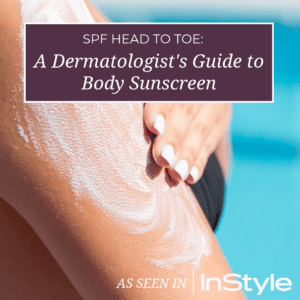
SPF Head to Toe: A Dermatologist’s Guide to Body Sunscreen | As Seen in InStyle

Most of us have mastered the face SPF routine, but the neck, chest, hands, and arms are just as vulnerable to sun damage and skin cancer as the face. Dr. Mona Foad, featured in InStyle, shares her expert guidance on daily body sunscreen, including how much SPF you actually need, the most common application mistakes people make, and which body sunscreens are worth your money. Whether you’re looking for an everyday formula or something built for a full day in the sun, here’s what to know before you buy.

body sunscreens


Should we wear body sunscreen every day? 

Yes, if parts of the body are exposed daily, sunscreen there matters too. People tend to be consistent about applying sunscreen to the face, which is great. But, areas like the neck, chest, ears, hands, and arms are often exposed to UV rays on a regular basis. For the average person, I would say daily body sunscreen is most important on the areas that are routinely uncovered. You don’t need to apply body sunscreen every single day if most of your body is covered by clothing. But, any exposed skin deserves the same attention we give the face. In that sense, it is absolutely an important part of a daily routine, not only for preventing premature aging, but also for helping reduce the risk of skin cancer.

How much SPF and what PA rating would you recommend for daily wear? 

For daily wear, I generally recommend using a broad-spectrum sunscreen with at least SPF 30. That level provides good everyday protection for most people when applied properly. If you are spending extended time outdoors, such as at the beach, a music festival, or any event where you are in direct sunlight for hours, I would suggest SPF 50 or higher, and more importantly, make sure to reapply every 2-3 hours since the protective effect wears off over that time.

When it comes to PA rating, which reflects UVA protection, I recommend choosing PA+++ or higher. Especially for people concerned about hyperpigmentation, melasma, or photoaging. UVA rays contribute significantly to long-term skin damage and can pass through clouds and windows, including your car window. The most important thing is not just the number on the label, but also making sure the sunscreen is broad-spectrum and water-resistant when needed. I always prefer to have a sunscreen with zinc oxide as an ingredient because zinc oxide is the best at covering both UVB and UVA rays. Also, always remember, UVB rays are what we call Burning rays, while UVA are what we call Aging rays because they go deeper in the skin and can cause more long term damage.

Do you have any tips for sunscreen application?

One of the biggest issues I see is that people don’t apply enough sunscreen and don’t re-appply.  For the face alone, a helpful guideline is about two finger lengths of product, and for the body, most adults need about one ounce, roughly a shot-glass amount, to fully cover exposed skin. It is also important to apply sunscreen before sun exposure rather than after you are already outside, and to remember commonly missed areas like the ears, neck, chest, scalp part, tops of the feet, and backs of the hands.

If you are spending time outdoors, sunscreen should be reapplied every two hours, and sooner if you are swimming or sweating. I also remind patients that sunscreen works best as part of a broader sun-protection strategy. Hats, sunglasses, protective clothing, and seeking shade when possible all add meaningful protection. Sunscreen is essential, but it should not be the only measure you rely on.

What are some of your recommendations? 

Supergoop Unseen Sunscreen Body – This stands out for its lightweight, invisible finish, which can make daily body sunscreen feel more wearable, especially for people who dislike heavier or greasy formulas.

La Roche Posay Anthelios Melt-In Milk Sunscreen – This is a sunscreen I generally view very favorably. La Roche-Posay tends to do an excellent job with formulations for sensitive skin. This one offers broad-spectrum protection and has a moisturizing feel. It is a good choice for daily wear, especially for those with drier or more reactive skin.

Elta MD UV Sport Sunscreen Lotion – EltaMD is a brand many dermatologists trust. This is a solid choice for people who are active or outdoors for long periods. It offers higher SPF protection and is designed to hold up well with sweat and activity. It is practical, dependable, and well-suited for sports or long outdoor days.

Cerave Hydrating Mineral Sunscreen SPF 50 – This can be a good choice for someone who prefers a mineral sunscreen, especially if they have sensitive skin. CeraVe products often include ingredients that support the skin barrier. That can be helpful for skin that is easily irritated. The downside is that mineral formulas can sometimes feel heavier and may leave a visible cast, depending on skin tone.

Blue Lizard Sensitive Mineral SPF 50 Sunscreen Lotion – This is a good option for sensitive skin, especially for people who prefer mineral sunscreens. It is straightforward, gentle, and less likely to irritate reactive skin. Like many mineral formulas, though, it can feel thicker and may leave a white cast on some skin tones. It is a strong choice for skin sensitivity, but the finish may not appeal to everyone.