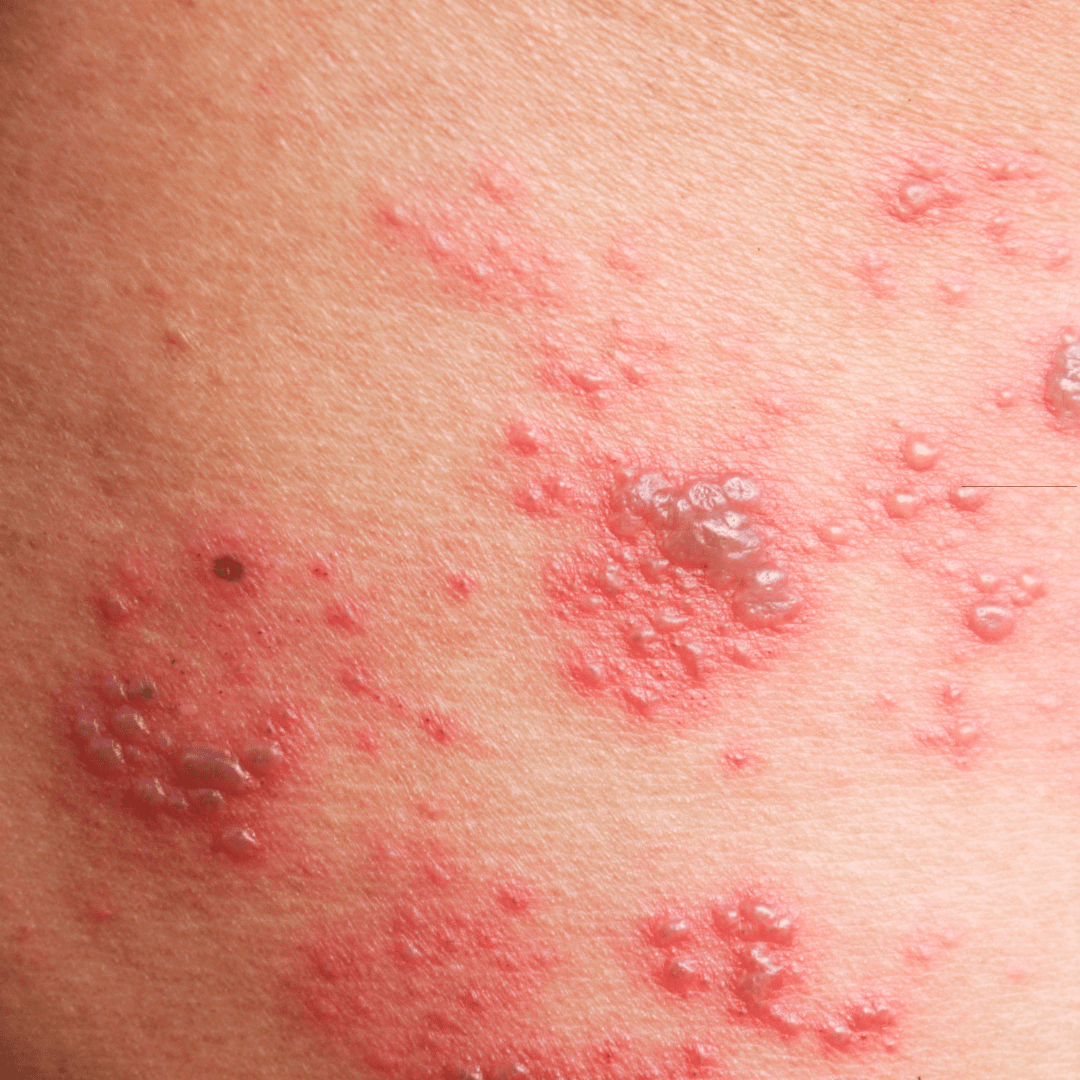
Identifying and Treating Fire Ant Bites | As Seen in USA Today
Fire ant bites can be painful, itchy, and alarming if you’re not sure what to expect. In this USA Today feature, board-certified dermatologist Dr. Alexandra Bowles explains how to recognize, treat, and prevent these pesky bites.
What do fire ant bites look like?
Fire ant bites usually appear as small, red bumps that quickly turn into raised, pus-filled blisters. They often appear in clusters since fire ants bite multiple times in the same area. These blisters can feel very itchy or tender and generally look more inflamed than a typical insect bite.
What are the symptoms or potential issues that could arise with fire ant bites?
Most people experience redness, swelling, and itching for several days. In some cases, allergic reactions can develop, including hives, dizziness, or difficulty breathing, which requires immediate medical attention. Scratching the blisters can also lead to infection, so keeping the area clean is important.
How do you treat fire ant bites, and when should you seek professional help?
Simple at-home care often helps. Wash the area gently with soap and water, apply a cool compress, and use hydrocortisone cream or an oral antihistamine to reduce itching and swelling. Avoid scratching, which can increase the risk of infection. Seek medical attention if redness spreads, purulent drainage develops, or if any systemic symptoms such as swelling of the lips or difficulty breathing occur.
Do you have any other advice for people who may be dealing with or trying to prevent these bites?
Prevention is key to avoiding fire ant bites. Wearing protective clothing, using insect repellent, and checking your skin after spending time outdoors can lower your risk. Most bites are uncomfortable but not dangerous and improve with simple care. If a bite looks unusual, worsens instead of healing, or comes with systemic symptoms, contact a healthcare professional.
If you’re concerned you may be experiencing symptoms of fire ant bites, book an appointment today to receive expert care and relief from our providers!
Microneedling vs Chemical Peels | As Seen in Women’s Health
Microneedling and chemical peels have become go-to treatments for patients seeking healthier, more radiant skin without the downtime of invasive procedures. Board-certified dermatologist Dr. Mona Foad explains that these treatments work by stimulating collagen production and encouraging skin cell renewal, helping improve texture, tone, and overall glow. Be sure to check out the full article in Women’s Health!
Why are treatments like microneedling and chemical peels so popular right now?
These treatments are popular because they deliver visible results with minimal downtime compared to more invasive procedures. Both microneedling and chemical peels improve skin texture, tone, and overall radiance by stimulating cell renewal and collagen production. Patients love that they can target multiple concerns such as fine lines, acne scars, pigmentation, and dullness in a natural way that helps the skin rejuvenate itself. In an age where people want healthy, glowing skin without drastic interventions, these treatments strike the perfect balance between effectiveness and recovery.
What is microneedling and how does it work? What are its main benefits?
Microneedling, also known as collagen induction therapy, uses fine sterile needles to create controlled micro-injuries in the skin. This process triggers the body’s natural healing response, which stimulates new collagen and elastin production. The result is smoother, firmer, and more youthful-looking skin. Microneedling can improve fine lines, acne scars, enlarged pores, and overall texture without significantly disrupting the surface of the skin. It is highly customizable and can be adjusted for different skin types and concerns, making it a versatile and effective treatment.
What is a chemical peel, and how does it work? What are its main benefits?
A chemical peel uses a carefully selected acid solution such as glycolic, lactic, salicylic or trichloroacetic acid to exfoliate the outer layers of the skin. The depth of the peel can vary from light to deep depending on the product used, the concentration and desired result. By removing dull or damaged skin cells, chemical peels reveal smoother, brighter, and more even-toned skin beneath. They can help fade sun damage, help acne and acne scarring, and help with unwanted superficial pigmentation while promoting healthy cell turnover. With consistent use, chemical peels can dramatically improve skin clarity and texture over time.
What are the similarities and differences between microneedling and chemical peels?
Both treatments rejuvenate the skin by encouraging new cell growth and collagen production. They target similar concerns such as fine lines, uneven tone, acne scars, and dullness. The main difference lies in their approach and how they work. Microneedling stimulates the skin from within by triggering a healing response, while chemical peels resurface the skin from the outside by removing the top layer of skin cells. Microneedling is often better for deeper textural issues, while chemical peels are ideal for surface brightness and tone. Chemical peels are better for treating brown spots and can be better at treating acne and superficial acne scarring, whereas microneedling would be better for slightly deeper scars and for overall skin rejuvenation and collagen stimulation.
What add-ons often accompany microneedling, and what benefits do these offer?
Microneedling can be enhanced with add-ons like platelet-rich plasma, exosome therapy, or targeted serums that contain growth factors or peptides. These add-ons take advantage of the microchannels created during treatment, allowing active ingredients to penetrate more deeply. Platelet-rich plasma uses the body’s own growth factors to accelerate healing and boost collagen, while exosomes and peptides can enhance cell repair and radiance. These combinations maximize results and often shorten recovery time, leaving the skin smoother and more luminous. But it is important to only add approved products and not just add anything. Certain products can cause irritation or can cause foreign body reactions under the skin.
What add-ons often accompany a chemical peel, and what benefits do these offer?
Popular add-ons for chemical peels include brightening boosters, hydrating serums, and soothing post-peel recovery masks. Some practitioners also incorporate LED light therapy to calm the skin and speed up healing. These additions help replenish moisture, reduce irritation, and enhance the peel’s brightening effects. They also make the overall experience more comfortable and help patients maintain hydration and glow as the skin renews.
Why does skin type and skin tone matter when deciding between a peel and microneedling?
Skin type and tone are key factors when deciding which treatment is most appropriate. For patients with sensitive or darker skin tones, deeper chemical peels can sometimes cause irritation or post-inflammatory hyperpigmentation.For darker skin types, consider a salicylic acid peel which may be safer than a glycolic or a TCA peels and always let patients know to avoid sun exposure and retinoid use before and right after a peel. In those cases, microneedling is often a safer choice because it does not rely on acids to achieve results. On the other hand, lighter skin types with sun damage or uneven tone may benefit more from a series of light chemical peels. The best treatment depends on the individual’s goals, skin history, and level of sensitivity.
Since both treatments increase collagen, how do they work, and how much growth can patients usually see?
Microneedling increases collagen by triggering the body’s natural wound-healing process. As the skin repairs itself, fibroblast activity increases, which leads to new collagen and elastin production. Chemical peels stimulate collagen by removing damaged surface layers and prompting the skin to regenerate. The amount of collagen production varies for each person, but studies suggest microneedling can increase collagen by up to several hundred percent over a series of treatments. Chemical peels typically provide gradual collagen stimulation that builds with consistent use. Both treatments strengthen and rejuvenate the skin over time, although microneedling will stimulate more collagen growth.
Is microneedling or a chemical peel better for skin cell renewal? Why?
Both treatments encourage cell turnover but in different ways. Chemical peels directly accelerate exfoliation by removing dead surface cells, leading to faster visible renewal. Microneedling works deeper within the skin, stimulating new cell growth over several weeks as collagen remodels. If the goal is instant brightness and smoother texture, a chemical peel provides quicker results. For more structural and long-term renewal, microneedling offers deeper benefits. Many patients use both treatments in rotation for comprehensive rejuvenation.
Is microneedling or a chemical peel better for improved texture and tone? Why?
Microneedling is excellent for improving texture because it remodels the skin from within, helping to smooth scarring, fine lines, and enlarged pores. Chemical peels are ideal for improving tone, texture, pore size, brightness, and pigmentation on the surface. The best treatment depends on whether the main concern is texture or discoloration. Combining both in a customized treatment plan often provides the most balanced results for smoother, more even skin.
How does the pain of a chemical peel compare to microneedling?
Both treatments are well tolerated, though they feel different. Microneedling typically causes a mild prickling or pressure sensation such as a strong cat’s tongue. A numbing cream is applied beforehand to minimize discomfort. Chemical peels may create a temporary tingling or stinging sensation as the acid interacts with the skin, but this usually subsides quickly. Most patients find both treatments comfortable and manageable, and any mild discomfort is short-lived compared to the long-term improvement in skin quality.
What is the downtime and recovery of microneedling vs. a chemical peel?
Recovery time depends on the intensity of the treatment. After microneedling, patients usually experience mild redness and sensitivity for one to two days, similar to a light sunburn, but can have a couple more days of redness if the depth of the microneedles is increased. Makeup can typically be applied after 48 hours. With a chemical peel, downtime varies more widely. A light peel may cause minor flaking for a few days, while a deeper peel can require about a week of recovery with visible peeling. Both treatments benefit from diligent sun protection and gentle skincare afterward to maintain results and support healing.
How are the results of both treatments maintained?
Results from both treatments last longer when paired with a consistent skincare routine and sun protection. Using daily SPF, antioxidants, and gentle exfoliating or collagen-boosting products helps extend results. Most patients start with a series of treatments and then move to maintenance sessions every few months. Hydration, a balanced diet, and regular skincare all play important roles in preserving the glow and firmness that follow either treatment.
How do you help patients decide if a peel or microneedling is right for them?
I start by assessing each patient’s skin type, main concerns, and comfort level with downtime. For patients looking to refine brightness, tone, and superficial pigmentation, a chemical peel is often the best choice. For those focused on texture, acne scars, or fine lines, microneedling tends to deliver better results. Many patients benefit from a combination of both, used at different times for complementary effects. The right choice always depends on the individual’s goals, skin condition, and how their skin responds over time.
Cookie Consent
We use cookies to improve your experience on our site. By using our site, you consent to cookies.
Cookie Preferences
Manage your cookie preferences below:
Essential cookies enable basic functions and are necessary for the proper function of the website.
Name
Description
Duration
Geolocation Config
This cookie is used to store the consent settings based on the visitor's location.
30 days
Cookie Preferences
This cookie is used to store the user's cookie consent preferences.
30 days
CloudFlare provides web performance and security solutions, enhancing site speed and protecting against threats.
These cookies are for internal use which allows Cloudflare to identify production issues on clients.
session
__cfruid
Used by the content network, Cloudflare, to identify trusted web traffic.
session
__cf_bm
Cloudflare's bot products identify and mitigate automated traffic to protect your site from bad bots. Cloudflare places the __cf_bm cookie on End User devices that access Customer sites that are protected by Bot Management or Bot Fight Mode. The __cf_bm cookie is necessary for the proper functioning of these bot solutions.
session
__cflb
When enabling session affinity with Cloudflare Load Balancer, Cloudflare sets a __cflb cookie with a unique value on the first response to the requesting client. Cloudflare routes future requests to the same origin, optimizing network resource usage. In the event of a failover, Cloudflare sets a new __cflb cookie to direct future requests to the failover pool.
session
_cfuvid
The _cfuvid cookie is only set when a site uses this option in a Rate Limiting Rule, and is only used to allow the Cloudflare WAF to distinguish individual users who share the same IP address.
session
cf_clearance
Whether a CAPTCHA or Javascript challenge has been solved.
session
__cfseq
Sequence rules uses cookies to track the order of requests a user has made and the time between requests and makes them available via Cloudflare Rules. This allows you to write rules that match valid or invalid sequences. The specific cookies used to validate sequences are called sequence cookies.
session
cf_ob_info
The cf_ob_info cookie provides information on: The HTTP Status Code returned by the origin web server. The Ray ID of the original failed request. The data center serving the traffic
session
cf_chl_rc_ni
These cookies are for internal use which allows Cloudflare to identify production issues on clients.
session
cf_chl_rc_i
These cookies are for internal use which allows Cloudflare to identify production issues on clients.
session
__cfwaitingroom
The __cfwaitingroom cookie is only used to track visitors that access a waiting room enabled host and path combination for a zone. Visitors using a browser that does not accept cookies cannot visit the host and path combination while the waiting room is active.
session
cf_use_ob
The cf_use_ob cookie informs Cloudflare to fetch the requested resource from the Always Online cache on the designated port. Applicable values are: 0, 80, and 443. The cf_ob_info and cf_use_ob cookies are persistent cookies that expire after 30 seconds.
session
Google Tag Manager simplifies the management of marketing tags on your website without code changes.
Name
Description
Duration
td
Registers statistical data on users' behaviour on the website. Used for internal analytics by the website operator.
session
cookiePreferences
Registers cookie preferences of a user
2 years
WooCommerce is a customizable eCommerce platform for building online stores using WordPress.
Name
Description
Duration
woocommerce_items_in_cart
Helps WooCommerce determine when cart contents/data changes.
session
woocommerce_cart_hash
Helps WooCommerce determine when cart contents/data changes.
session
woocommerce_dismissed_suggestions__
Count of suggestion dismissals, if enabled.
1 month
woocommerce_snooze_suggestions__
Allows dashboard users to dismiss Marketplace suggestions, if enabled.
2 days
store_notice
Allows customers to dismiss the Store Notice.
session
woocommerce_recently_viewed
Powers the Recent Viewed Products widget
session
wp_woocommerce_session_
Contains a unique code for each customer so that it knows where to find the cart data in the database for each customer.
2 days
Statistics cookies collect information anonymously. This information helps us understand how visitors use our website.
Google Analytics is a powerful tool that tracks and analyzes website traffic for informed marketing decisions.
Used to monitor number of Google Analytics server requests when using Google Tag Manager
1 minute
_gid
ID used to identify users for 24 hours after last activity
24 hours
_gac_
Contains information related to marketing campaigns of the user. These are shared with Google AdWords / Google Ads when the Google Ads and Google Analytics accounts are linked together.
90 days
_gali
Used by Google Analytics to determine which links on a page are being clicked
30 seconds
_ga
ID used to identify users
2 years
__utmx
Used to determine whether a user is included in an A / B or Multivariate test.
18 months
__utmv
Contains custom information set by the web developer via the _setCustomVar method in Google Analytics. This cookie is updated every time new data is sent to the Google Analytics server.
2 years after last activity
__utmz
Contains information about the traffic source or campaign that directed user to the website. The cookie is set when the GA.js javascript is loaded and updated when data is sent to the Google Anaytics server
6 months after last activity
__utmc
Used only with old Urchin versions of Google Analytics and not with GA.js. Was used to distinguish between new sessions and visits at the end of a session.
End of session (browser)
__utmb
Used to distinguish new sessions and visits. This cookie is set when the GA.js javascript library is loaded and there is no existing __utmb cookie. The cookie is updated every time data is sent to the Google Analytics server.
30 minutes after last activity
__utmt
Used to monitor number of Google Analytics server requests
10 minutes
__utma
ID used to identify users and sessions
2 years after last activity
SourceBuster is used by WooCommerce for order attribution based on user source.
Name
Description
Duration
sbjs_migrations
Technical data to help with migrations between different versions of the tracking feature
session
sbjs_current_add
Timestamp, referring URL, and entry page for your visitor’s current visit to your store
session
sbjs_first_add
Timestamp, referring URL, and entry page for your visitor’s first visit to your store (only applicable if the visitor returns before the session expires)
session
sbjs_current
Traffic origin information for the visitor’s current visit to your store
session
sbjs_first
Traffic origin information for the visitor’s first visit to your store (only applicable if the visitor returns before the session expires)
session
sbjs_udata
Information about the visitor’s user agent, such as IP, the browser, and the device type
session
sbjs_session
The number of page views in this session and the current page path
30 minutes
Marketing cookies are used to follow visitors to websites. The intention is to show ads that are relevant and engaging to the individual user.
Facebook Pixel is a web analytics service that tracks and reports website traffic.