Dermatologist-Recommended Dandruff Shampoos | As Seen in CNN Underscored

The right shampoo can make a major difference when it comes to controlling dandruff and calming your scalp. From antifungal formulas to gentle exfoliating options, choosing the right dandruff shampoo can help reduce flakes, itch, and irritation at the source. Check out Dr. Mona Foad’s top picks if you’re struggling with dandruff, featured in CNN Underscored’s article.

Dermatologist-Recommended Dandruff Shampoos

What are some typical causes of dandruff? 

Dandruff is very common, and in most cases, it’s related to an overgrowth of a naturally occurring yeast on the scalp called Malassezia. This yeast lives on everyone’s skin, but in some people, it can trigger irritation, leading to flaking and itching. Oil production also plays a role, since a more oily scalp creates an environment where this yeast can thrive. In some cases, conditions like seborrheic dermatitis or psoriasis can look similar and contribute to flaking as well. Dandruff can show up a little differently depending on hair type. With finer hair, flakes are often more visible on the scalp or shoulders. With thicker or more textured hair, patients may notice more buildup, scaling, or itch along the scalp rather than visible shedding. But underneath it all, the cause is usually the same: inflammation from an imbalance in the scalp environment.

What kinds of ingredients can help treat dandruff?

When choosing a dandruff shampoo, I usually recommend looking for ingredients that target both the cause and the symptoms. Ingredients like zinc pyrithione and ketoconazole help reduce the yeast on the scalp, which is often the root of the issue. Selenium sulfide can also be helpful, especially for oilier scalps, because it works on both oil production and yeast activity. If someone is dealing with more buildup or scaling, salicylic acid can be a good option. It helps gently exfoliate the scalp and loosen flakes so they can be washed away more easily. The key is finding something that treats the dandruff effectively but is still gentle enough for your scalp, so you can use it consistently without causing dryness or irritation.

How often should you be washing your hair if you’re trying to treat dandruff? 

When you’re actively treating dandruff, regular washing is important. For most people, that means washing every other day or a few times a week, depending on your hair type and how your scalp responds. I always recommend letting the shampoo sit on the scalp for a few minutes before rinsing, so the active ingredients have time to work. With consistent use, many people start to see improvement within about two to four weeks. If it’s not getting better after that, it may be a sign that you need a different treatment approach or something a bit stronger and you may need to see a dermatologist for a prescription. 

Do you need to use a dandruff shampoo long-term or just until the dandruff subsides?

Dandruff tends to be something that comes and goes rather than something that disappears completely. Once it’s under control, many patients can switch to a maintenance routine, like using a medicated shampoo once a week and a regular gentle shampoo in between. If you stop treatment altogether, it’s very common for dandruff to return, especially if the underlying factors are still present. So the goal is really to find a routine that keeps the scalp balanced over time.

What kinds of things can make dandruff worse? 

There are a few common things that can make dandruff worse. Going too long between washes, product buildup, and excess oil on the scalp can all contribute. Certain products can also be irritating, especially heavily fragranced formulas or very harsh shampoos that strip the scalp. That can sometimes create a cycle where the scalp becomes irritated and produces even more oil. I also advise being cautious with heavy oils or thick styling products directly on the scalp when dandruff is active, since they can contribute to buildup. Environmental factors like colder, drier weather and even stress can also play a role in flare-ups, so it’s often a combination of factors.

What are your recommendations for the best dandruff shampoos?

Nizoral A-D Anti-Dandruff Shampoo (Ketoconazole 1%): This is one of my go-to recommendations for more stubborn dandruff because it directly targets the yeast component. It’s clinically proven and often works well when other over-the-counter options haven’t been enough. There is also a stronger 2% shampoo that  your dermatologist can write a prescription for. 

Head & Shoulders Clinical Strength Dandruff Defense: A very accessible option that works especially well for oilier scalps. It helps reduce flaking and itching while also addressing excess oil.

Dove DermaCare Scalp Anti-Dandruff Shampoo: This is a gentle, hydrating formula that’s great for patients who need dandruff control but are also prone to dryness or sensitivity.

Neutrogena T/Sal Therapeutic Shampoo: I often recommend this for patients with more buildup or scaling. It helps lift flakes effectively, though it’s best paired with a moisturizing conditioner to keep the scalp balanced.


How to Hydrate and Moisturize a Dry Scalp | As Seen in Glamour

A dry scalp is often a sign that your skin barrier needs extra support, but simple changes can make a big difference. From gentle shampoos and scalp treatments to natural oils and proper hydration, Dr. Alexandra Bowles shares some expert tips help restore moisture and comfort for healthier hair and scalp, as seen in Glamour.

hydrate scalp

How can you hydrate your scalp?

A dry scalp is often a sign that your skin barrier needs a little extra support, and there are several simple steps that can make a big difference. I usually recommend starting with a gentle, hydrating shampoo. Look for one with calming ingredients like aloe, glycerin, or oat extract to help soothe irritation while moisturizing the scalp. Avoid washing with hot water, as it can strip your scalp of its natural oils. Instead, opt for lukewarm water to cleanse effectively without over-drying.

Scalp exfoliation is another great step. Massaging with your fingertips or using a soft brush once or twice a week can help remove dead skin so hydrating treatments can absorb more deeply. I also love scalp masks or serums with nourishing oils like jojoba or squalane. They provide targeted moisture right where it’s needed most. And don’t forget internal hydration. Drinking plenty of water and eating water-rich foods like cucumbers and watermelon can also help support scalp health from the inside out.

How do you get rid of dry scalp?

Getting rid of a dry scalp begins with taking a closer look at your hair care routine. I always tell my patients to pay attention to how their scalp feels between washes. If you’re washing too often or not often enough, it can throw off the scalp’s natural balance. Using a hydrating scalp treatment a few times a week can make a big difference. Especially when it includes ingredients like hyaluronic acid for moisture and niacinamide to help restore a healthy skin barrier. Be sure to choose shampoos that are sulfate-free and gentle, so they cleanse without stripping the scalp of its natural oils.

And while hot showers may feel comforting, washing with lukewarm water helps prevent further dryness or irritation. It’s also important to consider your environment and overall wellness. Also, support hydration from within by drinking plenty of water and incorporating omega-3s and vitamins A, B, and C into your diet.

Does conditioner moisturize your scalp?

Conditioner is primarily designed to hydrate and soften the hair shaft, not the scalp itself. That said, some conditioners with nourishing ingredients like glycerin, panthenol, or aloe can provide light moisture to the scalp if gently massaged in. However, it’s important to choose formulas that are non-comedogenic and free of heavy silicones or fragrances. I usually recommend focusing conditioner on the mid-lengths and ends of the hair. But if the scalp is feeling particularly dry, a light, scalp-safe conditioner can offer temporary relief. Just be sure to rinse thoroughly and follow with a targeted scalp treatment if deeper hydration is needed.

How do dermatologists moisturize the scalp?

As dermatologists, we look for evidence-based solutions that address both the cause and the symptoms of dryness. Depending on what’s going on, whether it’s seasonal dryness, eczema, or product-related irritation, we may recommend other treatments. These can include medicated shampoos, topical corticosteroids, or hydrating serums with ingredients like hyaluronic acid or ceramides. For more routine dryness, I often suggest lightweight scalp oils or leave-in treatments that restore moisture without clogging follicles. We also focus on preserving the scalp’s barrier by avoiding harsh products and encouraging regular, gentle exfoliation. Every scalp is different, so our approach is always tailored to the patient’s specific needs and skin types.

How can you moisturize the scalp naturally?

There are several gentle, natural ways to support scalp moisture that I often recommend to patients who prefer a more holistic approach. Natural oils, such as jojoba, coconut, or argan, can be massaged into the scalp to help lock in hydration. Just make sure to patch-test first and wash thoroughly to avoid buildup. Aloe vera is another great option, especially for soothing dry, irritated areas. Staying well-hydrated and eating a diet rich in omega-3 fatty acids can also support scalp health from the inside out. And don’t forget: consistency is key. Natural remedies work best when used regularly and paired with a gentle, non-stripping haircare routine.

What causes a dry or irritated scalp?

A dry or irritated scalp can come from a number of different sources, and often, it’s a mix of factors working together. Things like over-washing, product buildup, or using shampoos that are too harsh can strip away the scalp’s natural oils and throw off its balance. Cold weather, indoor heating, or excessive sun exposure can also cause moisture loss from the scalp, leaving it dry and uncomfortable. I also remind my patients that hydration and nutrition play a role. When your body’s dehydrated or missing key nutrients, your scalp can be one of the first places it shows. Some people are simply more prone to dryness due to genetic factors or underlying conditions such as eczema or psoriasis. If the dryness persists or becomes uncomfortable, it’s a good idea to see a board-certified dermatologist who can help pinpoint the cause and guide you toward the right treatment.

Does hair texture and type impact scalp dryness?

Yes, your hair texture and type can absolutely influence how dry your scalp feels. For example, curly and coily hair types tend to be drier overall because natural oils from the scalp have a harder time traveling down the hair shaft. People with finer or straighter hair may notice dryness more quickly if they’re over-washing or using products that strip the scalp. I always remind patients that their hair and scalp require a routine tailored to their unique biology. There’s no one-size-fits-all approach. Paying attention to how your scalp feels between washes is a helpful first step.

 Do certain products impact scalp dryness?

Yes, and sometimes it’s the products we use every day that quietly contribute to scalp issues. Harsh shampoos with sulfates or alcohol-based styling products can strip the scalp of its natural oils, leading to dryness and irritation. Even using the wrong shampoo for your hair type can throw off your scalp’s balance. I encourage patients to read labels and look for words like “hydrating,” “soothing,” or “moisture-replenishing.” A gentle, balanced product can make a big difference in how your scalp feels.

What are some product recommendations that help to moisturize the scalp?

There are several products I often recommend for hydrating the scalp. Look for serums or treatments that contain ingredients like hyaluronic acid, aloe vera, or niacinamide. These support both moisture and a healthy scalp barrier. Brands like Nécessaire ($45), Philip Kingsley Density Preserving Serum ($67), and Living Proof Dry Scalp Treatment ($38) all offer well-formulated scalp treatments that are gentle yet effective. If you’re experiencing ongoing dryness, a scalp-specific mask like Yobee Restorative Scalp Mask ($42) or SheaMoisture Pre-Wash Masque ($10), used once a week, can also help rebalance things. And as always, choosing a moisturizing shampoo without sulfates is a great foundation for healthy scalp care.


Peel-Off Masks for Sensitive Skin | As Seen in Allure

Peel-off masks are a fun way to refresh your skin, but not all formulas are created equal. From boosting radiance to hydrating dry skin and soothing sensitivity, these masks stand out for their unique benefits and carefully chosen ingredients. Find out Dr. Alexandra Bowles favorites, featured in Allure’s article.

peel off masks

Best Peel-Off Mask Overall: I’m From, Rice Glow Peel Off Beauty Mask

I like this as an overall option because the ingredient profile is more balanced than many traditional peel-offs. It contains Oryza Sativa (Rice) Extract, hydrolyzed rice protein, and rice amino acids, which can help improve the look of dullness and support skin radiance. I also appreciate the inclusion of niacinamide, which helps even tone and reinforce the skin barrier over time, along with glycerin and panthenol to maintain hydration. There’s even ceramide NP in the formula, which is particularly important in a peel-off format, since removal can otherwise feel drying. Overall, it delivers surface smoothing and glow without leaning heavily on harsh exfoliating acids.

Best Peel-Off Mask for Dry Skin: SUN & GLOW Intensive Collagen Peel-Off Mask

For dry or temporarily dehydrated skin, I look for formulas that combine humectants with emollient support. This mask features hydrolyzed collagen and ‘300Da peptides,’ which can enhance the immediate feel of smoothness and surface suppleness. While topical collagen does not rebuild your body’s own collagen stores, it can provide short-term plumping by reinforcing hydration at the surface.

The inclusion of apricot kernel oil, camellia japonica seed oil, and jojoba seed oil adds nourishing fatty acids that help soften the skin and support barrier function. That combination makes it more conditioning than many peel-off masks, which can otherwise feel tight or stripping.

Best Peel-Off Mask for Sensitive Skin: Aqua Kitten Hydrating Hyaluronic Acid Peel-Off Mask

For sensitive skin, ingredient restraint is key. This formula centers around hyaluronic acid, a well-tolerated humectant that draws water into the skin to support hydration. It also includes squalane, which helps reduce moisture loss and reinforce the barrier. Jeju sea water and blue agave leaf extract are included to promote overall skin resilience. Even with hydrating ingredients, peel-off masks should be used cautiously in sensitive skin because the mechanical removal can create friction. I advise limiting use and following immediately with a barrier-supportive moisturizer.


A Guide to Final Touches After Taking a Weight Loss Medication | As Seen in Cincinnati Magazine

There are many people in the United States and overseas who have recently experienced significant weight loss. If you are using one of these medications, you may experience unexpected changes to your face and body as the pounds come off. Board-certified dermatologist and anti-aging expert Dr. Mona S. Foad shares how to address and prevent some of the most common skin and body concerns that people face while on these medications, and how to feel more confident in your new body.

A Guide to Final Touches After Taking a Weight Loss Medication

Restoring Facial Volume

People don’t expect to lose fat in their face when they start losing weight. While seeing that number on the scale go down is exciting, facial volume loss can actually make you look older. Sometimes, up to five years older than you are. When fat or muscle disappears from your face, you might notice new lines and wrinkles, a hollowed-out look around your cheeks or temples. Also, skin can appear looser than before. The good news? There are several ways to restore that youthful fullness.

Dr. Mona’s Recommendations:

  • Hyaluronic acid fillers: Help restore lost volume from fat loss with immediate results that can last up to 12-18 months.
  • Biostimulators: Such as Sculptra, help to build your own collagen within the skin gradually, with best results seen 3-6 months after treatment.
  • Platelet Rich Plasma (PRP): Harness your body’s ability to build collagen using the growth factors in your blood’s platelet-rich plasma.

Building Muscle Strength & Tone

Did you know that up to 40% of the weight you lose might actually come from muscle, not just fat? While many of us focus on the muscle loss that can occur on the body, our face can actually lose that same muscle mass, creating premature signs of aging. Muscle, in addition to fat, is an important support structure for the skin. The first line of defense? Healthy lifestyle changes like eating more lean protein and incorporating strength training into your routine. But if you’re experiencing weakened muscle function or want an extra boost, electromagnetic stimulation treatments can help restore lost muscle on both the face and body.

Dr. Mona’s Recommendations:

  • EmFace: Consider muscle stimulation for the face. EmFace uses HIFES (high-frequency electrical stimulation) technology paired with radiofrequency energy to tighten skin and noninvasively improve muscle tone on the forehead, eyes, cheek, and submentum to build back that lost support with no downtime.
  • EmSculpt Neo: While EmFace focuses on the face, EmSculpt Neo targets muscle on the body to build back lost muscle and burn fat on the abdomen, flanks, buttocks, thighs, biceps, triceps, and calves with no downtime.

Improving Skin Quality

Significant weight loss can change how your skin looks and feels. That’s because losing weight doesn’t just affect fat—it also impacts the essential building blocks that keep skin looking youthful, like elastin, collagen, and other key nutrients. You might notice your skin looking saggy, dull, or less firm than it used to. The good news is that there are plenty of options to visibly tighten, smooth, and enhance your skin’s appearance.

Dr. Mona’s Recommendations:

  • Skincare: Growth Factors and peptides (such as TNS Advanced+ Serum) help the skin “act young” again and slow down aging. Adding a retinoid, such as Retin-A (tretinoin), or a retinol for more sensitive skin, can improve cellular turnover and increase skin radiance. Consider skin care for the neck and body. Our favorites are SkinMedica’s Firm and Tone for the body and Neck Correct for the neck.
  • Tightening: Ultrasound and radiofrequency are great, no-downtime ways to tighten skin on and off the face. We love Sofwave ultrasound tightening, Thermage radiofrequency, and Radiofrequency microneedling.
  • Lasers and Lights: If you have some downtime, a laser can help improve overall skin quality and help address fine lines. We love Fraxel Dual, Halo, Erbium, and CO2 for skin resurfacing.

Tackling Stubborn Fat

You’ve done the hard work and lost the weight—but you might still notice stubborn pockets of fat that won’t budge, no matter what you do. Stubborn fat is that layer beneath your skin that’s resistant to diet and exercise. If you’re at or near your ideal weight but are still bothered by specific areas, noninvasive body contouring treatments could be the final touch you need.

Dr. Mona’s Recommendations:

  • Kybella: Deoxycholic acid, a substance produced by the gallbladder to break down fat, can be injected to target unwanted fullness under the chin or along the jowls. It can also be used in small pockets of stubborn fat on the body, such as bra fat.
  • CoolSculpting Elite: This treatment uses freezing technology, also known as cryolypolisis, to permanently destroy fat cells. CoolSculpting is a great option for targeting a focused area of stubborn fat, such as on the abdomen, thighs, bra fat, or arms.

Not sure what’s right for you? Book online or call 513.984.4800 to schedule a consultation at Mona Dermatology to discuss which products and treatments are right for you


Dermatologist-Recommended Skincare for Crepey Skin | As Seen in Allure

Crepey skin can benefit from targeted care that addresses texture, firmness, hydration, and pigmentation. From retinol treatments to gentle barrier-repair options, discover Dr. Alexandra Bowles’ top picks that help improve skin resilience and appearance across different needs and budgets, featured in Allure’s article.

skincare for crepey skin

Best With Retinol: Murad Retinol Youth Renewal Night Cream 

This is one of my favorite options for patients who want visible improvement in crepey skin texture and firmness. Murad’s retinol is thoughtfully formulated with time-release technology, which helps stimulate collagen and improve skin elasticity while minimizing irritation. When used consistently on areas like the arms, knees, or chest, it can noticeably smooth thin, crinkled skin over time. I also appreciate that it’s paired with hydrating ingredients to support the skin barrier, which is especially important when treating body skin with retinoids.

Best for Sun Spots: SkinCeuticals Discoloration Defense 

Crepey skin often goes hand in hand with sun damage, and addressing pigmentation is key to overall skin quality. This formula combines tranexamic acid, niacinamide, and antioxidants to help fade discoloration while supporting skin tone uniformity. Over time, reducing visible sun spots can make the skin appear thicker, healthier, and more resilient. I like this option because it treats pigmentation without aggressive exfoliation, making it suitable for long-term use on sun-exposed areas like the arms and chest.

Best for Sensitive Skin: Avène XeraCalm A.D Lipid-Replenishing Balm

For patients with crepey skin who also have sensitivity, eczema, or frequent irritation, barrier repair is essential. This balm focuses on restoring lipids and calming inflammation rather than aggressively resurfacing the skin. When the skin barrier is healthy, crepiness often becomes less noticeable because the skin can retain moisture more effectively. This is a great option for anyone who cannot tolerate retinoids or acids but still wants improvement in texture and comfort.

Best for Redness: La Roche-Posay Lipikar AP+M Triple Repair Body Cream

Redness and crepey texture often coexist, especially in mature or reactive skin. This formula helps calm visible redness while deeply hydrating and strengthening the skin barrier. I recommend it because it supports long-term skin health rather than offering a short-term cosmetic fix. With consistent use, skin looks smoother, more supple, and less fragile, all of which help improve the appearance of crepiness.

Best for Dry Skin: Eucerin UreaRepair PLUS 10% Urea Lotion

Severe dryness can exaggerate crepey skin, making lines and thinning more apparent. Urea is an excellent ingredient because it both hydrates and gently softens rough, dehydrated skin. This formula improves moisture retention while subtly improving texture, which can make skin appear smoother and more resilient. I would recommend this for patients who need intensive hydration but want something that still actively improves skin quality.

Best Luxury: SkinMedica Firm & Tone Body Cream

For those looking for a luxury option, this is a beautifully formulated cream that focuses on skin regeneration and barrier support. It uses retinol and caffeine as well as nourishing ingredients to help improve firmness, hydration, and overall skin resilience. While luxury products are not necessary to see results, this one stands out for its elegant texture and ability to make skin feel visibly smoother and more conditioned with consistent use. It’s particularly nice for mature skin that needs both comfort and long-term support.

Best Drugstore: CeraVe Skin Renewing Night Cream 

This is an excellent, accessible option that I would recommend for treating crepey skin on a budget. It contains peptides, ceramides, and niacinamide, all of which support collagen production and barrier repair. When used regularly on areas like the arms or legs, it can help improve skin texture and hydration without irritation. It’s a great example of how effective skincare doesn’t need to be expensive to deliver meaningful results.

The Benefits of Scalp Serums | As Seen in Parade

Dryness, flaking, itchiness, and excess oil are common scalp concerns that can affect both hair health and comfort. Scalp serums work by delivering targeted ingredients directly to the scalp. They can restore balance, soothe irritation, and support healthier hair growth over time. Find out which is best for your scalp with Dr. Alexandra Bowles, featured in Parade.


scalp serums


What are common scalp issues and how can serums help?

Many people deal with dryness, flaking, itchiness, excess oil, and inflammation, and these issues can significantly affect how healthy the hair looks and feels. Scalp serums are helpful because they deliver targeted ingredients directly to the scalp, which is where most problems start. A hydrating serum can restore the skin barrier and calm dryness, while clarifying formulas reduce buildup and excess oil. There are also serums designed to soothe inflammation or support the hair growth cycle. I encourage patients to think of scalp serums the same way they think about skincare for the face. Consistent, targeted care helps create the healthiest foundation for hair to grow.

How do you apply a scalp serum?

When applying, it’s important to place the product directly on the scalp rather than on the hair itself. Most serums come with a dropper that allows you to part the hair in sections and apply the product right at the root. After that, gently massaging with your fingertips for 30 to 60 seconds helps increase absorption and stimulates circulation. Some formulas work best on a damp scalp after washing, while others are designed for use on a dry scalp. As with most treatments, consistency is what delivers the best long-term results.

What are some of the best scalp serums out there? 

There are several effective scalp serums that I often recommend, and the right choice depends on a person’s specific concern. Nutrafol Women’s Hair Serum is a lightweight option that helps support stronger, healthier-looking hair. Divi Scalp Serum is a popular formula that combines amino acids, caffeine, and rosemary oil to nourish the scalp and improve the look of thinning hair. HAIRtamin Scalp Serum is another reliable option for people who want to soothe dryness while supporting thicker hair growth. For those dealing with dryness or flaking, Pacifica Scalp Love Rosemary Mint Serum offers gentle soothing ingredients that calm irritation. Odele Rejuvenating Scalp Serum, made with rosemary and vitamin E, is a simple and fragrance-free option that helps maintain a balanced, healthy scalp environment. Each of these works well when used consistently and chosen based on the individual’s main scalp concern.

What do people need to know about their scalps?

People are often surprised to learn that the scalp is skin and needs consistent care just like the rest of the body. A healthy scalp sets the stage for healthy hair growth, and issues such as flaking, inflammation, or excess oil can interfere with the hair growth cycle over time. The scalp also has its own microbiome, which means that harsh products or over-cleansing can disrupt its natural balance and lead to irritation or discomfort. Paying attention to changes like increased shedding, dryness, or itchiness can offer early clues that the scalp needs a different approach. Treating the scalp thoughtfully can make a noticeable difference in the overall health and appearance of the hair.

What do scalp serums treat?

Scalp serums can help with many different concerns, including dryness, itching, flaking, excess oil, and product buildup. Some formulas focus on hydrating and soothing the scalp, while others gently exfoliate dead skin cells or support a healthier hair growth cycle. There are also serums created specifically to improve the appearance of thinning hair. They nourish the follicles and promote a balanced environment for growth. While no single serum can fix every issue, choosing one that targets your main concern and using it consistently can help. 


Collagen Masks & Their Benefits | As Seen in Parade

Collagen masks are a popular go-to for instantly refreshing tired, dry, or stressed skin. While they don’t replace your skin’s natural collagen, they work by deeply hydrating and temporarily plumping the skin, leaving it smoother, more comfortable, and visibly revitalized. Learn more about how to utilize them best and some of Dr. Alexandra Bowles’ recommendations, featured in Parade.

collagen masks and their benefits

What is the benefit of a collagen mask?

Collagen masks can offer immediate, visible skin benefits, particularly in terms of hydration, plumpness, and overall skin comfort. While topical collagen does not penetrate deeply enough to replace the body’s natural collagen, these masks help improve the appearance of fine lines by drawing moisture into the skin and supporting the skin barrier. Many patients notice their skin looks smoother, more supple, and refreshed after use, especially if their skin is dry or stressed. Collagen masks can also enhance short-term firmness by reducing dehydration-related creasing. They are especially helpful before events or travel, when the skin may be more prone to dryness. 

How does a collagen mask work?

Collagen masks primarily work by acting as a humectant-rich occlusive layer on the skin. The collagen molecules sit on the surface, helping to bind water and prevent moisture loss while the mask is in place. This creates a temporary plumping effect, which can soften the look of fine lines and improve skin texture. Many collagen masks are also formulated with additional hydrating or soothing ingredients, such as hyaluronic acid, glycerin, or peptides, which further support the skin barrier. The mask itself helps drive these ingredients into the skin more effectively by limiting evaporation. The result is skin that appears more hydrated, smoother, and healthier immediately after use.

What is the difference between a collagen mask and other types of masks?

Collagen masks are best thought of as hydration-focused treatments, whereas other masks may target exfoliation, oil control, or acne. Clay or charcoal masks, for example, are designed to absorb excess oil and impurities, which can be helpful for acne-prone skin but drying for others. Exfoliating masks focus on resurfacing the skin, which may improve texture over time but can cause irritation if overused. Collagen masks, on the other hand, are typically gentle and well-tolerated, making them suitable for sensitive or dehydrated skin types. They are ideal when the goal is comfort, plumping, and glow rather than deep treatment. In practice, collagen masks complement other masks rather than replace them.

What are some collagen mask products you recommend?


Red Light Therapy For The Body 101 | As Seen in Harper’s Bazaar

Red light therapy has become a popular, science-backed addition to both skincare and wellness routines. By using low-level wavelengths of light, this gentle treatment helps support healthier skin, reduce inflammation, and promote overall cellular function. Learn about the benefits, how to use it, and whether at-home devices are worth considering with Dr. Alexandra Bowles‘, featured in Harper’s Bazaar.

red light body

What are some of the benefits of red light therapy on the body?

Red light therapy can be a wonderful addition to a skincare or wellness routine because it gently encourages your cells to function at their best. The light works at a low wavelength to help calm inflammation, support collagen production, and improve overall skin radiance. Many patients notice that their skin looks smoother and more even. Some also experience faster healing after irritation or breakouts. Beyond the skin, red light therapy can be soothing for sore muscles and stiff joints because it helps boost circulation in targeted areas. What I love about this treatment is that it’s non-invasive, comfortable, and safe for most people. It’s not meant to replace other treatments, but it can be a great tool for healthier skin and overall wellness.

How should it be used?

Red light therapy works best when it’s done consistently and in short, steady sessions. Most patients do well using their device several times a week, usually between 2 and 5 sessions, depending on the device and their goals. Each treatment typically lasts around 10–20 minutes. At-home devices may take a little longer since they’re gentler than in-office equipment. What’s most important is pacing yourself and allowing the benefits to build gradually over several weeks. You should always follow your device’s instructions closely and make small adjustments based on how your skin feels. If your skin starts to feel warm, irritated, or overly sensitive, it’s a good idea to shorten sessions.

Are there any risks or side effects?

Red light therapy is generally very safe, which is one reason so many patients enjoy using it. Most people don’t experience any side effects at all, and when they do occur, they’re usually mild.   Patients with very sensitive or reactive skin should start slowly, just to make sure their skin tolerates the treatment well. It’s also important to protect your eyes, especially if you’re using a stronger professional device or a mask that sits close to the face. While it’s a low-risk treatment, a quick conversation with a dermatologist can help ensure it fits well within your routine.

Are there any at-home devices you recommend?

There are several at-home red light devices I recommend because they use safe wavelengths and are backed by good technology. Brands such as Omnilux, CurrentBody, and LightStim offer FDA-cleared options that deliver a controlled dose of red light without overheating or irritating the skin. These devices are lightweight and easy to use. They’re designed so that people can incorporate them into their schedules without much effort. The results are more gradual compared to in-office treatments, but with consistent use, many patients notice brighter, calmer, more refreshed-looking skin. I especially appreciate that these devices take a gentle approach while still offering meaningful benefits.


The Best Sulfate-Free Shampoos | As Seen in Glamour

Sulfate-free shampoos are gentle cleansers that protect your hair and scalp while maintaining moisture and balance. From reducing frizz to preserving color, switching to a sulfate-free formula can improve hair health across all textures and types. Find out Dr. Mona Foad’s top picks, featured in Glamour.

sulfate-free shampoos

What are sulfate-free shampoos?

Sulfate-free shampoos are gentle cleansers that omit harsh foaming agents, such as sodium lauryl sulfate (SLS) and sodium laureth sulfate (SLES). These ingredients are commonly used to create lather and remove buildup. Still, they can also strip the scalp and hair of their natural oils, especially in those with dryness, sensitivity, or color-treated hair. Sulfate-free formulas use milder surfactants to cleanse effectively while keeping the scalp barrier balanced and the hair hydrated. Many of my patients notice that their hair feels softer and less frizzy after switching. Plus, their scalp tends to be calmer and less irritated. Because these shampoos don’t foam as much, they may feel different at first, but that’s a sign they’re preserving the scalp’s natural moisture. Overall, they’re an excellent choice for maintaining healthy, resilient hair without over-drying or disrupting the scalp’s balance.

What are the benefits of switching to a sulfate-free shampoo?

Switching to a sulfate-free shampoo can have a meaningful impact on both the health of your scalp and the quality of your hair. Because these formulas don’t use harsh detergents like sodium lauryl or laureth sulfate, they cleanse more gently, helping to preserve the scalp’s natural oils and microbiome. This not only keeps the skin barrier balanced but also leaves hair feeling softer, smoother, and more hydrated over time. Sulfate-free shampoos are especially beneficial for color-treated or chemically processed hair, as they minimize fading and dryness while maintaining shine. They’re also a great option for those with sensitive, dry, or eczema-prone scalps because they reduce irritation and flaking. Many of my patients notice their hair feels healthier and easier to manage within just a few washes, proof that gentler cleansing truly supports stronger, more resilient strands.

Which hair types and textures can benefit from switching to a sulfate-free shampoo?

Nearly every hair type can benefit from using a sulfate-free shampoo, but it’s especially helpful for those with dry, textured, or color-treated hair. Traditional sulfates can strip the scalp’s natural oils, which are essential for keeping curls, coils, and processed hair soft and elastic. By contrast, sulfate-free formulas help maintain that natural moisture, so hair stays smooth, manageable, and vibrant. Patients with sensitive or eczema-prone scalps often notice less irritation and flaking after making the switch to gentler formulas. Even those with fine or oily hair can use sulfate-free shampoos successfully. Choosing a lightweight version ensures an effective cleanse without residue or buildup. Overall, these formulations tend to promote a balanced scalp environment and healthier-looking strands across nearly all hair textures.

Is sulfate-free shampoo good for your hair?

Yes, sulfate-free shampoos can be very beneficial for most people, particularly if you’re aiming to maintain hydration and reduce irritation. Traditional shampoos with sulfates can be overly harsh, stripping away the scalp’s natural oils and leaving hair dry, frizzy, or brittle. Sulfate-free options cleanse more gently, helping preserve both the hair’s protective barrier and its moisture balance. They’re especially effective for color-treated, curly, or chemically processed hair. Patients with sensitive skin or scalp conditions, such as eczema or psoriasis, also tend to tolerate these formulas better because they’re less likely to cause burning or itching. Over time, switching to a sulfate-free shampoo often leads to softer, smoother, and stronger hair, a clear reflection of a healthier scalp and improved overall hair resilience.

What happens when you start using a sulfate-free shampoo?

When you first transition to a sulfate-free shampoo, your scalp and hair might feel a little different, which is completely normal. These formulas don’t produce the same thick lather as traditional shampoos, which can make them seem less effective, but they’re actually doing a gentler, more balanced cleanse. During the first week or two, your scalp may rebalance its natural oil production, so your hair might feel heavier or less “squeaky clean” at first. Once your scalp adjusts, you’ll likely notice that your hair becomes softer, shinier, and easier to manage, as it retains more of its natural oils.

Those with color-treated or textured hair often find that their strands feel more hydrated and less frizzy, while individuals with sensitive scalps appreciate the reduction in dryness and irritation. In the long run, sulfate-free shampoos help support a healthier scalp environment, one that keeps your hair strong, smooth, and more resilient over time.

Is sulfate-free shampoo good for sensitive scalps?

Yes, sulfate-free shampoos are an excellent option for people with sensitive scalps. Traditional sulfates, like sodium lauryl sulfate or sodium laureth sulfate, can sometimes be too harsh, stripping away natural oils and disrupting the scalp’s barrier. This often leads to dryness, tightness, redness, or itching, especially if you’re already prone to conditions like eczema or irritation. Sulfate-free formulas cleanse more gently, allowing the scalp to retain its natural moisture and remain balanced. Many of these shampoos are also enriched with soothing ingredients, such as aloe vera, oat extract, or glycerin, which help calm the skin and add hydration. Over time, most patients notice reduced flaking and sensitivity, along with an overall improvement in scalp comfort. It’s a simple switch, but one that can make a meaningful difference for scalp health and hair resilience.

Do dermatologists recommend sulfate-free shampoos?

Many dermatologists recommend sulfate-free shampoos, particularly for patients experiencing scalp sensitivity, dryness, or color-treated hair. Traditional sulfates can be very effective cleansers, but they can also strip the scalp of its natural oil, which may lead to irritation, flaking, or a feeling of tightness over time. Sulfate-free formulas are much gentler. They clean effectively while maintaining the scalp’s moisture balance and supporting a healthy skin barrier. For patients with eczema, psoriasis, or seborrheic dermatitis, sulfate-free options are often better tolerated and less likely to trigger inflammation. These formulas also tend to preserve color and hydration in processed or curly hair. While not everyone needs to avoid sulfates entirely, most people find that switching to a sulfate-free shampoo leaves their scalp calmer and their hair softer and stronger. It’s a simple adjustment that often leads to healthier and more comfortable results in the long term.

What are the signs of sulfate damage in hair?

When your hair has been exposed to harsh sulfates for a long time, there are a few clear signs that your shampoo may be too stripping. The first is dryness. Your hair may feel rough, brittle, or “squeaky” after washing, rather than smooth and hydrated. You may also notice more frizz, tangles, or split ends because sulfates can weaken the cuticle. For those with color-treated hair, you may notice your color fading or looking dull more quickly, as sulfates can wash away pigment molecules.

Scalp irritation is another red flag. If your scalp feels tight, itchy, or flaky after shampooing, your cleanser could be too harsh for your skin barrier. Over time, that combination of dryness and irritation can make hair more prone to breakage or even increased shedding. If you’re seeing any of these changes, switching to a sulfate-free shampoo can help restore moisture, calm the scalp, and bring your hair back to a healthier balance.

Here are Dr. Mona’s top picks:

Best Overall:

Olaplax No. 4 Bond Maintenance Shampoo

The richly lathering formula gently yet thoroughly cleanses every hair type without stripping or drying  to maintain hydrated hair and scalp, and has been shown to have better than 90% detangling and conditioning as well as  49% reduction in breakage. 

Redken All: Soft Shampoo

This is one of my go-to, all-around recommendations because it provides rich conditioning while keeping the scalp balanced. It softens, smooths, and restores manageability without weighing hair down, making it a great everyday choice for most hair types.

Best for Dry Hair:

Pureology Hydrate Shampoo

If your hair feels brittle, dehydrated, or over-processed, this formula is a standout choice. It deeply replenishes moisture while remaining color-safe, so you’re nourishing your hair without dulling your color. The result is soft, hydrated hair that looks and feels healthier.

Best for Oily Hair:

L’Oréal Paris Elvive Hyaluron Pure Shampoo

For oily scalps, this shampoo strikes the perfect balance. It uses salicylic and hyaluronic acid to cleanse away excess oil while keeping the lengths hydrated. It’s ideal if your roots get greasy but your ends still need moisture.

Best for Fine Hair:

OUAI Fine Hair Shampoo 

Fine hair benefits from volume and strength without heaviness, and this shampoo delivers both. With biotin and keratin, it helps strengthen strands and build body, leaving hair feeling fuller and more resilient without buildup.

Best for Curly Hair:

Curlsmith Curl Reset Detox Shampoo – Curly textures can accumulate buildup from styling products and oils, which dulls curl definition. This detox shampoo gently clarifies without stripping moisture, helping curls stay soft, defined, and healthy.

Best for Damaged Hair:

Sulfate Free Shampoo for Hair I Aveda 

Restore hair and fight back against damage. This gentle shampoo is the first step for stronger, healthier looking hair. With a powerful blend of ingredients, including quinoa protein, helps repair and strengthen damaged hair. Gently wash away pollutants thanks to a babassu oil-derived surfactant blend, improving both texture and shine.

Best for Keratin-Treated Hair:

Ion Keratin Smoothing Shampoo 

After a keratin treatment, your hair needs a sulfate-free formula that maintains smoothness while replenishing protein. This shampoo helps extend the life of your treatment, keeping your hair sleek, soft, and frizz-free.

Best for Color-Treated Hair:

Redken Color Extend Magnetics Shampoo 

Color-treated hair benefits from gentle, protective cleansing, and this formula does exactly that. It fortifies the hair fiber, helps maintain vibrancy, and reduces color fade, which is ideal for anyone who wants to keep their tone looking fresh and glossy.

 

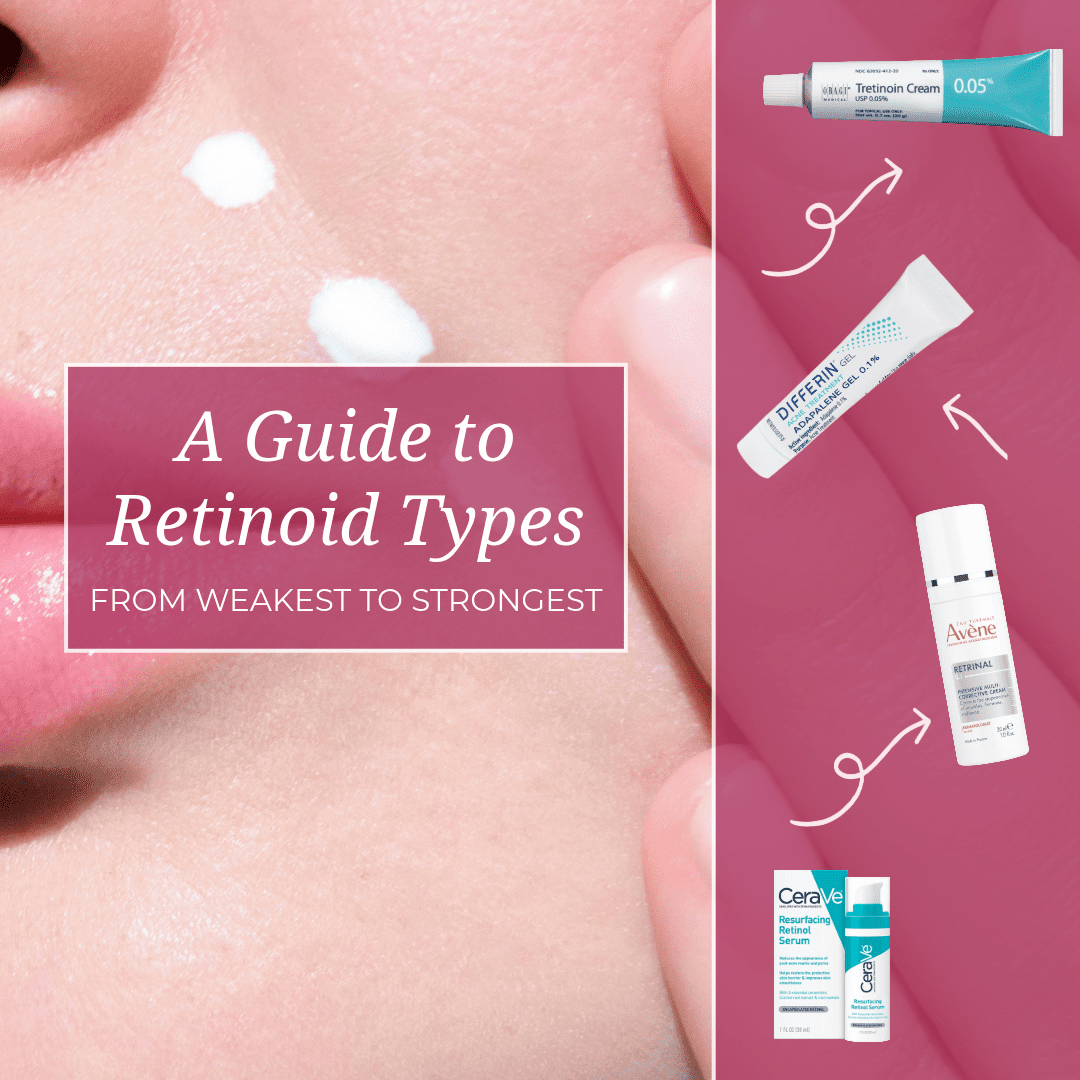
A Guide to Retinoid Types | From Weakest to Strongest

Between “retinol,” “retinal,” and “retinoid”, it’s easy to get confused. Let’s break down the four main categories of retinoids so you can finally understand which one is right for your skin.

There are four main types of retinoids available:

  1. Retinol: Over-the-counter, needs to convert twice in your skin
  2. Retinal: Over-the-counter, needs to convert once in your skin
  3. Over-The-Counter Prescription Strength: Like Differin, no conversion needed
  4. Prescription Only: Like Tretinoin, the strongest option

The key difference between these four categories is how many steps it takes for them to become active in your skin. Fewer conversion steps means faster and stronger results, but also more potential for irritation.

retinoids

Category 1: Retinol 

Retinol,  spelled with an “o”, is what you’ll find at drugstores, Sephora, and most skincare counters. It’s the most common and beginner-friendly option for good reason.

How Retinol Works: Your skin has to convert retinol twice before it becomes retinoic acid, the active form that actually improves your skin. This double conversion makes it slower-acting but also much gentler on your skin.

Available Strengths:

  • 0.1% to 0.3% – Beginner strength
  • 0.5% – Intermediate strength
  • 1% – Maximum over-the-counter strength

Best For:

  • Complete beginners to retinoids
  • Sensitive or dry skin types
  • Anti-aging prevention
  • Anyone wanting a gentle introduction

Results Timeline: Expect to wait 12-16 weeks before seeing noticeable results.

Example Products: SkinMedica’s Retinol Complex, La Roche-Posay Retinol B3, The Ordinary Retinol, CeraVe Resurfacing Retinol Serum, RoC Retinol Correxion

Category 2: Retinal/Retinaldehyde 

Retinal, spelled with an “a” and also called retinaldehyde, is newer but quickly becoming a favorite among skincare enthusiasts.

How RetinAL Works: Retinal only needs to convert once in your skin before becoming active retinoic acid. This single conversion means it works much faster than retinol. Studies suggest it can be up to 11 times more effective than retinol at the same concentration.

Available Strengths: 0.05% to 0.1%

Best For:

  • People who’ve already used retinol successfully
  • Anyone wanting faster results without a prescription
  • The middle ground between over-the-counter retinol and prescription strength

Results Timeline: You might see improvements in 6-8 weeks instead of 12-16.

Example Products: Avène Retrinal Intensive Multi-Corrective Cream, Avène Retrinal Advanced Correcting Serum, Geek & Gorgeous A-Game, Medik8 Crystal Retinal,

Category 3: Over-The-Counter Prescription Strength 

These retinoids used to require a prescription but are now available over-the-counter. The most common is Adapalene, sold under the brand name Differin.

How OTC Retinoids Work: Adapalene is already in its active form, no conversion needed. Your skin can use it immediately, which is why it works faster than retinol.

Available Strength: 0.1% over-the-counter (0.3% requires prescription)

Best For:

  • Acne and clogged pores specifically
  • People who want retinoid strength without seeing a doctor
  • Anyone who wants to level-up the results they’re seeing from their current retinol or retrinal

Results Timeline: Expect to see improvements in 8-12 weeks, particularly for acne.

Key Difference: This is technically a retinoid, not a retinol. It’s chemically different and works differently in your skin. Adapalene is particularly effective at unclogging pores and reducing inflammation, making it especially popular for acne treatment.

Example Products: Differin Gel, La Roche-Posay Effaclar Adapalene Gel

Category 4: Prescription Only Retinoids 

Prescription retinoids are the strongest options available and require a doctor’s prescription for good reason.

Main Types

Tretinoin (Retin-A):

  • Available in 0.025%, 0.05%, 0.1%
  • Pure retinoic acid that works immediately
  • Most studied and proven effective

Adapalene 0.3% (Prescription-strength Differin):

  • Three times stronger than OTC version
  • Used for moderate to severe acne

Tazarotene

  • Available in 0.05% and 0.1%
  • Incredibly effective but can cause the most irritation

How Prescription Retinoids Work: These are pure retinoic acid or active retinoids. No conversion needed, they get to work immediately in your skin.

Best For:

  • Stubborn acne that hasn’t responded to OTC treatments
  • Significant sun damage or deep wrinkles
  • When over-the-counter options haven’t worked after 3-4 months
  • Anyone wanting the fastest, most dramatic results

Results Timeline: You may see improvements in as little as 4-8 weeks.

Key Differences:

  • Much more potent than anything over-the-counter
  • Can cause more irritation initially (dryness, redness, peeling)
  • Shows results faster
  • Requires monitoring by a dermatologist
  • Often more affordable with insurance


The Key Differences at a Glance

Type Conversions Needed Speed Strength Availability
Retinol 2 conversions Slowest Gentlest Drugstore/Online
Retinal 1 conversion Faster Moderate Drugstore/Online
OTC Retinoids 0 conversions Fast Strong Drugstore/Online
Prescription 0 conversions Fastest Strongest Doctor required

The fewer conversion steps required, the faster and stronger the results, but also the higher the potential for irritation.

Which One is Right for You?

Try Retinol if:

  • You’re brand new to retinoids
  • You have sensitive, dry, or reactive skin
  • You want gentle anti-aging prevention
  • You’re nervous about irritation
  • You prefer starting slow and building up

Choose Retinal if:

  • You’ve successfully used retinol before
  • You want faster results without seeing a doctor
  • You’re looking for a middle-ground option
  • You’re impatient with retinol’s slow timeline
  • You want to try something newer and more advanced

Try Over-the-Counter Retinoids if:

  • You’re primarily dealing with acne
  • You want stronger results without a prescription
  • Retinol hasn’t worked well for you after several months
  • You need something that targets clogged pores
  • You want proven acne treatment without the doctor visit

Choose Prescription Retinoids if:

  • You have severe acne or significant sun damage
  • OTC options haven’t worked after 3-4 months of consistent use
  • You want the fastest, most dramatic results
  • You’re willing to deal with more initial irritation
  • You have access to a dermatologist
  • You want the most researched and proven option

Important Tips for All Retinoid Users

Regardless of which category you choose, follow these essential guidelines:

  • Start Low and Slow: Begin with the lowest strength available in your chosen category. Use it 2-3 times per week initially, then gradually increase frequency as your skin adjusts.
  • Be Patient: Don’t expect overnight results. Even prescription retinoids take several weeks to show improvements. OTC retinol can take 12-16 weeks. Stick with it.
  • Always Wear Sunscreen: All retinoids increase sun sensitivity. Daily SPF 30 or higher is non-negotiable.
  • Expect Some Adjustment: Mild dryness, flaking, or redness in the first few weeks is normal with any retinoid. This is often called the “retinization” period. It usually improves after 2-4 weeks.
  • Don’t Use If Pregnant: Retinoids are not safe during pregnancy or breastfeeding. Talk to your doctor about safe alternatives.
  • Apply to Dry Skin: Wait a few minutes after cleansing before applying your retinoid. This minimizes irritation.
  • Less Is More: A pea-sized amount is enough for your entire face. More product doesn’t mean better results.

The “best” retinoid isn’t necessarily the strongest one – it’s the one you’ll actually use consistently without excessive irritation. A gentler retinoid you use every night is infinitely better than a strong prescription retinoid that sits unused in your cabinet because it irritates your skin too much. Don’t obsess over finding the “perfect” retinoid. Just start somewhere appropriate for your experience level and stick with it. Consistency beats strength every single time. Your skin will thank you for taking the gentle, patient approach, even if it takes a little longer to see results.