Latest and Greatest Cosmetic Technologies | As Seen on Dermasphere Podcast
Are you curious about the latest and greatest cosmetic technologies? Dr. Alexandra Bowles shares her picks for the best new technologies, how they work, and the amazing results they provide! For more information, listen to the full Dermasphere podcast interview.
What is your new favorite cosmetic technology that you think more people should know about?
Ellacor. Ellacor is a minimally invasive technique to improve fine lines and wrinkles, approved for around the mouth. The way it works is by micro coring. Think of it as tiny little punch biopsies that core out columns of skin. This stimulates the body’s natural response to injury, which builds collagen and improves fine lines and wrinkles and gives a lifted appearance. There is minimal downtime and most people are back to normal in around 2 weeks. But not everyone heals the same way, especially depending on your skin type.
It’s been a very popular procedure because we’re one of the only offices in the state offer it and have people coming from all over the country to try it. Recently, we’ve noticed it helps in other parts of medicine like foreign body granulomas from things like Sculptra or acne scarring. It can even help crepey skin on the neck, arms, tops of legs and knees.
What have your patients’ results been like after the procedure?
We have had great results when it comes to both scarring and tissue laxity. I haven’t had any patients with long term issues with scarring or anything else from the procedure. One of my first patients of this treatments says it’s been one of the most efficacious treatments she’s done, and she’s done every laser under the sun. Because it’s not heat based, it doesn’t cause discomfort later on that people tend to complain about. She said she felt totally comfortable after the treatment, versus other treatments which have made her very swollen and uncomfortable. People are loving to so much they’re coming back for 2nd and 3rd treatments.
Could this be used to help scarred areas from other skin issues?
I think this would be amazing to look further into and definitely could be possible. I think there is so much potential for how Ellacor can help, we just haven’t figured out all the ways yet.
Is there a variety of treatment styles for Ellacor?
You can do the treatment on the skin in any order you’d like. I’ve been testing different methods for what works best. Using it for stretch marks is a great example of different treatment styles because the movement pattern is different than on the face. We’ve done this on the the back of the arms and legs and have seen great improvements. One of the only issues patients have encountered is that if you are prone to hyperpigmentation, your skin may take 4-6 weeks to look completely healed instead of the standard two weeks. This can also depend on the intensity of the treatment. But good news is that studies are showing the increased intensity of the treatment doesn’t necessarily equate to a better result.
What is the device you use most in your practice?
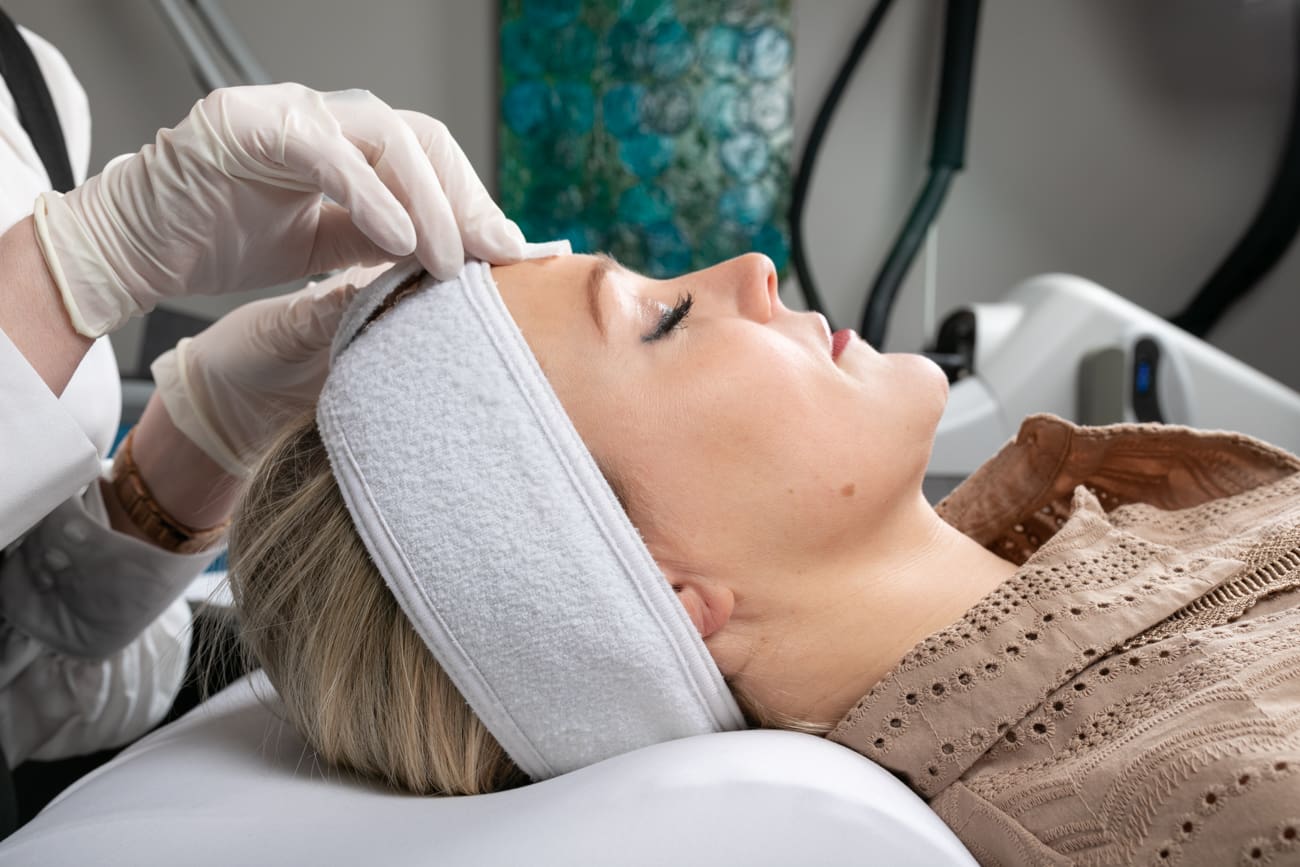
What I use all day, everyday is the BroadBand Light, also known as a BBL Hero. We use this for acne and have had fantastic results. The patients love to low to no downtime and how they come home with their skin glowing. Their pores are decreased without having to do a full resurfacing or fractionally ablative device.
How does the BroadBand Light technology work?
It uses Hero passes, which stands for high energy rapid output. With the first pass, you’re laying down a lot of heat and energy. Depending on the patient, you choose various wave lengths. For example, for somebody with a of redness, I’ll chose the 560 wave length because we know this absorbs hemoglobin, so it targets redness. Then I’ll lay down a base pass of a 560 heat, basically prepping the skin for corrective passes. This is where I increase the energy and decrease the pulse width. I stamp higher energy to try to target things like vessels and angiomas, diffuse rosacea or even bruises.
After, I usually follow up with a pigment setting, which is a different wavelength. I use the 515 wavelength which absorbs melanin, so is good for targeting pigment, freckles, and antigenes. The last we pass we do what we call a photo finish. That’s with a 640 wavelength and is a little deeper, so you get a little bit more collagen production. With this whole treatment, you get improvement in redness, pigment, and fine lines.
With the acne protocol treatment, that is a different wavelength. It’s a 420 wavelength and is known to help kill the bacteria that causes acnes. It’s a great option for those who don’t want to go on Accutane® or have lots of inflammatory redness from acne.
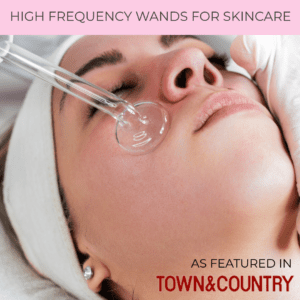
High Frequency Wands in Skincare | As Featured in Town & Country
Recently, high frequency wands have gained popularity and Dr. Alexandra Bowles shares her opinion on the effectiveness of them and best practices when using. Read Town & Country’s article for more recommendations.
The theory of using electrical currents to help treat acne, tighten skin and build collagen has been around for years. When using these devices, a low electrical current is applied to the skin via a glass electrode. It’s filled with either argon gas, which targets acne and oil production, or neon gas which helps to improve blood flow and build collagen.
What should I consider when choosing a high frequency wand?
When deciding on a device, I would first decide what you are trying to address. Is it acne, skin tone, or just overall skin rejuvenation? Devices also can come with a myriad of attachments so look to see what attachments different brands have. A mushroom wand is good for treating broader areas such as cheeks, forehead and jawline. A tongue wand serves sensitive areas such as under eyes. For zapping individual break outs, a spot wand is great. The Y shape wand is for the curved contours of the neck and the rod wand is good for larger body areas such as legs. The comb wand stimulates hair and helps address scalp conditions like seborrheic dermatitis or dandruff
Can you share some recommendations? What differs between wands?
Stacked Skincare High Frequency Acne Device:
This device can treat acne because it uses Argon gas, but can also help with dandruff. Because it lacks anti-aging benefits, the device comes with limited attachments.
Pure Daily Care NuDerma Professional Skin Therapy Wand:
Unlike the StackedSkincare High Frequency Acne Device, this device has both Argon and neon gas so can have a broader range of benefits, but has limited attachments so may be more limiting in use.
Skin Gym Skin Gym High Frequency Wand:
This has both argon and neon gases so has a broad range of benefits, including multiple attachments so you can treat both on and off face. You have to switch between the neon and argon wands to customize your treatments.
Pure Daily Care NuDerma Clinical Skin Therapy Wand:
This has all the advantages of the Pure Daily Care NuDerma Professional Skin Therapy Wand but because the wands have neon and argon gases combined, you do not need to switch out between wands.
Top Skincare Trends to Watch For in 2025
As the beauty industry continues to evolve, staying ahead of emerging trends is key to understanding what treatments and techniques will shape the year ahead. Dr. Mona Foad and Dr. Alexandra Bowles share valuable insights and their predictions for what skincare trends may gain or maintain traction in 2025.
What procedures do you think will be most popular?
Laser resurfacing as an anti-aging procedure is going to become big. “I educate that laser resurfacing and light procedures are just as helpful for anti-aging as they are for reversing signs of sun damage. I see younger patients coming in for these procedures more and more and I love it! It’s easier to prevent aging than to try to reverse damage,” Dr. Alexandra shares.
Laser tightening procedures will also be popular. No downtime and natural collagen stimulation. Sofwave and thermage are both incredible procedures and options for all skin types. “Tightening procedures and lasers are a great way to stimulate muscle, and collagen production, both of which diminish with age,” Dr. Mona adds.
What ingredient in skincare is gaining popularity?
“I think exosomes are going to become even bigger than they currently are, whether they are used in topical skin care or as an adjunct to treatments in the office. We are just scratching the surface,” says Dr. Mona. Companies are putting more resources behind looking into these powerhouse extracellular growth factors. Exosomes are extracellular microvesicles packed full of nucleic acids, proteins, lipids and other metabolites that can help with cellular communication, and regeneration.
How will skincare routines shift?
Historically, multi-step skin care routines have been a mainstay of “good skin care”. In recent years, we’ve seen on social media the idea of extensive routines with 10+ steps. As a result, we may see a trend towards some simplification of a routine and going back to basics. “I am not saying get rid of your skin fridge, but maybe have less items in it. Too many active ingredients can create irritation and sensitivity in some people,” warns Dr. Mona. Combination products may also gain popularity and be helpful, such as a hyaluronic acid with sunscreen.
Finally, “you are what you eat” is another area people are going to be looking more into. Supplements, food, and drinks are going to be popular since what we put in our bodies affect how we age.
What trends are emerging the younger generation?
We are continuing to see younger and younger people more aware of their options regarding skin care and treatments. Lip filler among college aged students is on the rise. Dr. Mona emphasizes that this treatment must be done by a trained professional to avoid complications.
Do you notice people taking sun protection more seriously?
Young teens taking control of their skin and actively preventing sun damage is gaining popularity fast. “Sunscreen as makeup is also something I can see becoming a huge trend,” predicts Dr. Alexandra.
Dr. Mona agrees that “we’ll start seeing more sunscreens that block not only UV rays but also infrared and blue light. These ‘everscreens’ are good ways to further protect our skin from not only the suns damaging effect but other light sources that can cause damage.”
MD Codes™: Revolutionizing Aesthetic Medicine | As Seen in Cincinnati Magazine
Congratulations to Dr. Mona S. Foad, MD Codes Injector Mentee! Mona S. Foad, M.D., MHS FAAD is among one of 15 cosmetic providers chosen to be in the US MD Codes™ Mentorship program.
What is MD Codes™?
MD Codes™ is an injection technique developed by world renowned plastic surgeon, Dr. Mauricio de Maio. Dr. de Maio has a private practice in São Paulo, Brazil. He has extensive clinical expertise which has earned him recognition worldwide for his contributions to the field of aesthetic medicine. The MD Codes injector technique is used internationally for Botox and filler treatments to create both safe and consistent results. For the first time ever, Dr. de Maio is bringing his transformative technique to the United States. He has selected 15 providers to have a one-of-a-kind chance to receive personalized coaching and training with him. This exclusive mentorship is a two-year program, designed to elevate the providers’ skills as an injector. After the mentorship, selected providers may also become MD Codes™ Trainers in the future. This will allow them to support both local and national MD Codes™ training initiatives.
“We are excited to announce the launch of our inaugural US MD Codes™ Mentorship Program. This prestigious two-year initiative, in collaboration with Dr. Mauricio de Maio, is designed to advance expertise in injectable techniques and train future MD Codes™ Trainers,” shares Brittney Morris, Lead for US MD Codes™ program.
Dr. Mona S. Foad and other MD Codes mentees at their kick-off training event in Long Beach, CA.
Dr. Mona S. Foad has been chosen as one of 15 cosmetic providers within the United States to be a part of this highly sought-after and exclusive mentorship program. She is the only provider in our area to receive this honor. This is a testament to her skill and experience in the field of medical aesthetics. Dr. Mona is the owner and founder of Mona Dermatology, located in Kenwood. Additionally, she has been in private practice in the Cincinnati area as a board-certified dermatologist (FAAD) since 2002 and has been a Cincinnati Magazine Top Doctor since 2008.
Some of us are born with sunken cheeks, while others notice facial drooping during the aging process. No matter your reasoning for seeking out a cheek filler treatment, it can lift and rejuvenate your profile to make you look and feel your best. However, every person is different. Our providers at Mona Dermatology are extensively trained in the latest filler injection techniques, allowing them to customize treatments to each patient’s unique facial structure. They are experts at facial analysis and proper placement to give you a great outcome.
Here are a few of their favorite places to use filler:
Cheekbone Filler: Rejuvenating
The cheekbones, or zygomatic bones, are one of the most well-known structures when it comes to defining the contours of your face. With age, this area suffers fat pad loss, which leads to a flat, hollow appearance. Placing fillers in the soft tissue around your cheekbones can replace lost volume and produce a rounder and more youthful appearance. For patients who have not experienced volume loss yet, cheek filler treatment can also be a great way to enhance existing facial features. By defining the profile of your cheeks, younger patients can reveal a more contoured and slender facial shape.
Before | After
Temple Filler: Lifting
Drooping cheeks create deep frown lines and the appearance of loose skin around the mouth, making your face appear more square-shaped than it is. Injecting fillers above the cheekbone can lift that drooping skin upwards to restore facial balance. Additionally, our providers may recommend pairing this lifting treatment with filler around the actual nasolabial folds, or tired lines around the nose and mouth, depending on your unique facial anatomy.
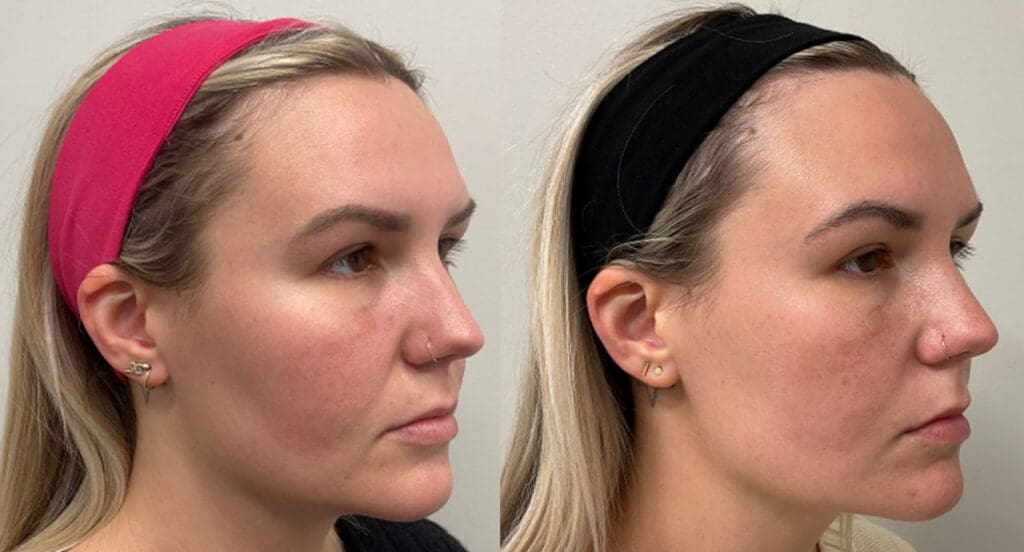
1 syringe of Juvederm Voluma XC to temples & piriform (2 additional syringes were used elsewhere on her face): Before | After
Midcheek Filler: Rounding
The midcheek area is the place to target if you’re hoping for apple cheeks, since filler in this area has a rounding and plumping effect and helps restore your face to a youthful triangle shape. Your provider may choose a filler with a higher G prime that allows your provider to achieve maximum lifting results. Alongside increasing facial volume, midcheek filler can help reduce the appearance of eye bags and dark circles, making it perfect for adult patients of all ages.
1 Syringe of Juvederm Vollure: Before | After
Lateral Cheek Filler: Defining
Who doesn’t love the appearance of a sharp and well-defined bone structure? Filler around the jawline — one of the most popular locations — can dramatically improve your profile, sharpening flat features for a more sculpted look. By combining Juvederm Volux XC, the only FDA-approved filler for the jawline, under the chin with sturdy Voluma XC to build structure in the lateral face, our expert providers pronounce your natural jawline and create an elegant facial structure.
4 Syringes of Juvederm Volux Treatment: Before | After
Not sure what filler treatment is best for you? Schedule a consultation with one of our providers to learn more!
What are the benefits, if any, of using CBD skin care?
CBD (cannabidiol) has gained popularity in the beauty industry for its potential benefits. It is known for its anti-inflammatory effects, which can help reduce redness and irritation. CBD is rich in antioxidants, which can help combat free radicals and reduce the signs of aging, such as wrinkles and fine lines. Additionally, CBD-infused beauty products often contain hemp seed oil, which is known for its moisturizing properties that can help hydrate the skin without clogging pores, making it suitable for both dry and oily skin types. There are multiple clinical studies showing that CBD oil has the potential to improve various skin conditions. The soothing properties of CBD can potentially help calm the skin and reduce stress-related skin issues, especially for people with sensitive skin.
CBD can also help regulate sebum production, which benefits those with oily or acne-prone skin. By balancing oil levels, it can prevent clogged pores and breakouts. It helps strengthen the skin barrier, protecting it from environmental stressors like pollution and UV radiation and enhancing overall skin health. CBD’s analgesic properties can also relieve pain and discomfort, making it useful in products aimed at reducing muscle soreness and inflammation.
Will CBD skin care get you high? Make you feel relaxed?
CBD products, including those used in beauty and skincare, do not get you high for several reasons. Firstly, CBD is non-psychoactive, meaning it does not produce the “high” associated with THC (tetrahydrocannabinol), the psychoactive compound found in cannabis. Therefore, using CBD beauty products will not result in any mind-altering effects. Most CBD beauty products are applied topically to the skin and are designed to act on the skin’s surface and surrounding layers. The CBD in these products does not enter the bloodstream in significant amounts, so it does not affect the brain or nervous system in a way that would cause a high.
While topical CBD products do not produce systemic relaxation (affecting the whole body), they can offer localized relief. For instance, CBD creams and balms might reduce inflammation and muscle tension in the area they are applied, leading to a sense of localized relaxation and comfort. The calming and soothing effects on the skin might contribute to overall well-being. For example, if a CBD skincare product alleviates skin irritation or discomfort, you may feel more relaxed and at ease.
Can CBD skin care cause any adverse reactions?
While CBD beauty products are generally considered safe for most people, they can cause adverse reactions in some cases. For one, some individuals may experience skin irritation, redness, or rash from CBD products, particularly if they have sensitive skin or allergies to other ingredients in the product.
Although rare, allergic reactions to CBD or other components in the product, such as fragrances, preservatives, or carrier oils, can occur. Symptoms might include itching, swelling, or hives. Additionally, the purity and quality of CBD products can vary widely. Some products may contain contaminants, such as pesticides, heavy metals, or residual solvents, which can cause adverse reactions. Like with any product, the overuse of any topical product can lead to issues like clogged pores or imbalanced skin, so it is essential to follow the product’s usage instructions and not apply excessive amounts.
To minimize the risk of adverse reactions, start by performing a patch test by applying a small amount to a discrete area of your skin and waiting 24 hours to see if any reaction occurs. Make sure to read the ingredient list carefully to ensure there are no known allergens or irritants for your skin. It’s always recommended to consult with a dermatologist before trying new skincare products, especially if you have sensitive skin. Opt for products from reputable companies that provide transparency about their sourcing, extraction methods, and third-party lab testing.
Do you need to avoid mixing CBD skin care with other CBD or THC products?
Mixing CBD beauty products with other CBD or THC products generally does not pose significant risks. There are a few considerations to keep in mind.
Monitor Total CBD or THC Used
For example, while using multiple CBD products, be aware of the total amount of CBD you consume. The risk of overconsumption is low for topical products since they are not significantly absorbed into the bloodstream. However, if you are also taking oral CBD (like tinctures or edibles), keep track of your overall CBD intake to avoid potential side effects such as drowsiness, dry mouth, or changes in appetite.
Additionally, combining multiple topical CBD products may increase the risk of skin irritation or sensitivity, especially if the products contain other active ingredients like retinoids, acids, or essential oils. Always patch-test new products. It’s important to be mindful of how your skin responds. While CBD itself is unlikely to interact negatively with other CBD products, the other ingredients in these products might. Be cautious when layering products with potentially irritating ingredients and consider using them at different times of the day.
On the other hand, THC is psychoactive, unlike CBD, which means that using products that contain THC, especially in conjunction with other THC or CBD products, could enhance the psychoactive effects, which might not be desirable in a beauty routine. Be cautious with the dosages and monitor how your body responds. In addition, CBD can potentially modulate the effects of THC, making it either more tolerable or, in some cases, enhancing certain effects. If using both, start with lower doses to understand how they interact in your body. If you choose to combine CBD and THC products, make sure to start slow and with lower doses to gauge your body’s response. Pay close attention to how your skin and body react to the combination of products. If you notice any adverse effects, discontinue use and consult a healthcare provider.
What is the difference between CBD and THC?
CBD and THC are two of the most well-known compounds found in the cannabis plant. Despite their similar chemical structures, they have distinct differences in their effects and uses. CBD is non-psychoactive in that it does not produce a “high” or any mind-altering effects. It is often used for its potential therapeutic benefits without impacting mental clarity or function. THC, however, is the primary psychoactive compound in cannabis that causes the “high” associated with marijuana use. It affects the brain by binding to cannabinoid receptors, particularly the CB1 receptors in the brain.
Legal Differences
From a legal perspective, CBD is legal in many places. Especially when derived from hemp (a variety of cannabis with less than 0.3% THC). However, regulations vary by country and state, so it’s important to check local laws. THC, on the other hand, is still illegal under federal law in many countries and states, although some regions have legalized it for medicinal or recreational use. The legality of THC is more restricted compared to CBD.
Medical Differences
Medically, CBD is widely used for its potential therapeutic effects, including reducing anxiety, relieving pain, reducing inflammation, and improving sleep. It is also being studied for its potential in treating epilepsy, PTSD, and other conditions. THC is used for its pain-relieving properties. THC has the ability to reduce many things. This includes, nausea and stimulate appetite, particularly in patients undergoing chemotherapy or those with conditions like AIDS. It is also used for its muscle relaxant properties.
Some side effects that people might experience when using CBD are dry mouth, diarrhea, reduced appetite, or fatigue. Generally, CBD can be well tolerated. THC, however, can cause various side effects. This includes euphoria, altered sensory perception, increased heart rate, dry mouth, red eyes, and impaired memory or coordination. It can also cause anxiety or paranoia in some individuals
K-Beauty’s Best-Kept Secret: The Power of Cleansing Oils
Cleansing oil has become a trending skincare product in recent years. But is it even a good choice for your skin? Dr. Alexandra Bowles shares her thoughts on cleansing oil and tips on how to get the best results.
Cleansing Oils 101
Cleansing oil is a skincare product that removes makeup, dirt, and impurities from the skin. What is unique about cleansing oil is that it also is hydrating and nourishing. Cleansing oils are typically formulated with a combination of natural oils such as jojoba oil, coconut oil, olive oil, etc. These are emulsifiers that work to dissolve makeup, sunscreen, and excess sebum on the skin.
When using a cleansing oil, make sure to first choose the right oil for your skin type. Different oils have unique properties that may be better suited to certain skin types. For example, you may prefer lighter oils like grapeseed or jojoba oil if you have oily or acne-prone skin. If you have dry skin, you may benefit from richer oils like avocado or almond oil.
I typically recommend applying a small amount to your skin and gently massaging the oil in circular motions to emulsify the oil. This will turn it into a milky consistency that helps lift away dirt and makeup more effectively. Avoid rubbing or pulling at your skin too harshly, especially around the delicate eye area. Once the oil has emulsified, rinse it off thoroughly with lukewarm water. Follow up with your regular skincare routine, including moisturizer to lock in hydration and keep your skin soft and supple.
Where did cleansing oils come from? Why are they suddenly so popular?
The origins of cleansing oil can be traced back to traditional Japanese skincare practices. The concept of using oil to cleanse the skin dates back centuries in Japan, where geishas and kabuki actors used a mixture of oils, such as camellia oil, to remove heavy makeup and maintain clear, radiant skin.
Today, the popularity of cleansing oils has become heavily influenced by K-beauty (Korean Beauty) trends. South Korean skincare routines often emphasize thorough cleansing as the first step towards achieving healthy, glowing skin. The double cleansing method, which typically involves using a cleansing oil followed by a water-based cleanser, has become a cornerstone of K-beauty skincare routines. Korean skincare brands have developed a wide range of cleansing oils tailored to different skin types and concerns. Many incorporate ingredients like green tea extract, rice bran oil, and botanical extracts to provide additional skincare benefits beyond just makeup removal.
K-beauty, short for Korean beauty, refers to the skincare and cosmetic products, techniques, and routines that originate from South Korea. It has gained immense popularity globally for its innovative approach to skincare and its focus on achieving healthy, radiant skin through a multi-step regimen. These regimens often include exfoliating, toning, moisturizing, and applying targeted treatments like serums and essences. K-Beauty emphasizes hydration and nourishment while prioritizing gentle formulations with natural ingredients. Incorporating cutting-edge skincare technologies and customizing skincare routines and products for maximum benefit are also popular.
How do cleansing oils compare to normal face washes?
Cleansing oil differs from regular cleansers, face washes, and micellar water primarily in its formulation and mode of action. Cleansing oil is typically formulated with a blend of natural oils (such as coconut oil, jojoba oil, or olive oil) along with an emulsifier that works to dissolve makeup, sunscreen, and excess sebum on the skin. In contrast, regular cleansers and face washes often contain water-based formulas with surfactants that help to remove dirt and impurities from the skin.
Cleansing oil works on the principle of “like dissolves like” in that the oil in the cleansing oil binds to the oils and waxes in makeup and sebum on the skin, effectively breaking them down and lifting them away. When emulsified with water, the oil forms a milky texture that can be easily rinsed off, leaving the skin clean and hydrated. Cleansing oil is particularly effective at removing heavy or waterproof makeup. This is because it can break down and dissolve the oils and pigments in makeup products. Micellar water, on the other hand, uses micelles (tiny oil molecules suspended in water) to attract and remove dirt, makeup, and impurities from the skin without rinsing. While micellar water can effectively remove light makeup and cleanse the skin, it may not be as effective for heavy or waterproof makeup as cleansing oil.
Cleansing oil often provides additional hydration to the skin due to its oil-based formulation. It can help to replenish the skin’s natural oils and prevent it from feeling dry or tight after cleansing. Micellar water is also gentle and hydrating but may not provide as much moisture as cleansing oil, especially for dry or dehydrated skin.
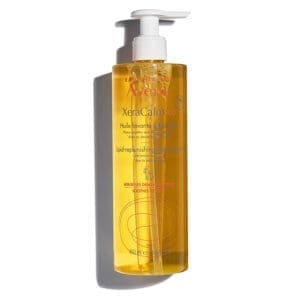
Avene Xeracalm AD Lipid Replenishing Cleansing Oil
What to Look for in Cleansing Oil:
When choosing a cleansing oil, it’s essential to consider both the ingredients and the texture to ensure that it suits your skin type and preferences. I recommend looking for cleansing oils formulated with natural oils like jojoba oil, coconut oil, olive oil, grapeseed oil, or sunflower seed oil. These oils can effectively dissolve makeup and impurities while providing nourishment to the skin. Ingredients like vitamin E, green tea extract, or rosehip oil can provide antioxidant benefits, helping to protect the skin from environmental damage and signs of aging. Cleansing oils enriched with botanical extracts such as chamomile, lavender, or calendula can soothe and calm the skin, making them suitable for sensitive or irritated skin.
Look for cleansing oils that contain emulsifiers like polysorbate or sorbitan oleate. These ingredients help the oil to emulsify with water, allowing it to rinse off cleanly without leaving a greasy residue.
Consider Your Skin Type:
If you have sensitive skin or are prone to irritation, consider opting for fragrance-free cleansing oils to minimize the risk of allergic reactions. Some cleansing oils have a lightweight texture that feels thin and non-greasy on the skin. These are suitable for all skin types, including oily or combination skin, and are easily emulsified with water for rinsing. A product I like to recommend to my patients is Avene’s Xeracalm Cleansing Oil which has a nourishing, biodegradable formula that seals in moisture and helps balance the skin’s microbiome while restoring the skin barrier. It’s also suitable for all ages, including newborns, and can be used for cleansing the face, body, and scalp.
On the other hand, if you have dry or dehydrated skin, you may prefer a cleansing oil with a richer texture that feels more moisturizing on the skin. These oils provide extra hydration and can leave the skin feeling soft and supple after cleansing. Make sure to also look for cleansing oils labeled as non-comedogenic, meaning they are less likely to clog pores or cause breakouts. These oils are suitable for acne-prone or sensitive skin types.
Tips for Adding Cleansing Oil to Your Routine:
Cleansing oil can be used as either the first or second step in your cleansing routine, depending on your preference and skincare needs.
If you are using a cleansing oil as your first step:
Start with dry hands and a dry face and apply a small amount of cleansing oil into your palm (typically 1-2 pumps).
Gently massage it onto your skin using circular motions for about a minute or two.
Wet your hands slightly and continue massaging the oil onto your skin to emulsify the oil. This will turn it into a milky texture that will help to lift away dirt and impurities.
Rinse thoroughly with lukewarm water until all traces of oil, makeup, and impurities are removed from your skin.
Follow up with a water-based cleanser if desired as part of a double cleansing routine.
If you are using a cleansing oil as your second step:
Start with a dry face and use a water-based cleanser to cleanse your skin first. A gel cleanser or foaming cleanser works well for this.
Massage the cleanser onto your skin using gentle circular motions, then rinse thoroughly with lukewarm water.
Double cleansing with a cleansing oil as the second step helps to ensure that all traces of makeup, sunscreen, and impurities are effectively removed from the skin without stripping away too much natural moisture.
Our provider Jessica, PA-C talks more about how to double cleanse using cleansing oil in her Skincare Hacks blog post.
Who is a candidate for cleansing oils?
Cleansing oil can benefit a wide range of skin types and concerns, making it a versatile option in skincare routines. It can be particularly beneficial for those with dry skin. This is because it helps to nourish and hydrate the skin while effectively removing impurities. The oils in the cleansing oil can replenish the skin’s natural oils, leaving it feeling soft, supple, and moisturized. Many cleansing oils are formulated with gentle, natural ingredients that are suitable for sensitive skin types. These oils can help to cleanse the skin without causing irritation or stripping away its natural moisture barrier.
Cleansing oil is also suitable for normal skin types looking for a thorough yet gentle cleansing option. It effectively removes makeup, sunscreen, and impurities while leaving the skin feeling balanced and refreshed. Those with combination skin can also benefit from cleansing oil, as it can help to effectively cleanse oily areas without drying out drier areas of the skin. Opting for a lightweight cleansing oil can provide thorough cleansing without weighing down the skin. Cleaning oil can also be suitable for oily skin types. Oil-based cleansers can effectively dissolve excess sebum and impurities on the skin without stripping away too much natural oil, which can help to balance oil production and prevent the skin from becoming overly dry or tight.
Need more help choosing the right skincare products for your skin type and goals? Schedule a consultation with one of our providers to learn more!
Chemical Peels: Your Secret Weapon for Healthy, Radiant Skin
If achieving flawless, glowing, and healthy skin is on your fall to-do list: Chemical peels may be for you! These medical-grade facial treatments have minimal downtime and are safe for all skin types. They are the perfect choice for skin maintenance or even addressing skin concerns. This includes: acne, acne scarring, brown spots, pores, or texture. Mona Dermatology aesthetic providers, Kylee Finn, RN and Amanda Schmidt, LME, break down the science behind chemical peel treatments and answer your top questions about chemical peel benefits.
How do chemical peels work?
Kylee, RN: Chemical peels use the applications of various chemicals, such as alpha-hydroxy acid or salicylic acid. This causes the top layers of your skin to shed over a short period of time. During the appointment, your provider will apply multiple layers of the chemical peel solution onto your skin. These solutions consist of retinol, and different types of acids to raise the acidity of the skin. When you change the acidity of the skin it causes the skin to start to exfoliate, causing your peeling. The peeling of the skin promotes rejuvenation of healthy skin cells. This allows new, fresh skin to be revealed after the peeling.
Will I “peel”?
Amanda, LME: There are different levels of chemical peels such as superficial, medium depth or deeper peels that cause more layers of skin to peel. Your provider will help choose the best peel for you. This depends on the severity of your skin condition, what type of skin condition you want to treat, and how sensitive your skin is. Chemical peels can range from gentler treatments that will refresh your skin and cause no peeling at all to deeper peels that can improve more advanced concerns.
What can a chemical peel treat?
Chemical peels treat many different skin conditions such as sun damage, hyperpigmentation, melasma, acne, acne scarring, and other concerns. There are many benefits to a chemical peel making it versatile.
Sun Damage:
Chemical peels can address the visible signs of aging caused by sun damage. This can be done by, increasing the turnover of skin cells and promoting collagen production. Common concerns include superficial lines and wrinkles, uneven skin tone, brown spots, and more. In addition to addressing these cosmetic concerns, some chemical peels can also help to exfoliate actinic keratosis. These precancerous lesions develop in the epidermis of your skin as a result of sun exposure. Overtime, this has the potential to develop into skin cancer.
Hyperpigmentation:
A chemical peel helps exfoliate the skin, which reveals fresh and youthful skin underneath. In addition to boosting your collagen production, a chemical peel can also help exfoliate sun-induced brown spots as well as hyperpigmentation from various conditions such as acne scarring and melasma. By addressing these key causes of hyperpigmentation, chemical peels help even out and benefit your skin tone over time.
Melasma
Melasma is often triggered by hormone changes in the body which cause an overproduction of pigment in the superficial layers of the skin. A chemical peel can help increase your skin cell turnover, and exfoliate brown patches without causing heat-induced inflammation that can actually trigger melasma. Therefore, chemical peels are a great way to decrease the visible signs of Melasma.
Acne & Acne Scarring:
By promoting the shedding of skin and reproduction of skin cells, chemical peels can help heal acne breakouts quicker and prevent them from becoming inflamed. It can also help fade the leftover red pigment caused by acne, called post-inflammatory hyperpigmentation, and some types of acne scarring. In addition, salicylic acid peels are a great way to help treat active acne as well as acne scarring.
Fine Lines & Wrinkles:
if you’re seeking a no-needles way to soften superficial wrinkles and fine lines, a chemical peel may be a great option. By increasing cell turnover and boosting collagen production, a series of chemical peel treatments can help lessen the appearance of wrinkles over time. For deeper wrinkles, other treatments such as Botox or lasers may be a better choice.
Rosacea
Some lighter chemical peels contain mandelic acid, which can help calm inflammation. As a result, this can decrease the redness in your skin from rosacea. Chemical peels may not be the best choice for all patients experiencing rosacea. Your provider will help you choose what products and treatments are right for you.
Click the video below to read more about this customizable treatment!
Filler Myths Debunked: Expert Insights from Mona Dermatology
Filler is a popular injectable cosmetic treatment for adding or restoring volume in the lips, cheeks, under eyes, jawline, and more. Board-certified dermatologists, Dr. Mona Foad and Dr. Alexandra Bowles, share the truth behind what you may have heard about filler myths and whether or not it’s fact or fiction.
“One syringe of filler will be enough to treat multiple areas on the face”: Fiction
Dr. Mona: Believe it or not, a syringe of filler usually only con-tains 1 ml of product. In comparison, a ketchup packet contains over 8 ml. For this reason, one syringe of filler does not go that far, especially when trying to restore lost volume in multiple areas of the face such as the cheeks, temples, lips, and more. How many syringes do most people get? That depends on how many areas you want to treat and how much volume loss you may have. If you are nervous and only want to do one syringe, I recommend choosing one area on your face, like your lips for example, to get the best result.
“Fillers replace lost volume that happens as we age”: Fact
Dr. Mona: We naturally lose volume in the face as we age. We lose bone, muscle, and collagen at the same time as our fat pads flatten and shift downward, all of which can cause jowling and a more sunken or hollow look. Fillers can be a great way to immediately treat areas where volume has diminished and to restore a more youthful version of ourselves.
“Most fillers are made up of products that are naturally occurring in your skin”: Fact
Dr. Mona: Hyaluronic acid is produced by our bodies and can be found in areas such as our eyes, joints, and skin. Most dermal fillers are made up of hyal-uronic acid, such as Juvederm Collection, RHA Collection, Restylane, and Belatero. Hyaluronic acid fillers are a great option because they have a very low risk of allergic reactions, due to their natural occurrence in the body. The other benefit of hyaluronic acid fillers is that they are dissolvable, so the treatment can be reversed if necessary. Radiesse, another popular filler, is made of calcium hydroxyapatite, another naturally occurring substance in our skin.
“Filler is unsafe or risky”: It depends
Dr. Mona: Although most filler treatments are safe, with few side effects, complications are possible with any medical procedure, and filler is no different. There are many blood vessels and arteries in the face. If the filler is injected into these areas, serious complications can arise. However, choosing the right provider is the best and most important step you can take to reduce this risk and ensure you have a safe and effective treatment. Ensure that the office you are visiting has a physician on staff who is board-certified in a related field, such as a Dermatologist or Plastic Surgeon.
You also want to ensure that the individual provider who you are seeing has extensive experience and training in not just the treatment, but also on how to handle any complication. At Mona Dermatology, all of our providers hold advanced degrees (such as MDs, DOs, PAs, NPs). They also train for a minimum of six months prior to seeing patients. It is important to ask your provider about these potential risks at your first visit and understand how they will handle a complication in the unlikely event that it does occur.
Dr. Alexandra Bowles
“Lip filler will look unnatural”: Fiction
Dr. Alexandra: Filler injections are highly customizable. Results can vary depending on the provider’s technique as well as the patient’s natural lips. Often, individuals you may see with obvious over-filled lips have had multiple syringes placed in the same area over a short period of time. A well-trained provider who is skilled at giving natural-looking results can enhance the shape of your lips in a way that still fits your facial anatomy. We discuss patient expectations and proportions before each procedure to ensure that both myself and the patient are on the same page with regards to shape, volume, and overall look. Additionally, as we age, we begin to lose volume in our face such as the mid face and lips. Filler treatments is a great way to maintain the youthful volume in these areas and continue to age gracefully.
“Filler can correct facial imbalances”: Fact
Dr. Alexandra: Dermal filler treatments are a great way to correct asymmetry and balance facial features. Popular treatment areas for balancing the facial pro-portions include temples, cheeks, chin, jawline, and lips. It is very important to see a provider who can do a full facial assessment. They are able to provide you with a treatment plan that addresses all areas of your facial anatomy. It is always beneficial to see before and after photos of past full-face treatments your provider has given. Providing volume in proper areas can result in a beautiful refreshed result that still looks very natural.
“Filler goes away quickly or stays for a long time”: It depends
Dr. Alexandra: Hyaluronic acid–based dermal fillers, such as Juvederm or RHA, last 6–18 months. Filler is metabolized in the body varies between patients and depends on the area treated and type of filler used. This determines the speed it metabolizes at. For example, filler around the mouth may not last as long as filler in the cheeks. This is due to the properties of the filler and constant movement of the mouth. As a result, it is possible some people may notice their filler results disappearing quicker or lasting longer.
“Filler will make me look frozen”: Fiction
Dr. Alexandra: A common misconception! Fillers add volume to treatment areas, such as the lips, cheeks, or undereye. A filler treatment will not give the ap-pearance of looking “frozen.” Botox on the other hand, is a neurotoxin which temporarily paralyzes or softens muscle movements to relax wrinkles over time. It is possible that someone could get too much Botox. By stopping their muscle movement entirely, which can lead to this frozen look. A well-trained provider utilizes techniques that ensure your muscle movement is appropriately reduced while still maintaining a natural look.
“It’s expensive”: It depends
Dr. Alexandra: Depending on the office where you are being treated, a sy-ringe of filler can range from $600 to $1,000. If you are treating one area, such as your lips, it is possible to only need one syringe. This will leave your final cost of treatment under $1,000. You may need a larger number of syringes when treating multiple areas. Large amount of volume loss you wish to replace may also require a larger number of syringes. If you are considering a filler treatment and are curious about the cost, it is best to have a consultation. At your consultation, your provider can provide you with a personalized treatment plan and estimate costs before beginning.
Take a look at this patient’s results after a lip filler treatment:
Jawline Filler Aftercare: Tips for Best Results
You just arrived home from your first jawline filler appointment. You can’t stop admiring your side profile in the mirror and are eager to show your new look to the world. Not so fast! If you want to enjoy the maximum benefits of the procedure and maintain your new look, Mona Dermatology recommends some important aftercare steps.
Be Cautious For 24 Hours After Jawline Filler
Our experienced providers will be meticulous while placing your filler to ensure you receive the safest treatment and best possible results. Everyone’s facial structure is different, so precision is key when it comes to building the jawline of your dreams. However, applying pressure to the treated area during the healing process may cause the filler to migrate to other areas around the neck and jaw. Be aware of habits, like resting your chin in your hands or sleeping on your side, for the first 24 hours as this may put too much pressure on the treated area.
Stay Hydrated
Hyaluronic acid-based dermal fillers work by attracting water molecules from nearby tissues to create a plumping effect in the desired area. Drinking plenty of water after your appointment will maximize the results of your filler, ensuring you get the most out of your treatment. Additionally, the topical numbing applied to the skin during the procedure may cause dryness, so it is important to hydrate your skin with your favorite moisturizer during the recovery period.
Avoid Excess Salt and Alcohol
Alcohol products and food high in sodium increase water retention and cause systemic swelling — think of the dreaded bloating and facial swelling the morning after dinner and drinks with friends. While fluctuation in water retention is normal, higher-than-average swelling is not ideal after a filler appointment. Your jawline will already be sore and irritated from the treatment, so it’s best to avoid the extra puffiness until the area heals. Instead, drink plenty of water to flush out the excess salt.
Use UV Protection & Avoid Excess Heat
Although you should be applying sunscreen to your face daily, UV protection is especially important post-filler, since excess UV rays can affect the longevity of your dermal fillers. The damage and inflammation caused by overexposure to the sun stimulates your skin’s healing process. As you shed dead skin cells, the molecules in the filler can be broken down, too. Make sure to wear a topical sunscreen and consider adding a wide-brimmed hat to your daily wardrobe, as well as staying indoors during peak UV hours. You’ll also want to be cautious to avoid extensive heat exposure for 72 hours after your treatment, as it could negatively impact your results or cause excessive swelling.
Schedule a Combination Treatment
It’s good practice to schedule a follow-up appointment for two weeks after your initial treatment. That way, your provider can evaluate how the filler is settling into your face, even out any asymmetry, or add more product if needed. Many clients also choose to pair filler with other anti-aging treatments — like Botox, microneedling, or chemical peels — to boost their results.
Cookie Consent
We use cookies to improve your experience on our site. By using our site, you consent to cookies.
Cookie Preferences
Manage your cookie preferences below:
Essential cookies enable basic functions and are necessary for the proper function of the website.
Name
Description
Duration
Geolocation Config
This cookie is used to store the consent settings based on the visitor's location.
30 days
Cookie Preferences
This cookie is used to store the user's cookie consent preferences.
30 days
CloudFlare provides web performance and security solutions, enhancing site speed and protecting against threats.
These cookies are for internal use which allows Cloudflare to identify production issues on clients.
session
__cfruid
Used by the content network, Cloudflare, to identify trusted web traffic.
session
__cf_bm
Cloudflare's bot products identify and mitigate automated traffic to protect your site from bad bots. Cloudflare places the __cf_bm cookie on End User devices that access Customer sites that are protected by Bot Management or Bot Fight Mode. The __cf_bm cookie is necessary for the proper functioning of these bot solutions.
session
__cflb
When enabling session affinity with Cloudflare Load Balancer, Cloudflare sets a __cflb cookie with a unique value on the first response to the requesting client. Cloudflare routes future requests to the same origin, optimizing network resource usage. In the event of a failover, Cloudflare sets a new __cflb cookie to direct future requests to the failover pool.
session
_cfuvid
The _cfuvid cookie is only set when a site uses this option in a Rate Limiting Rule, and is only used to allow the Cloudflare WAF to distinguish individual users who share the same IP address.
session
cf_clearance
Whether a CAPTCHA or Javascript challenge has been solved.
session
__cfseq
Sequence rules uses cookies to track the order of requests a user has made and the time between requests and makes them available via Cloudflare Rules. This allows you to write rules that match valid or invalid sequences. The specific cookies used to validate sequences are called sequence cookies.
session
cf_ob_info
The cf_ob_info cookie provides information on: The HTTP Status Code returned by the origin web server. The Ray ID of the original failed request. The data center serving the traffic
session
cf_chl_rc_ni
These cookies are for internal use which allows Cloudflare to identify production issues on clients.
session
cf_chl_rc_i
These cookies are for internal use which allows Cloudflare to identify production issues on clients.
session
__cfwaitingroom
The __cfwaitingroom cookie is only used to track visitors that access a waiting room enabled host and path combination for a zone. Visitors using a browser that does not accept cookies cannot visit the host and path combination while the waiting room is active.
session
cf_use_ob
The cf_use_ob cookie informs Cloudflare to fetch the requested resource from the Always Online cache on the designated port. Applicable values are: 0, 80, and 443. The cf_ob_info and cf_use_ob cookies are persistent cookies that expire after 30 seconds.
session
Google Tag Manager simplifies the management of marketing tags on your website without code changes.
Name
Description
Duration
td
Registers statistical data on users' behaviour on the website. Used for internal analytics by the website operator.
session
cookiePreferences
Registers cookie preferences of a user
2 years
WooCommerce is a customizable eCommerce platform for building online stores using WordPress.
Name
Description
Duration
woocommerce_items_in_cart
Helps WooCommerce determine when cart contents/data changes.
session
woocommerce_cart_hash
Helps WooCommerce determine when cart contents/data changes.
session
woocommerce_dismissed_suggestions__
Count of suggestion dismissals, if enabled.
1 month
woocommerce_snooze_suggestions__
Allows dashboard users to dismiss Marketplace suggestions, if enabled.
2 days
store_notice
Allows customers to dismiss the Store Notice.
session
woocommerce_recently_viewed
Powers the Recent Viewed Products widget
session
wp_woocommerce_session_
Contains a unique code for each customer so that it knows where to find the cart data in the database for each customer.
2 days
Statistics cookies collect information anonymously. This information helps us understand how visitors use our website.
Google Analytics is a powerful tool that tracks and analyzes website traffic for informed marketing decisions.
Used to monitor number of Google Analytics server requests when using Google Tag Manager
1 minute
_gid
ID used to identify users for 24 hours after last activity
24 hours
_gac_
Contains information related to marketing campaigns of the user. These are shared with Google AdWords / Google Ads when the Google Ads and Google Analytics accounts are linked together.
90 days
_gali
Used by Google Analytics to determine which links on a page are being clicked
30 seconds
_ga
ID used to identify users
2 years
__utmx
Used to determine whether a user is included in an A / B or Multivariate test.
18 months
__utmv
Contains custom information set by the web developer via the _setCustomVar method in Google Analytics. This cookie is updated every time new data is sent to the Google Analytics server.
2 years after last activity
__utmz
Contains information about the traffic source or campaign that directed user to the website. The cookie is set when the GA.js javascript is loaded and updated when data is sent to the Google Anaytics server
6 months after last activity
__utmc
Used only with old Urchin versions of Google Analytics and not with GA.js. Was used to distinguish between new sessions and visits at the end of a session.
End of session (browser)
__utmb
Used to distinguish new sessions and visits. This cookie is set when the GA.js javascript library is loaded and there is no existing __utmb cookie. The cookie is updated every time data is sent to the Google Analytics server.
30 minutes after last activity
__utmt
Used to monitor number of Google Analytics server requests
10 minutes
__utma
ID used to identify users and sessions
2 years after last activity
SourceBuster is used by WooCommerce for order attribution based on user source.
Name
Description
Duration
sbjs_migrations
Technical data to help with migrations between different versions of the tracking feature
session
sbjs_current_add
Timestamp, referring URL, and entry page for your visitor’s current visit to your store
session
sbjs_first_add
Timestamp, referring URL, and entry page for your visitor’s first visit to your store (only applicable if the visitor returns before the session expires)
session
sbjs_current
Traffic origin information for the visitor’s current visit to your store
session
sbjs_first
Traffic origin information for the visitor’s first visit to your store (only applicable if the visitor returns before the session expires)
session
sbjs_udata
Information about the visitor’s user agent, such as IP, the browser, and the device type
session
sbjs_session
The number of page views in this session and the current page path
30 minutes
Marketing cookies are used to follow visitors to websites. The intention is to show ads that are relevant and engaging to the individual user.
Facebook Pixel is a web analytics service that tracks and reports website traffic.