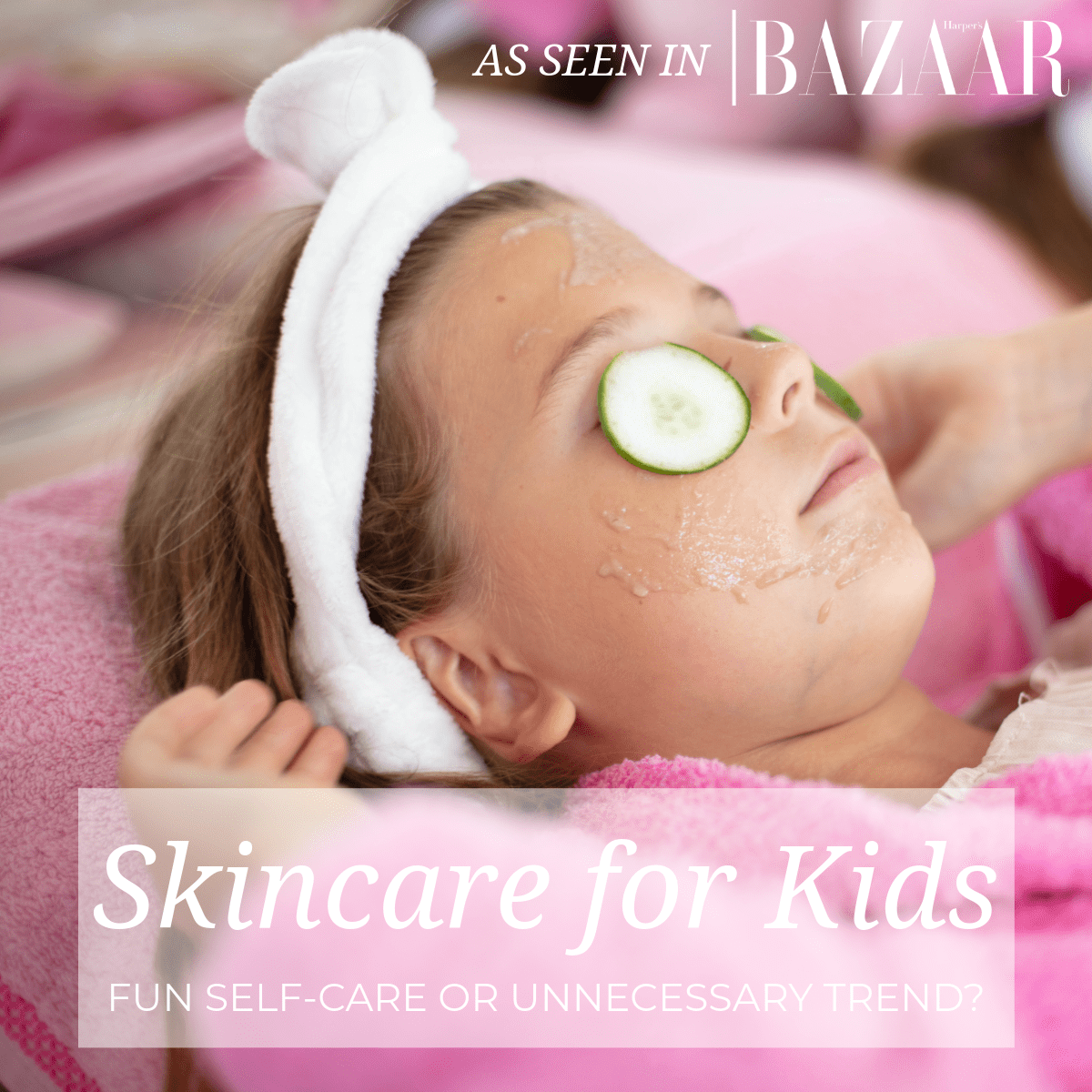
Skincare for Kids: Fun Self-Care or An Unnecessary Trend? | As Seen in Harper’s Bazaar
Skincare isn’t just for adults anymore—kids are becoming curious about face masks, serums, and playful routines designed just for them. Shay Mitchell’s new kids’ skincare brand, Rini, has stirred controversy for marketing sheet masks to children as young as three, with critics warning it could introduce unrealistic beauty standards too early. So, is this simply harmless fun, or are we complicating childhood with adult-focused beauty trends? Board-certified dermatologist Dr. Mona Foad breaks down the controversy and explains how parents can navigate this trend thoughtfully. Check out the full article in Harper’s Bazaar!
 Do you think the criticisms here are deserved? Is it so preposterous that kids would want gentle sheet masks with fun designs?
I can absolutely understand why this topic may spark conversation. The idea of very young children using sheet masks can feel unnecessary or overly commercialized. At the same time, it’s not unreasonable that kids might want gentle, playful products that make skincare feel fun. We’re seeing a cultural shift where skincare is viewed less as beauty and more as self-care. For some families, these routines can even become bonding moments. The key question isn’t whether kids should or shouldn’t use them, but how it’s done. When formulas are genuinely gentle, the messaging focuses on care rather than appearance, and the activity is supervised, it can be a harmless way to introduce good skin habits. Some of the criticism is justified when products are marketed with adult beauty claims, but when executed thoughtfully, there’s room for kids to enjoy skincare safely and playfully.
Can kids use gentle sheet masks designed for adults?
I’m cautious about children using sheet masks made for adults because the formulations are often stronger and contain active ingredients such as acids, retinoids, or high concentrations of botanical extracts. These can be too harsh for a child’s thinner, more sensitive skin. However, when masks are specifically created for young users, the approach can be different. The most important thing is to choose formulas that are hypoallergenic, fragrance-free, and designed for delicate skin. In those cases, and with parental supervision, a gentle mask can be a fun, occasional part of self-care. But if it’s an adult mask, it’s best to read the ingredient list carefully and err on the side of caution.
Should children be using sheet masks? Are there any risks?
From a dermatologic standpoint, children don’t need sheet masks in the same way adults do. Their skin naturally stays hydrated and hasn’t yet developed the environmental or aging concerns these products are meant to treat. The main risks come from added fragrance, harsh preservatives, or potent actives that can irritate or inflame the skin. If a child is curious about trying a sheet mask, choose one with gentle, fragrance-free ingredients and use it sparingly. Parents should always supervise and ensure that it’s not part of a daily routine. When used thoughtfully, the risk is low, but unnecessary exposure to stronger ingredients can do more harm than good. On the flip side, some children may have dry skin or are more eczema prone. In these case a sheet mask specifically formulated with these conditions in mind can help their skin become more hydrated and less inflamed.
Where do you stand on this continuing debate of skincare designed for kids?
I think we’re in an interesting transitional moment. There’s growing curiosity among kids about skincare, which isn’t inherently negative—it can help build healthy habits early. However, the concern is when children start adopting adult routines or products meant for mature skin, which can lead to both irritation and unrealistic beauty expectations. I support the idea of gentle, age-appropriate products that focus on basic care like cleansing, moisturizing, and sun protection, rather than correction or anti-aging. If the messaging stays focused on education, fun, and self-care, skincare can be positive for kids. But it’s essential to keep it simple, safe, and free from the pressures of beauty culture.