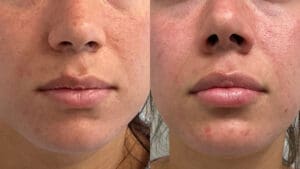
DiamondGlow vs. HydraFacial: What’s the Difference and Which is Right for You?
When it comes to achieving radiant, healthy skin, facial treatments have come a long way. Two of the most popular options—DiamondGlow and HydraFacial—offer deep cleansing, exfoliation, and hydration, but they work in different ways and deliver unique benefits. So how do you choose the one that’s right for you? Let’s take a closer look at both treatments to help you decide.
What Is HydraFacial?
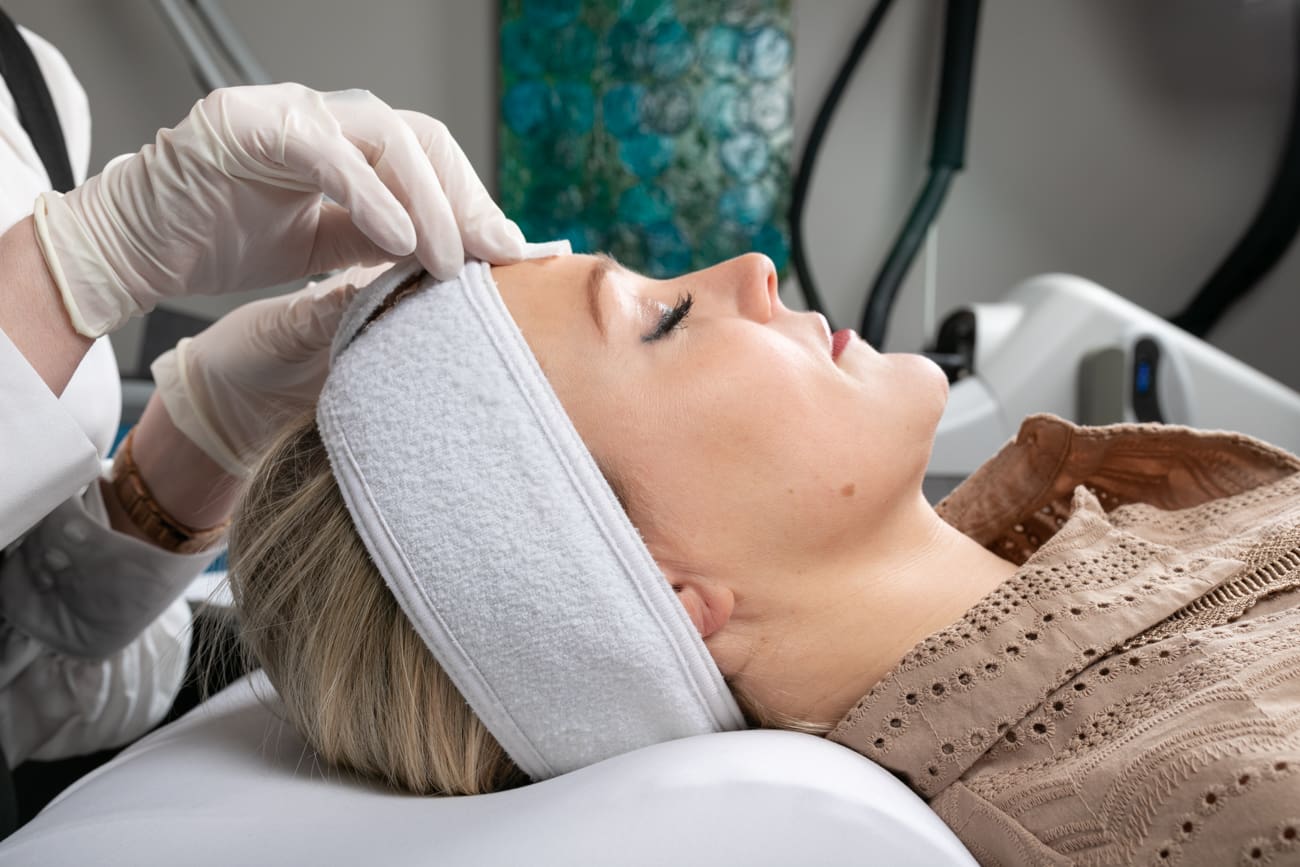
HydraFacial is a popular non-invasive treatment that uses a patented Vortex-Fusion technology to cleanse, extract, and hydrate the skin. The process involves multiple steps, including a gentle acid peel, painless extraction with suction, and infusion of serums tailored to your skin concerns.
HydraFacial is known for being gentle and relaxing, great for all skin types, especially those new to facials or looking for a quick refresh. It’s also a favorite for its immediate glow and lack of downtime.
What Is DiamondGlow?
DiamondGlow takes things a step further. It uses a diamond-tip wand that physically buffs away dead skin cells while delivering medical-grade serums deep into the skin. Diamond Glow exfoliates, extracts, and infuses customized serums all at the same time to plump skin by up to 70%. This no-downtime treatment is appropriate for all skin types.
The precise and personalized exfoliation sets DiamondGlow apart. You can also choose between multiple options depending on what you want to target. Options include:
TNS Advanced+: Visible Signs of Aging
HA5 Hydra Collagen: Rough, Dry Skin
Even & Correct Brightening: Hyperpigmentation
Pore Purifying: Congested Skin & Visible Redness
Vitamin C: Dullness & Photodamage
Which Treatment Is Best for You?
Both treatments offer great results and are safe for all skin types. If you’re looking for a gentle introduction to facials or a quick skin pick-me-up before an event, HydraFacial is a reliable choice.
However, for those who want to elevate their skincare results, especially if you’re targeting concerns like dullness, acne scars, rough texture, or sun damage, DiamondGlow’s combination of precision exfoliation and deep serum infusion offers a next-level experience.
Sometimes, that extra layer of customization and depth can make all the difference.
The Bottom Line
Choosing between DiamondGlow and HydraFacial ultimately depends on your skin goals and preferences. Both are excellent treatments, but if you’re looking to invest in something that offers deeper rejuvenation and more targeted results, DiamondGlow may just be your skin’s new best friend!
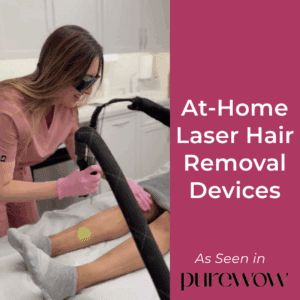
At-Home Hair Removal Devices | As Seen in PureWow
Laser hair removal devices use targeted light to reduce hair growth over time, offering a long-term alternative to shaving or waxing. Whether used at home or in a professional setting, Dr. Alexandra Bowles explains how they work, their benefits, and potential risks in PureWow’s article.
How do laser hair removal devices work?
Laser hair removal works by using light energy to target the pigment in your hair, which is then converted into heat that damages the hair follicle, the part of the skin that produces hair. This process helps slow or reduce future hair growth. Since the laser is attracted to pigment, it works best on darker hair. Because it only affects hairs in their active growth phase (called the anagen phase), multiple treatments are usually needed. I always remind my patients that results take time and consistency, and it’s important to work with a provider who understands your skin and hair type to ensure safe, effective treatment.
What are the benefits of at-home laser hair removal devices?
At-home laser hair removal devices can be a great option for those looking for convenience, privacy, and long-term savings. I often hear from patients who appreciate being able to treat areas on their own schedule, without the need for appointments or travel. These devices are typically compact and easy to use, making it simple to target unwanted hair in the comfort of your own home, even in more sensitive areas. While they may not be as powerful as professional treatments, consistent use can still lead to noticeable hair reduction over time. And for many, the one-time cost of a device ends up being more affordable than multiple sessions in a clinic. Just be sure to follow instructions carefully and choose a device that’s safe for your skin tone and hair type.
What are the downsides of at-home laser hair removal devices?
While at-home laser hair removal devices can offer convenience and affordability, there are some important limitations to keep in mind. These devices tend to be less powerful than professional treatments, which can result in slower and less noticeable results, especially when treating larger areas. Many at-home systems also work best on specific skin tones and hair colors. If they’re not used properly, they could lead to irritation or uneven results. These devices are also less precise, which means you might miss spots or deal with ingrown hairs. In a dermatology office, we use more advanced technology that’s tailored to your skin type, and we guide you through proper post-treatment care to help protect your skin. I would recommend reaching out to a dermatologist if you’re unsure whether an at-home device is right for you.
Is it safe to try laser hair removals at home?
At-home laser hair removal devices can be safe for many people, especially those with light skin and dark hair. These devices typically use intense pulsed light (IPL), which is gentle and generally considered safe for home use. However, they’re not as powerful as professional treatments, and those with darker skin tones might experience temporary side effects, like hyperpigmentation or burns. While these devices can be a convenient way to reduce hair growth, it’s immensely important to follow the instructions carefully. So if you are considering at-home treatments, speak with a dermatologist first to ensure it’s the right fit for you and to avoid any potential complications.
Do laser hair removal devices really work?
At-home laser hair removal devices can work, but know they use lower energy than what we use in the office. You will likely need more sessions to see results. With consistent use, many people do see a reduction in hair growth, but results can vary. In the office, we’re able to use more powerful, customized lasers that tend to give quicker, more noticeable results. If you’re thinking about trying an at-home device, I would recommend consulting with a dermatologist first.
Do home laser hair removal work as well as in office treatments?
At-home laser hair removal devices can be great, but they don’t deliver the same results as in the office. Professional lasers are much more powerful and targeted. We can typically achieve over 90% hair reduction in about 7 to 9 sessions. With at-home devices, you may still see results, but it often takes more time and more sessions. The outcomes aren’t always as complete and usually only achieve around 70% reduction after a few months.
Are there any safety precautions or best practices to consider when using a laser hair removal device?
Whether it’s at home or by a professional, this is an effective way to reduce hair. But, it’s important to take the right precautions. At-home devices usually use lower-energy IPL (intense pulsed light). This is generally considered safe for people with lighter skin and darker hair. However, if you have a deeper skin tone or lighter hair, the results may not be as effective. There’s also a greater risk for irritation, burns, or changes in pigmentation. To stay safe, always follow the device instructions carefully and avoid sun exposure before and after treatment. Be sure to take extra care when treating sensitive areas. I also recommend moisturizing the treated area and using SPF daily to protect your skin as it heals. And if you’re ever unsure about whether it’s the best option for you, don’t hesitate to check in with a board-certified dermatologist.
What at-home laser hair removal devices do you recommend and why?
Braun IPL Hair Remover: This FDA-approved device from Braun takes a lot of the guesswork out of at-home laser hair removal with features like automatic skin tone sensing and adjustable intensity levels to keep things comfortable. I also like that it comes with interchangeable heads. This makes it easy to safely treat everything from larger areas, to more delicate spots.
Nood The Noodist Kit: If you have sensitive skin or a low pain threshold, Nood’s Flasher 2.0 can be a good place to start. This FDA-cleared device offers seven adjustable levels for comfort and includes a built-in safety feature. This only allows it to flash when fully pressed against your skin, so it’s simple and gentle to use.
LuminoPro: This IPL device offers fast, noticeable results, with many users experiencing permanent hair reduction in as little as 8 to 12 weeks. It’s easy to use, safe, and gentle on the skin. This makes it a great cost-effective alternative to shaving and waxing for whole-body smoothness.
Swissklip LuminSmooth – IPL – Perm Hair Removal: This IPL device is a great option if you’re looking for fast, noticeable results, with many users seeing progress in just 3 weeks. Compared to other high-end models, it’s affordable, easy to use, and delivers smooth, hair-free skin. Also, it’s safe and gentle on your skin, without the discomfort of waxing or shaving.
Managing PCOS Hair Growth | As Seen in MedEsthetics
Dealing with unwanted hair due to PCOS can be frustrating, but modern hair removal treatments offer real solutions. MedEsthetics’ article explores how electrolysis and laser hair removal work differently. Dr. Alexandra Bowles weighs in on which might be the better fit for your skin, hair type, and hormonal needs.
How do electrolysis and laser hair removal work differently for treating unwanted hair caused by PCOS?
Electrolysis and laser hair removal are both effective methods for reducing unwanted hair. They differ in the way they target hair follicles. Electrolysis uses a tiny electric current to destroy the hair follicle. This method makes it a great option for all skin tones and hair types. It’s especially useful for those with PCOS because it targets each follicle individually, offering long-term results. Laser hair removal, on the other hand, uses light to target pigment in the hair. It’s most effective on people with light skin and dark hair. For those with PCOS, it can sometimes require more sessions or touch-ups due to hormonal fluctuations that cause hair regrowth.
Are there any specific considerations for someone with PCOS when it comes to choosing between these two treatments?
If you have PCOS, it’s important to consider how your hormones may impact hair growth. For many women with PCOS, hair growth can be more persistent or widespread due to hormonal imbalances. I’ve found that electrolysis tends to be a more reliable option for people with PCOS because it targets each follicle individually, regardless of hair color or skin type. Laser hair removal, while effective, may not work as well on lighter hair and can be difficult to properly use on darker skin, and it may require more frequent sessions since hormonal changes can cause regrowth. It’s always a good idea to discuss your specific needs with a professional to determine the best option for you.
Are there any increased risks or side effects for people with PCOS undergoing electrolysis or laser hair removal?
For people with PCOS, there are a few things to keep in mind when considering these treatments. With laser hair removal, I’ve seen some individuals with darker skin or hormonal fluctuations experience pigmentation changes. This is why it’s important to go to a provider who understands how to adjust for your skin type. Electrolysis is generally safe for all skin tones, but it can cause slight redness or irritation immediately after treatment. Since PCOS can make your skin more sensitive, it’s good to be aware that both treatments may cause more irritation or discomfort, especially if your skin is already prone to sensitivity.
Are there certain skin or hair types that make one treatment more effective than the other for someone with PCOS?
Yes, skin and hair type play a big role in which treatment will be most effective. Laser hair removal works best on people with light skin and dark hair. This is because it targets the pigment in the hair. If you have lighter hair or darker skin, electrolysis is usually a better option. I’ve found that people with PCOS often experience varied hair growth. Having a treatment that works for different skin and hair types is crucial for this. Electrolysis is ideal because it can be used on all skin tones and hair colors and provides more consistent results. This is especially true if your hair growth pattern changes over time.
How do the mechanisms of electrolysis and laser hair removal differ in targeting hair follicles, and how does this impact results for someone with PCOS?
The way electrolysis and laser hair removal target hair follicles is where the main difference lies. Electrolysis uses a needle that delivers an electric current directly to the hair follicle. This makes it very effective for all hair types and skin tones. It’s especially useful for people with PCOS because it’s less affected by hormonal changes. Laser hair removal uses light to target the pigment in the hair follicle, so it works best on dark hair. If you have PCOS, it may not be as effective if you have light hair or if hormonal fluctuations are causing regrowth in unexpected areas.
How do the two methods compare in terms of pain or discomfort during and after the treatment, especially for patients with PCOS-related skin sensitivity?
When it comes to pain, it’s a bit subjective. After talking with patients, laser hair removal tends to be less uncomfortable than electrolysis. Laser treatments usually feel like a quick snap or sting, which some people find tolerable. Electrolysis can feel more intense, as it involves a needle being inserted into each hair follicle. For those with PCOS, skin sensitivity can be a concern, so it’s good to be prepared for some redness or irritation after either treatment. In general, electrolysis might cause a bit more post-treatment irritation, especially if your skin is more reactive.
How do both treatments compare in terms of maintenance after the initial course of sessions, especially for PCOS patients whose hair might regrow due to hormonal fluctuations?
Maintenance is where the difference between electrolysis and laser hair removal can be more noticeable for people with PCOS. Since electrolysis treats each follicle individually, I’ve found that it tends to offer longer-lasting results with fewer maintenance sessions, even if your hormones are fluctuating. Laser hair removal, while effective, may require more frequent touch-ups as hormones can cause hair to regrow, sometimes in areas you wouldn’t expect. If you have PCOS, both treatments will likely require some ongoing care, but electrolysis might be the better option for those who want a more permanent solution.
Vaginal Rejuvenation: Latest Treatment Options | As Seen in MedEsthetics
As women age, the skin and vaginal tissue undergo similar changes—slower collagen production, hormonal shifts, and reduced natural lubrication. Discover new and innovative treatments offering relief for common issues such as vaginal dryness and painful intercourse. Dr. Alexandra Bowles adds her thoughts in MedEsthetics’ article about women’s health.
How does vaginal rejuvenation relate to skin health?
Vaginal rejuvenation is similar to overall skin health as they undergo similar changes. As we age, we begin to have slower collagen production, hormonal changes contribute to lack of lubrication, or incontinence.
What are the newest dermatological advancements in vaginal rejuvenation?
Dermatology plays a role by providing laser treatments and vaginal PRP therapy. Vaginal CO2 therapy, (also known as Femtouch), is a wonderful way to provide vaginal rejuvenation. CO2 lasers work by targeting water and vaporizing the tissue which stimulates the body’s natural healing response and triggers production of collagen. It also targets the mucosal cells and improves lubrication.
Intra-vaginal PRP can also stimulate collagen production and improve vaginal health. This is a medical treatment that involves injecting or applying platelet-rich plasma derived from a patient’s own blood into the vaginal tissue. It can stimulate tissue regeneration, improve blood flow, and promote collagen production, which may help with a range of gynecological or sexual health concerns.
Are there specific skin concerns that vaginal rejuvenation can help with?
I find that CO2 helps the most with lubrication issues, specifically those that suffer from painful intercourse due to vaginal dryness. It can also help with incontinence and vaginal itching due to dryness.
The Best Hair Removal Methods | As Seen in Marie Claire
As seen in Marie Claire’s article “The Ultimate Guide to Hair Removal Methods,” Dr. Alexandra Bowles expands upon her insights on the topic of hair removal. Read to learn more about the different hair removal methods, and the benefits and drawbacks of each. Find out what hair removal method will work best for you!
Dermaplaning:
What is it?
Dermaplaning is a minimally invasive cosmetic procedure that uses a sterile surgical scalpel to gently exfoliate the skin by removing the outermost layer of dead skin cells and fine vellus hair (often referred to as “peach fuzz”). This treatment is designed to create a smoother, brighter complexion and can be a beneficial addition to your skincare routine.
What areas is it ideal for?
Dermaplaning is primarily performed on the face, particularly effective on areas such as the forehead, cheeks, chin, and upper lip. However, it can also be used on other areas of the body where finer hair and dead skin accumulation may occur.
Benefits of Dermaplaning
I often recommend dermaplaning for a variety of reasons. First, it helps your makeup apply more smoothly by removing dead skin cells and “peach fuzz” and creating a more even texture. With less texture, foundations and powders blend and sit on the skin better. Second, removing excess skin cells allows your skincare products to penetrate deeper, improving their absorption and effectiveness. For this reason, it can also help boost the effectiveness of in-office procedures such as facials. Finally, regularly removing dead skin cells helps promote cell turnover. When the top layer of dead skin cells is removed, it encourages the skin to produce new cells to replace the ones that were lost, which is essential for maintaining healthy, glowing skin.
Downsides to Dermaplaning
Dermaplaning may cause skin sensitivity, redness, and a risk of cuts or abrasions if done improperly. After dermaplaning, your skin may feel more sensitive to skin care products or the environment. You may also experience some redness immediately after the treatment, as the exfoliation from dermaplaning can cause mild irritation for some patients. When not performed by an experienced professional, it is possible to damage or cut the skin which could be a potential risk of infection. If dermaplaning at home, it’s important to use a high-quality dermaplaning blade and proceed carefully.
How to prep for at-home dermaplaning or appointment.
To prepare for your dermaplaning appointment, arrive with a clean face and avoid wearing makeup or skincare products. Refrain from using exfoliants or retinoids in the week leading up to the treatment, and try to limit sun exposure before and after treatment to reduce skin sensitivity.
What should you expect from the experience? (Does it hurt? Approx how long does it take? Will hair grow back thicker?)
Dermaplaning sessions typically last between 15 and 30 minutes. The procedure is generally well-tolerated, with patients reporting only mild tingling or scratching sensations. Any redness or sensitivity typically resolves quickly. It’s a common misconception that dermaplaning causes hair to grow back thicker when in reality, the fine vellus hair returns at its natural rate and texture.
Aftercare
After dermaplaning, avoid direct sun exposure for 24 to 48 hours and apply a broad-spectrum sunscreen. Don’t use harsh skincare products and exfoliants, keep your skin hydrated with a gentle moisturizer, and refrain from touching your face to minimize irritation and support healing.
Laser Hair Removal
What is it?
Laser hair removal is a medical procedure that uses focused light to eliminate unwanted hair by targeting hair follicles. The laser works by targeting the pigment, also known as melanin, in the hair follicle and destroying it. For this reason, laser hair removal treatment only works on hair types that contain melanin, such as brown or black. Blonde or red hair lacks melanin and as a result, the laser cannot target the follicle effectively. Over time, laser hair removal can provide long-term hair reduction after multiple treatments.
What areas is it ideal for?
Laser hair removal is suitable for a wide range of areas, including the face, underarms, bikini line, legs, back, and chest. It can be used on any part of the body where hair grows.
Benefits of Dermaplaning
One of the main advantages of laser hair removal is its ability to provide long-term hair reduction. The treatment is precise, targeting hair follicles without damaging the surrounding skin, which can result in smoother skin and fewer ingrown hairs.
Downsides to Dermaplaning
Some potential downsides include slight discomfort during the treatment, which may feel like a snapping sensation. Multiple sessions (typically 6-8) are usually required for optimal results. Additionally, laser hair removal is not effective on hair colors that lack melanin, such as red or blond, as the laser targets the pigment in the hair. There is also a potential for hyperpigmentation if the correct laser is not utilized in certain skin types, so I recommend doing a small test area prior to moving forward with a full treatment session in patients with darker complections.
What should you expect from the experience? (Does it hurt? Approx how long does it take? How many laser sessions does one typically need?)
Laser hair removal sessions typically last from 20 to 40 minutes, depending on the treatment area. While the procedure may cause mild discomfort, often described as a snapping feeling on the skin, most patients report that it is tolerable. To achieve optimal results, most people require 6 to 8 sessions, spaced several weeks apart.
Aftercare
To minimize irritation after treatment, avoid sun exposure, hot showers, and strenuous activities for at least 24 hours. Keeping the skin moisturized and applying a broad-spectrum sunscreen is vital for protecting the treated area. You should also plan to receive touch-up treatments every year or two to maintain results.
Waxing
What is it?
Waxing is a hair removal method that involves applying warm or cold wax to the skin and quickly pulling it off with a cloth or paper strip, removing hair from the root. This technique typically results in longer-lasting smoothness compared to shaving, as it may take several weeks for hair to regrow.
What areas is it ideal for?
Waxing is a great option for many areas, including the legs, arms, bikini line, eyebrows, and upper lip. It’s particularly popular for larger areas and sensitive zones where precise hair removal is important.
Benefits of Dermaplaning
One of the main benefits of waxing is that it removes hair from the root, resulting in smoother skin for several weeks before it grows back. Over time, repeated waxing can lead to finer and sparser hair, and it can also help exfoliate the skin by removing dead skin cells.
Downsides to Dermaplaning
Waxing can cause discomfort or pain during the procedure and may lead to skin irritation, such as redness or bumps. There’s also a risk of ingrown hairs and allergic reactions to the wax, especially for those with sensitive skin.
What should you expect from the experience? (Does it hurt? Approx how long does it take? Etc?
Waxing can be uncomfortable, but the pain usually subsides quickly. Sessions typically last between 15 and 30 minutes, depending on the area being treated, and many people enjoy smoother skin for 3 to 6 weeks.
Aftercare
After waxing, avoid hot showers, saunas, and sun exposure for at least 24 hours to minimize irritation. Apply a soothing lotion or aloe vera to calm the skin, and gently exfoliate a few days later to prevent ingrown hairs.
Shaving
What is it?
Shaving is a common hair removal technique that involves using a razor or cutting tool to remove hair from the skin’s surface. Unlike dermaplaning, which exfoliates by removing dead skin cells along with hair, shaving primarily targets hair.
What areas is it ideal for?
Shaving is a popular choice for areas that require frequent grooming, such as the face, legs, underarms, and bikini line. It’s easy to use and provides immediate results.
Benefits of Dermaplaning
Shaving is a convenient and fast way to remove hair without having to go to a salon. It’s also more budget-friendly than other hair removal techniques and can be easily included in your daily routine.
Downsides to Dermaplaning.
Shaving may cause cuts, razor burn, or ingrown hairs, especially if not done correctly. To avoid cuts, razor burn, and ingrown hairs, it’s important to use a sharp razor, apply gentle pressure, use shaving cream or gel, and avoid exfoliating immediately before or after shaving. Also, shaving only removes hair from the surface, so it grows back faster than methods that remove hair from the root.
Aftercare
To prevent post-shaving irritation, rinse your skin with cool water and apply a gentle moisturizer or aftershave balm. Avoid tight clothing and sun exposure for a day or two to minimize the risk of irritation or ingrown hairs.
Some of us are born with sunken cheeks, while others notice facial drooping during the aging process. No matter your reasoning for seeking out a cheek filler treatment, it can lift and rejuvenate your profile to make you look and feel your best. However, every person is different. Our providers at Mona Dermatology are extensively trained in the latest filler injection techniques, allowing them to customize treatments to each patient’s unique facial structure. They are experts at facial analysis and proper placement to give you a great outcome.
Here are a few of their favorite places to use filler:
Cheekbone Filler: Rejuvenating
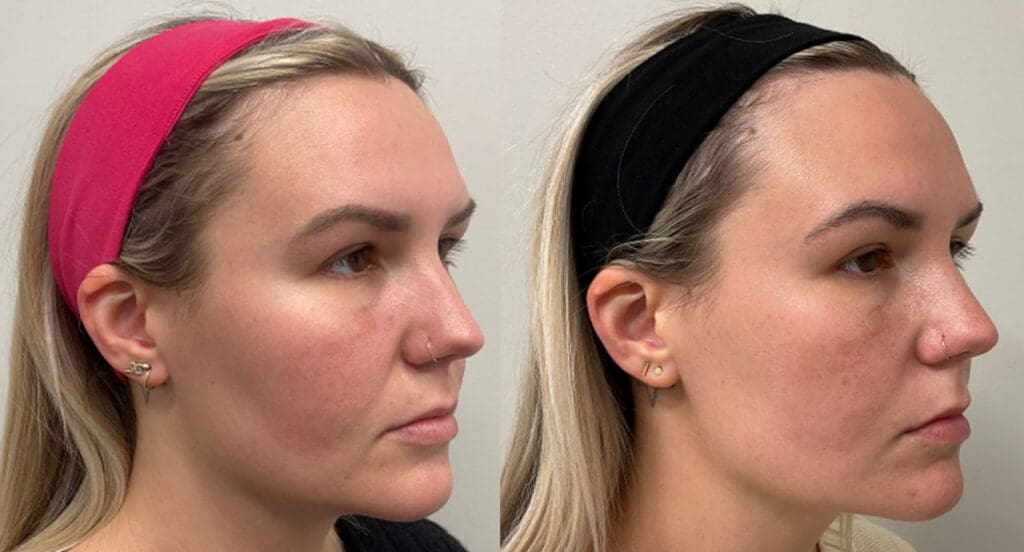
The cheekbones, or zygomatic bones, are one of the most well-known structures when it comes to defining the contours of your face. With age, this area suffers fat pad loss, which leads to a flat, hollow appearance. Placing fillers in the soft tissue around your cheekbones can replace lost volume and produce a rounder and more youthful appearance. For patients who have not experienced volume loss yet, cheek filler treatment can also be a great way to enhance existing facial features. By defining the profile of your cheeks, younger patients can reveal a more contoured and slender facial shape.
Before | After
Temple Filler: Lifting
Drooping cheeks create deep frown lines and the appearance of loose skin around the mouth, making your face appear more square-shaped than it is. Injecting fillers above the cheekbone can lift that drooping skin upwards to restore facial balance. Additionally, our providers may recommend pairing this lifting treatment with filler around the actual nasolabial folds, or tired lines around the nose and mouth, depending on your unique facial anatomy.
1 syringe of Juvederm Voluma XC to temples & piriform (2 additional syringes were used elsewhere on her face): Before | After
Midcheek Filler: Rounding
The midcheek area is the place to target if you’re hoping for apple cheeks, since filler in this area has a rounding and plumping effect and helps restore your face to a youthful triangle shape. Your provider may choose a filler with a higher G prime that allows your provider to achieve maximum lifting results. Alongside increasing facial volume, midcheek filler can help reduce the appearance of eye bags and dark circles, making it perfect for adult patients of all ages.
1 Syringe of Juvederm Vollure: Before | After
Lateral Cheek Filler: Defining
Who doesn’t love the appearance of a sharp and well-defined bone structure? Filler around the jawline — one of the most popular locations — can dramatically improve your profile, sharpening flat features for a more sculpted look. By combining Juvederm Volux XC, the only FDA-approved filler for the jawline, under the chin with sturdy Voluma XC to build structure in the lateral face, our expert providers pronounce your natural jawline and create an elegant facial structure.
4 Syringes of Juvederm Volux Treatment: Before | After
Not sure what filler treatment is best for you? Schedule a consultation with one of our providers to learn more!
Chemical Peels: Your Secret Weapon for Healthy, Radiant Skin
If achieving flawless, glowing, and healthy skin is on your fall to-do list: Chemical peels may be for you! These medical-grade facial treatments have minimal downtime and are safe for all skin types. They are the perfect choice for skin maintenance or even addressing skin concerns. This includes: acne, acne scarring, brown spots, pores, or texture. Mona Dermatology aesthetic providers, Kylee Finn, RN and Amanda Schmidt, LME, break down the science behind chemical peel treatments and answer your top questions about chemical peel benefits.
How do chemical peels work?
Kylee, RN: Chemical peels use the applications of various chemicals, such as alpha-hydroxy acid or salicylic acid. This causes the top layers of your skin to shed over a short period of time. During the appointment, your provider will apply multiple layers of the chemical peel solution onto your skin. These solutions consist of retinol, and different types of acids to raise the acidity of the skin. When you change the acidity of the skin it causes the skin to start to exfoliate, causing your peeling. The peeling of the skin promotes rejuvenation of healthy skin cells. This allows new, fresh skin to be revealed after the peeling.
Will I “peel”?
Amanda, LME: There are different levels of chemical peels such as superficial, medium depth or deeper peels that cause more layers of skin to peel. Your provider will help choose the best peel for you. This depends on the severity of your skin condition, what type of skin condition you want to treat, and how sensitive your skin is. Chemical peels can range from gentler treatments that will refresh your skin and cause no peeling at all to deeper peels that can improve more advanced concerns.
What can a chemical peel treat?
Chemical peels treat many different skin conditions such as sun damage, hyperpigmentation, melasma, acne, acne scarring, and other concerns. There are many benefits to a chemical peel making it versatile.
Sun Damage:
Chemical peels can address the visible signs of aging caused by sun damage. This can be done by, increasing the turnover of skin cells and promoting collagen production. Common concerns include superficial lines and wrinkles, uneven skin tone, brown spots, and more. In addition to addressing these cosmetic concerns, some chemical peels can also help to exfoliate actinic keratosis. These precancerous lesions develop in the epidermis of your skin as a result of sun exposure. Overtime, this has the potential to develop into skin cancer.
Hyperpigmentation:
A chemical peel helps exfoliate the skin, which reveals fresh and youthful skin underneath. In addition to boosting your collagen production, a chemical peel can also help exfoliate sun-induced brown spots as well as hyperpigmentation from various conditions such as acne scarring and melasma. By addressing these key causes of hyperpigmentation, chemical peels help even out and benefit your skin tone over time.
Melasma
Melasma is often triggered by hormone changes in the body which cause an overproduction of pigment in the superficial layers of the skin. A chemical peel can help increase your skin cell turnover, and exfoliate brown patches without causing heat-induced inflammation that can actually trigger melasma. Therefore, chemical peels are a great way to decrease the visible signs of Melasma.
Acne & Acne Scarring:
By promoting the shedding of skin and reproduction of skin cells, chemical peels can help heal acne breakouts quicker and prevent them from becoming inflamed. It can also help fade the leftover red pigment caused by acne, called post-inflammatory hyperpigmentation, and some types of acne scarring. In addition, salicylic acid peels are a great way to help treat active acne as well as acne scarring.
Fine Lines & Wrinkles:
if you’re seeking a no-needles way to soften superficial wrinkles and fine lines, a chemical peel may be a great option. By increasing cell turnover and boosting collagen production, a series of chemical peel treatments can help lessen the appearance of wrinkles over time. For deeper wrinkles, other treatments such as Botox or lasers may be a better choice.
Rosacea
Some lighter chemical peels contain mandelic acid, which can help calm inflammation. As a result, this can decrease the redness in your skin from rosacea. Chemical peels may not be the best choice for all patients experiencing rosacea. Your provider will help you choose what products and treatments are right for you.
Click the video below to read more about this customizable treatment!
Filler Myths Debunked: Expert Insights from Mona Dermatology
Filler is a popular injectable cosmetic treatment for adding or restoring volume in the lips, cheeks, under eyes, jawline, and more. Board-certified dermatologists, Dr. Mona Foad and Dr. Alexandra Bowles, share the truth behind what you may have heard about filler myths and whether or not it’s fact or fiction.
“One syringe of filler will be enough to treat multiple areas on the face”: Fiction
Dr. Mona: Believe it or not, a syringe of filler usually only con-tains 1 ml of product. In comparison, a ketchup packet contains over 8 ml. For this reason, one syringe of filler does not go that far, especially when trying to restore lost volume in multiple areas of the face such as the cheeks, temples, lips, and more. How many syringes do most people get? That depends on how many areas you want to treat and how much volume loss you may have. If you are nervous and only want to do one syringe, I recommend choosing one area on your face, like your lips for example, to get the best result.
“Fillers replace lost volume that happens as we age”: Fact
Dr. Mona: We naturally lose volume in the face as we age. We lose bone, muscle, and collagen at the same time as our fat pads flatten and shift downward, all of which can cause jowling and a more sunken or hollow look. Fillers can be a great way to immediately treat areas where volume has diminished and to restore a more youthful version of ourselves.
“Most fillers are made up of products that are naturally occurring in your skin”: Fact
Dr. Mona: Hyaluronic acid is produced by our bodies and can be found in areas such as our eyes, joints, and skin. Most dermal fillers are made up of hyal-uronic acid, such as Juvederm Collection, RHA Collection, Restylane, and Belatero. Hyaluronic acid fillers are a great option because they have a very low risk of allergic reactions, due to their natural occurrence in the body. The other benefit of hyaluronic acid fillers is that they are dissolvable, so the treatment can be reversed if necessary. Radiesse, another popular filler, is made of calcium hydroxyapatite, another naturally occurring substance in our skin.
“Filler is unsafe or risky”: It depends
Dr. Mona: Although most filler treatments are safe, with few side effects, complications are possible with any medical procedure, and filler is no different. There are many blood vessels and arteries in the face. If the filler is injected into these areas, serious complications can arise. However, choosing the right provider is the best and most important step you can take to reduce this risk and ensure you have a safe and effective treatment. Ensure that the office you are visiting has a physician on staff who is board-certified in a related field, such as a Dermatologist or Plastic Surgeon.
You also want to ensure that the individual provider who you are seeing has extensive experience and training in not just the treatment, but also on how to handle any complication. At Mona Dermatology, all of our providers hold advanced degrees (such as MDs, DOs, PAs, NPs). They also train for a minimum of six months prior to seeing patients. It is important to ask your provider about these potential risks at your first visit and understand how they will handle a complication in the unlikely event that it does occur.
Dr. Alexandra Bowles
“Lip filler will look unnatural”: Fiction
Dr. Alexandra: Filler injections are highly customizable. Results can vary depending on the provider’s technique as well as the patient’s natural lips. Often, individuals you may see with obvious over-filled lips have had multiple syringes placed in the same area over a short period of time. A well-trained provider who is skilled at giving natural-looking results can enhance the shape of your lips in a way that still fits your facial anatomy. We discuss patient expectations and proportions before each procedure to ensure that both myself and the patient are on the same page with regards to shape, volume, and overall look. Additionally, as we age, we begin to lose volume in our face such as the mid face and lips. Filler treatments is a great way to maintain the youthful volume in these areas and continue to age gracefully.
“Filler can correct facial imbalances”: Fact
Dr. Alexandra: Dermal filler treatments are a great way to correct asymmetry and balance facial features. Popular treatment areas for balancing the facial pro-portions include temples, cheeks, chin, jawline, and lips. It is very important to see a provider who can do a full facial assessment. They are able to provide you with a treatment plan that addresses all areas of your facial anatomy. It is always beneficial to see before and after photos of past full-face treatments your provider has given. Providing volume in proper areas can result in a beautiful refreshed result that still looks very natural.
“Filler goes away quickly or stays for a long time”: It depends
Dr. Alexandra: Hyaluronic acid–based dermal fillers, such as Juvederm or RHA, last 6–18 months. Filler is metabolized in the body varies between patients and depends on the area treated and type of filler used. This determines the speed it metabolizes at. For example, filler around the mouth may not last as long as filler in the cheeks. This is due to the properties of the filler and constant movement of the mouth. As a result, it is possible some people may notice their filler results disappearing quicker or lasting longer.
“Filler will make me look frozen”: Fiction
Dr. Alexandra: A common misconception! Fillers add volume to treatment areas, such as the lips, cheeks, or undereye. A filler treatment will not give the ap-pearance of looking “frozen.” Botox on the other hand, is a neurotoxin which temporarily paralyzes or softens muscle movements to relax wrinkles over time. It is possible that someone could get too much Botox. By stopping their muscle movement entirely, which can lead to this frozen look. A well-trained provider utilizes techniques that ensure your muscle movement is appropriately reduced while still maintaining a natural look.
“It’s expensive”: It depends
Dr. Alexandra: Depending on the office where you are being treated, a sy-ringe of filler can range from $600 to $1,000. If you are treating one area, such as your lips, it is possible to only need one syringe. This will leave your final cost of treatment under $1,000. You may need a larger number of syringes when treating multiple areas. Large amount of volume loss you wish to replace may also require a larger number of syringes. If you are considering a filler treatment and are curious about the cost, it is best to have a consultation. At your consultation, your provider can provide you with a personalized treatment plan and estimate costs before beginning.
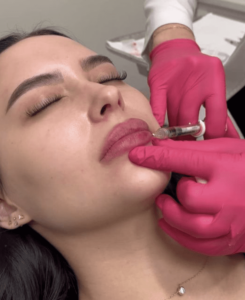
Take a look at this patient’s results after a lip filler treatment:
Jawline Filler Aftercare: Tips for Best Results
You just arrived home from your first jawline filler appointment. You can’t stop admiring your side profile in the mirror and are eager to show your new look to the world. Not so fast! If you want to enjoy the maximum benefits of the procedure and maintain your new look, Mona Dermatology recommends some important aftercare steps.
Be Cautious For 24 Hours After Jawline Filler
Our experienced providers will be meticulous while placing your filler to ensure you receive the safest treatment and best possible results. Everyone’s facial structure is different, so precision is key when it comes to building the jawline of your dreams. However, applying pressure to the treated area during the healing process may cause the filler to migrate to other areas around the neck and jaw. Be aware of habits, like resting your chin in your hands or sleeping on your side, for the first 24 hours as this may put too much pressure on the treated area.
Stay Hydrated
Hyaluronic acid-based dermal fillers work by attracting water molecules from nearby tissues to create a plumping effect in the desired area. Drinking plenty of water after your appointment will maximize the results of your filler, ensuring you get the most out of your treatment. Additionally, the topical numbing applied to the skin during the procedure may cause dryness, so it is important to hydrate your skin with your favorite moisturizer during the recovery period.
Avoid Excess Salt and Alcohol
Alcohol products and food high in sodium increase water retention and cause systemic swelling — think of the dreaded bloating and facial swelling the morning after dinner and drinks with friends. While fluctuation in water retention is normal, higher-than-average swelling is not ideal after a filler appointment. Your jawline will already be sore and irritated from the treatment, so it’s best to avoid the extra puffiness until the area heals. Instead, drink plenty of water to flush out the excess salt.
Use UV Protection & Avoid Excess Heat
Although you should be applying sunscreen to your face daily, UV protection is especially important post-filler, since excess UV rays can affect the longevity of your dermal fillers. The damage and inflammation caused by overexposure to the sun stimulates your skin’s healing process. As you shed dead skin cells, the molecules in the filler can be broken down, too. Make sure to wear a topical sunscreen and consider adding a wide-brimmed hat to your daily wardrobe, as well as staying indoors during peak UV hours. You’ll also want to be cautious to avoid extensive heat exposure for 72 hours after your treatment, as it could negatively impact your results or cause excessive swelling.
Schedule a Combination Treatment
It’s good practice to schedule a follow-up appointment for two weeks after your initial treatment. That way, your provider can evaluate how the filler is settling into your face, even out any asymmetry, or add more product if needed. Many clients also choose to pair filler with other anti-aging treatments — like Botox, microneedling, or chemical peels — to boost their results.
Lip Filler vs Lip Flip: Which is Right for You?
What is the difference between lip filler and a lip flip?
Lip filler is a hyaluronic acid injectable that adds hydration or volume to your lips. It is a fantastic enhancement treatment that will leave you with noticeable results. A lip flip, on the other hand, involves a Botox injection into your upper or bottom lip, or both. Botox is used to help relax the muscles, allowing the lips to ‘flip’ outward and appear fuller. While lip fillers add physical volume to the lips, a lip flip enhances the shape by relaxing the muscles around the lips, creating a subtle outward curl.
How do you know which treatment is better for you?
Megan, PA-C, suggests that if you are unsure about getting a lip filler treatment, begin with a lip flip. A lip flip creates shorter-term and more subtle results. For these reasons, a lip flip could be a good place to start if you aren’t sure if lip enhancements are right for you. If you wish to add hydration or volume to your lips, Megan PA-C suggests getting lip filler because it provides both these enhancements with longer-lasting results. Additionally, lip fillers can be more versatile in achieving different looks, from subtle enhancement to more enhanced volume, depending on your preferences and goals.
How long do the results last?
Our providers typically utilize hyaluronic acid-based fillers, such as Juvederm or RHA, for lip enhancement procedures. These fillers generally last between 8 and 18 months; however, it is important to note that everyone metabolizes filler at different rates, causing variations in the duration of results. Lip filler touch-ups may be necessary after approximately one year. Alternatively, some fillers, like Bellafill, can last significantly longer (2-5 years). However, these types of fillers are not dissolvable and are used less commonly for lip filler treatments.
A lip flip treatment, on the other hand, typically lasts for about 3-4 months. Since Botox is used to relax the muscles around the lips, the results are temporary and will gradually diminish as muscle movement returns to the area. Some patients may notice their results lessening sooner, as it is a high-movement area with strong muscles.
What do the results look like?
Lip filler results can vary from subtle to dramatic based on the amount of filler used and the patient’s specific goals. Generally, patients can expect plumper, more hydrated lips with enhanced shape and definition. The results are immediately visible, though there might be some initial swelling that subsides within a few days.
A lip flip results in a more subtle enhancement compared to fillers. The lips will appear slightly fuller and more defined due to the relaxed muscles, but without the added volume that fillers provide. The effect is often described as a gentle, natural-looking enhancement. For this reason, it is perfect for those seeking a less invasive option or a trial before committing to fillers.
.
Lip filler
BEFORE AFTER
Lip flip
BEFORE AFTER
Cookie Consent
We use cookies to improve your experience on our site. By using our site, you consent to cookies.
Cookie Preferences
Manage your cookie preferences below:
Essential cookies enable basic functions and are necessary for the proper function of the website.
Name
Description
Duration
Geolocation Config
This cookie is used to store the consent settings based on the visitor's location.
30 days
Cookie Preferences
This cookie is used to store the user's cookie consent preferences.
30 days
CloudFlare provides web performance and security solutions, enhancing site speed and protecting against threats.
These cookies are for internal use which allows Cloudflare to identify production issues on clients.
session
__cfruid
Used by the content network, Cloudflare, to identify trusted web traffic.
session
__cf_bm
Cloudflare's bot products identify and mitigate automated traffic to protect your site from bad bots. Cloudflare places the __cf_bm cookie on End User devices that access Customer sites that are protected by Bot Management or Bot Fight Mode. The __cf_bm cookie is necessary for the proper functioning of these bot solutions.
session
__cflb
When enabling session affinity with Cloudflare Load Balancer, Cloudflare sets a __cflb cookie with a unique value on the first response to the requesting client. Cloudflare routes future requests to the same origin, optimizing network resource usage. In the event of a failover, Cloudflare sets a new __cflb cookie to direct future requests to the failover pool.
session
_cfuvid
The _cfuvid cookie is only set when a site uses this option in a Rate Limiting Rule, and is only used to allow the Cloudflare WAF to distinguish individual users who share the same IP address.
session
cf_clearance
Whether a CAPTCHA or Javascript challenge has been solved.
session
__cfseq
Sequence rules uses cookies to track the order of requests a user has made and the time between requests and makes them available via Cloudflare Rules. This allows you to write rules that match valid or invalid sequences. The specific cookies used to validate sequences are called sequence cookies.
session
cf_ob_info
The cf_ob_info cookie provides information on: The HTTP Status Code returned by the origin web server. The Ray ID of the original failed request. The data center serving the traffic
session
cf_chl_rc_ni
These cookies are for internal use which allows Cloudflare to identify production issues on clients.
session
cf_chl_rc_i
These cookies are for internal use which allows Cloudflare to identify production issues on clients.
session
__cfwaitingroom
The __cfwaitingroom cookie is only used to track visitors that access a waiting room enabled host and path combination for a zone. Visitors using a browser that does not accept cookies cannot visit the host and path combination while the waiting room is active.
session
cf_use_ob
The cf_use_ob cookie informs Cloudflare to fetch the requested resource from the Always Online cache on the designated port. Applicable values are: 0, 80, and 443. The cf_ob_info and cf_use_ob cookies are persistent cookies that expire after 30 seconds.
session
Google Tag Manager simplifies the management of marketing tags on your website without code changes.
Name
Description
Duration
td
Registers statistical data on users' behaviour on the website. Used for internal analytics by the website operator.
session
cookiePreferences
Registers cookie preferences of a user
2 years
WooCommerce is a customizable eCommerce platform for building online stores using WordPress.
Name
Description
Duration
woocommerce_items_in_cart
Helps WooCommerce determine when cart contents/data changes.
session
woocommerce_cart_hash
Helps WooCommerce determine when cart contents/data changes.
session
woocommerce_dismissed_suggestions__
Count of suggestion dismissals, if enabled.
1 month
woocommerce_snooze_suggestions__
Allows dashboard users to dismiss Marketplace suggestions, if enabled.
2 days
store_notice
Allows customers to dismiss the Store Notice.
session
woocommerce_recently_viewed
Powers the Recent Viewed Products widget
session
wp_woocommerce_session_
Contains a unique code for each customer so that it knows where to find the cart data in the database for each customer.
2 days
Statistics cookies collect information anonymously. This information helps us understand how visitors use our website.
Google Analytics is a powerful tool that tracks and analyzes website traffic for informed marketing decisions.
Used to monitor number of Google Analytics server requests when using Google Tag Manager
1 minute
_gid
ID used to identify users for 24 hours after last activity
24 hours
_gac_
Contains information related to marketing campaigns of the user. These are shared with Google AdWords / Google Ads when the Google Ads and Google Analytics accounts are linked together.
90 days
_gali
Used by Google Analytics to determine which links on a page are being clicked
30 seconds
_ga
ID used to identify users
2 years
__utmx
Used to determine whether a user is included in an A / B or Multivariate test.
18 months
__utmv
Contains custom information set by the web developer via the _setCustomVar method in Google Analytics. This cookie is updated every time new data is sent to the Google Analytics server.
2 years after last activity
__utmz
Contains information about the traffic source or campaign that directed user to the website. The cookie is set when the GA.js javascript is loaded and updated when data is sent to the Google Anaytics server
6 months after last activity
__utmc
Used only with old Urchin versions of Google Analytics and not with GA.js. Was used to distinguish between new sessions and visits at the end of a session.
End of session (browser)
__utmb
Used to distinguish new sessions and visits. This cookie is set when the GA.js javascript library is loaded and there is no existing __utmb cookie. The cookie is updated every time data is sent to the Google Analytics server.
30 minutes after last activity
__utmt
Used to monitor number of Google Analytics server requests
10 minutes
__utma
ID used to identify users and sessions
2 years after last activity
SourceBuster is used by WooCommerce for order attribution based on user source.
Name
Description
Duration
sbjs_migrations
Technical data to help with migrations between different versions of the tracking feature
session
sbjs_current_add
Timestamp, referring URL, and entry page for your visitor’s current visit to your store
session
sbjs_first_add
Timestamp, referring URL, and entry page for your visitor’s first visit to your store (only applicable if the visitor returns before the session expires)
session
sbjs_current
Traffic origin information for the visitor’s current visit to your store
session
sbjs_first
Traffic origin information for the visitor’s first visit to your store (only applicable if the visitor returns before the session expires)
session
sbjs_udata
Information about the visitor’s user agent, such as IP, the browser, and the device type
session
sbjs_session
The number of page views in this session and the current page path
30 minutes
Marketing cookies are used to follow visitors to websites. The intention is to show ads that are relevant and engaging to the individual user.
Facebook Pixel is a web analytics service that tracks and reports website traffic.